
Able Seaman H. Hall of Guernsey, aged 28, died in Shanghai of cholera, 7 September 1881.
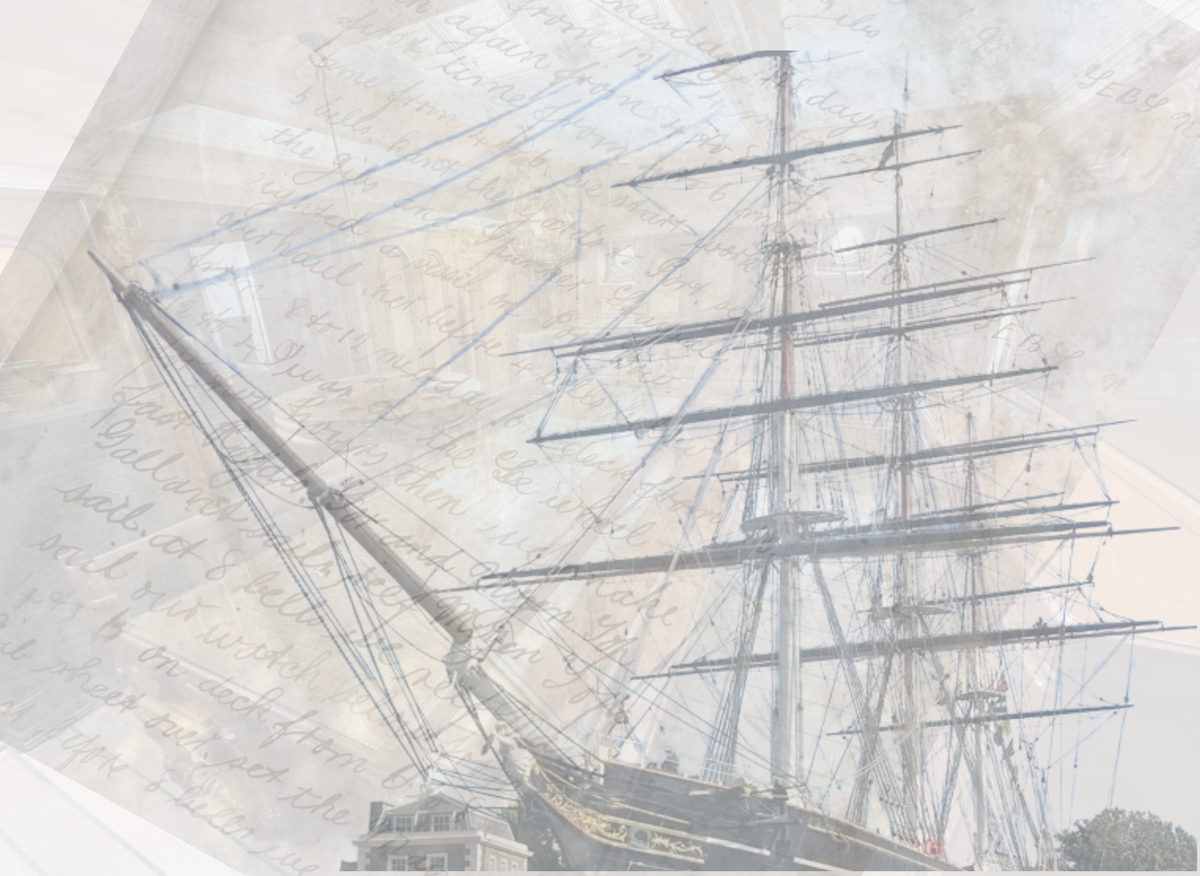
This is just one line on a display board inside the most famous tea clipper of them all, Cutty Sark.
It is where this story of discovery begins, a story that contains tantalising glimpses of a time past, of adventure, of hard times, of laughter, of loss - and of miraculous escapes.
I’ve always loved Cutty Sark, if I think of London I think of her outline, I think of runners streaming around her and vibrant crowds screaming and clapping during the marathon. I also think of watching news clips of the devastating fire that so nearly destroyed her.
But until this year I’d never been aboard - I felt there was something a little sorrowful of such an elegant and exciting looking ship being cocooned in dry dock.
But on a wet May morning in London with time to spare, and a burning curiosity to know Cutty Sark’s story, I stepped aboard and have been hooked ever since.
Able Seaman H. Hall of Guernsey.
His story is why I later found myself in the Priaulx Library looking at census records - I wanted to know H. Hall.
It was why I later travelled back to Greenwich, this time to Caird Library of the National Maritime Museum, to look at journals and logs stained with sea water from voyages 130 years ago.
It was why I hunted out a book which lists all the crew that had sailed on Cutty Sark.
And how I found out it was not H Hall I was looking for at all, it was J Hall. Probably. The sailing on which he died while in service became known as the “hell voyage” because of the amount of misfortune that hit it and the punishment the crew suffered.
It was also how I found out Guernsey’s connections with Cutty Sark run deeper, in all at least eight men from the island sailed on her, one onboard when a storm so fierce hit that nearby ships were lost in a terrible night and Cutty Sark nearly destroyed off the English coast.
There was another Guernseyman who reportedly got kicked off for drunkenness, others, who, as was pretty commonplace, deserted - one in a sliding doors moment maybe saving his life by doing so.
Cutty Sark marks the passing of an age of sail that will never be repeated. It was exciting and captured the imagination of the public who were fed updates on different ships' progress in the newspapers as they raced to bring the earliest harvest of tea back to England.
The opening of the Panama Canal and the improvements in steamship technology put an end to her role in the tea trade.
She continued to carry cargo like wool and even the coal to feed the ships that replaced her, and there is something quite sad about that.
Cutty Sark changed owners, spent time in Portugal as Ferreira, and later became a Royal Navy training vessel.
She is a survivor, and part of her soul comes from Guernsey.