
- Archaeologists have discovered evidence of Neolithic settlement near Les Fouaillages, one of the world's oldest stone monuments
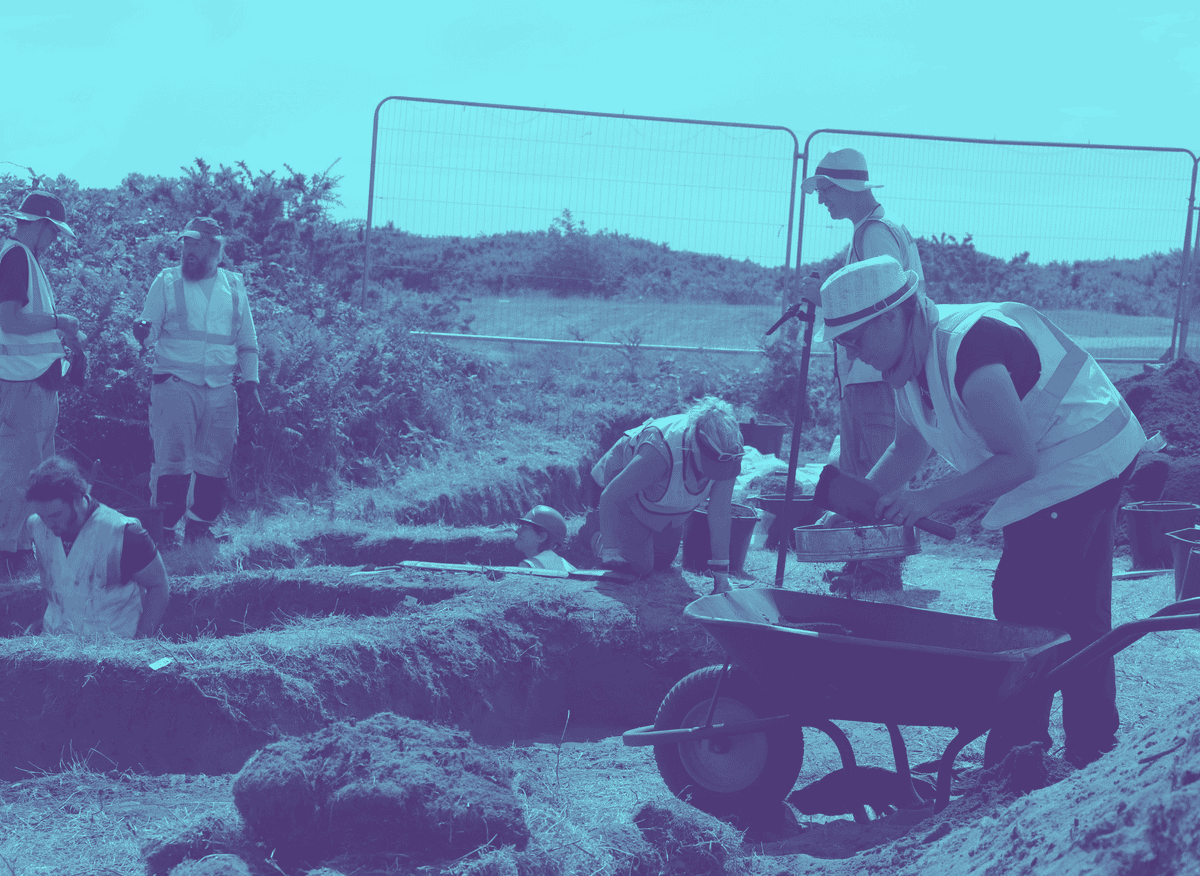
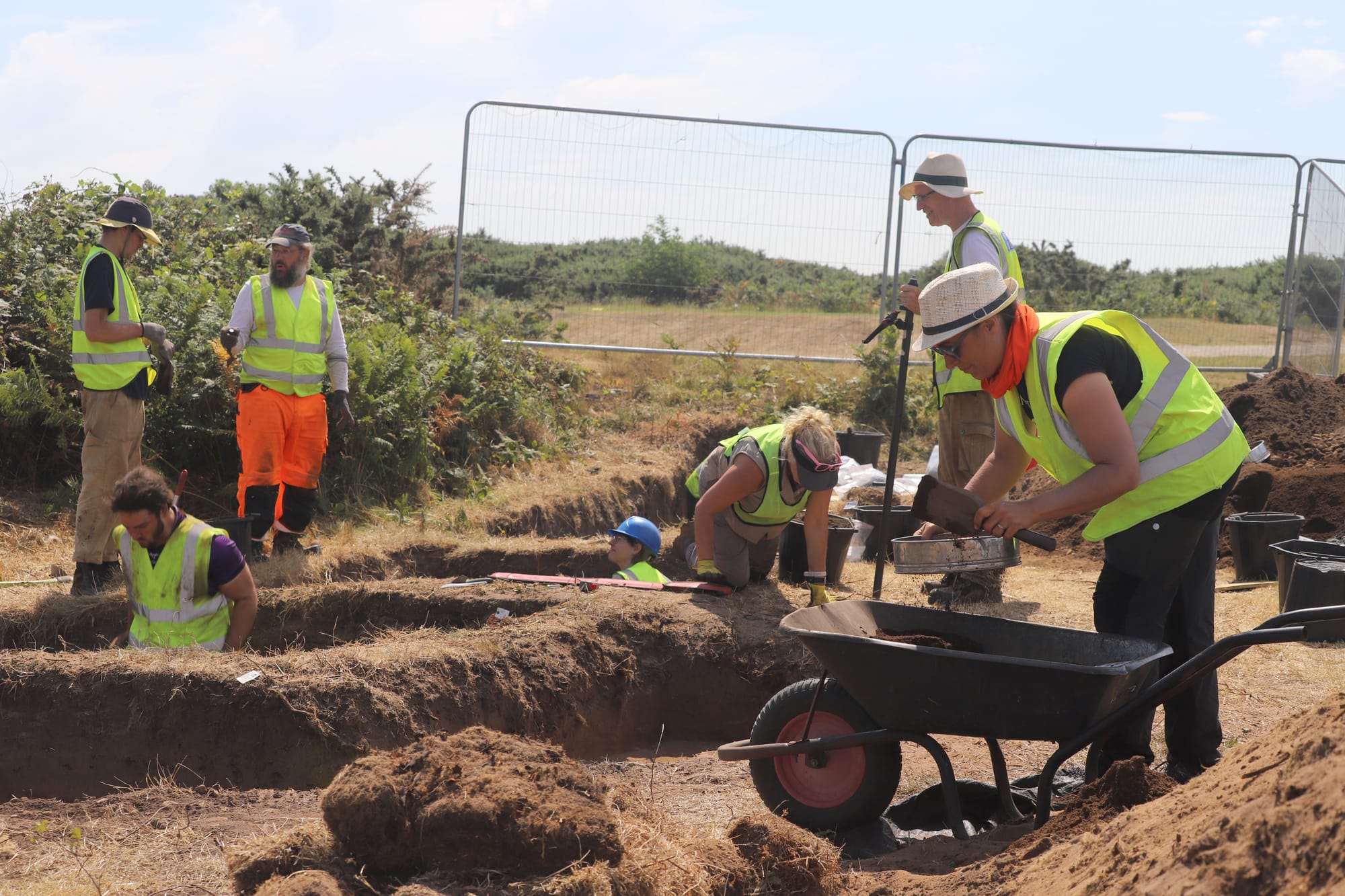
- A project bringing together experts from France, England and Guernsey uncovered a hearth, ditch, pottery, and flint indicating people lived within 200m of the monument in around 3000 to 2500BC
- New optically stimulated luminescence dating technology is being used for the first time on the tomb to help determine its age
- The landscape has been dramatically altered by medieval sandstorms, concealing potential additional monuments under L'Ancresse Common
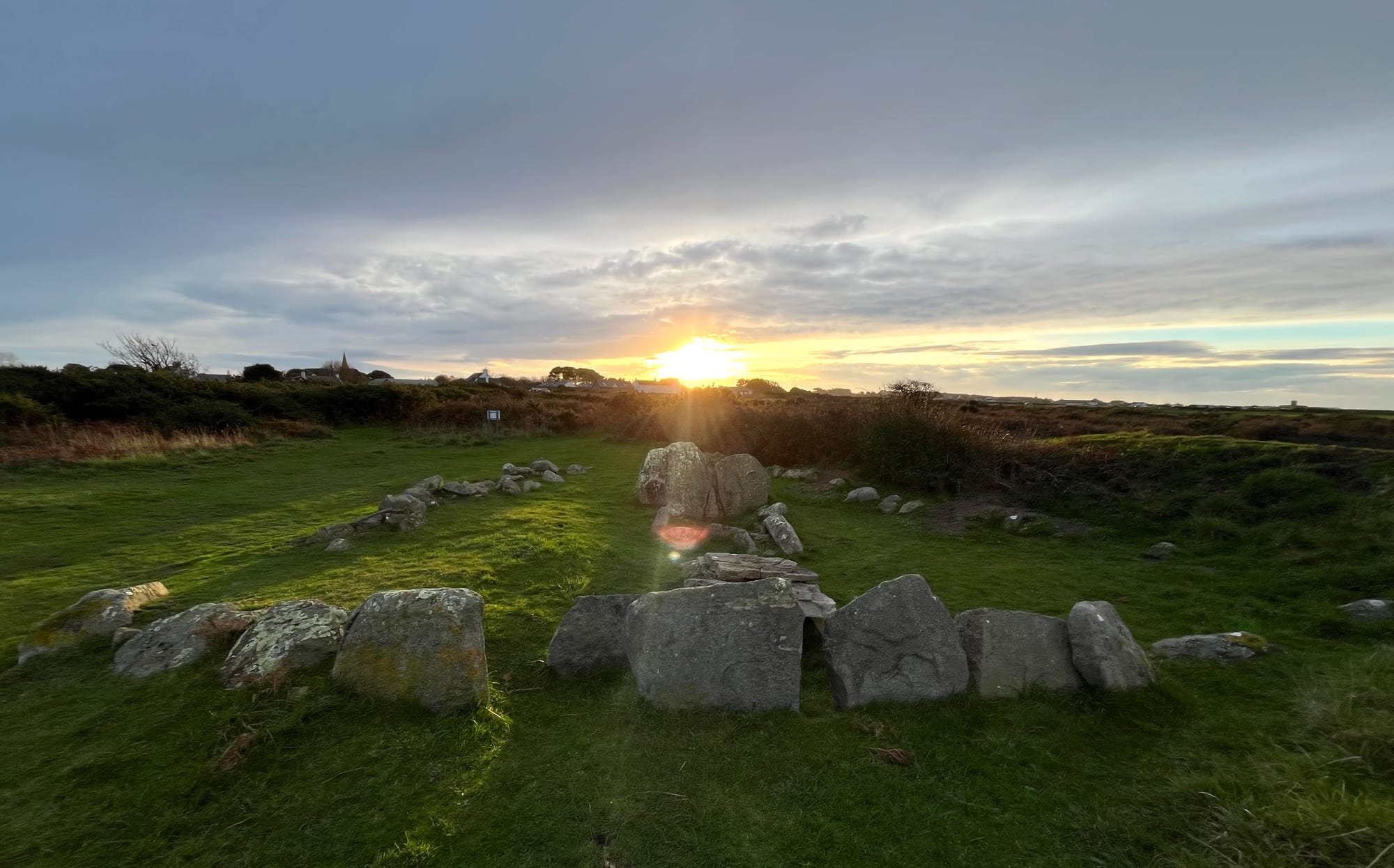
Les Fouaillages is one of the world’s oldest stone monuments to the dead.
It sits at L’Ancresse Common as a permanent sign of how important the site was 7,000 years ago and through millennia that followed.
While there has been plenty of attention paid to Les Fouaillages and the evidence of what was happening there, much less has been turned to whether people were living nearby and if so, what they were doing.
There were references by Ian Kinnes, who led archaeological work in and around the stones in the late 1970s and early 1980s, to evidence of settlement, but it was poorly documented, just a hint.
Then in 2024 and 2025 test pits showed some promise, which led to much more extensive work this year in a project that brings together archaeologists from France, England and Guernsey and a pool of expertise across elements including pottery, pollen and soil as well as access to technology like optically stimulated luminescence which has been used on the tomb for the first time to help settle its dating.
Our ancestors left clues and this year’s dig found some of them, exciting evidence of settlement in Neolithic times to the north east of Les Fouaillages.
But this is not a simple picture or story to tell.
There were different phases of the monument being used, before it was finally sealed in around 2000BC.
The evidence of nearby settlement from this year initially appears to date in the 3000-2500BC range.
When you stand on this section of the common today it is hard to picture people living there, it feels inhospitable compared to other areas in the island, all gorse and tufty grass.
But this is a landscape that is the product of sandstorms in medieval times which has reshaped the environment.
Indeed, one of the other finds this year was medieval plough marks, while in 2025 a wall from a medieval farmhouse was discovered under the sand.
No-one lives there today, but from at least the late Neolithic until perhaps the 12th-century there were phases of occupation less than 200m from Les Fouaillages.
It is not an isolated site of death, but a connected one of life.
Key terms
Work on Les Fouaillages and the surrounding area is an international effort.
Helene Pioffet-Barracand is a French archaeologist specialising in Neolithic pottery and was part of a French government funded team that has been visiting the site since 2024.
She has also studied the pottery found at the monument.
That pottery was of a very high quality, indeed a higher quality than has been found on the European continent for the same period, and with a style distinct from Brittany or Normandy.
Some of it was from vessels identical in style to those found on Jersey sites, demonstrating a connection between the islands.
The pottery finds from this year’s search for settlement evidence are very different.
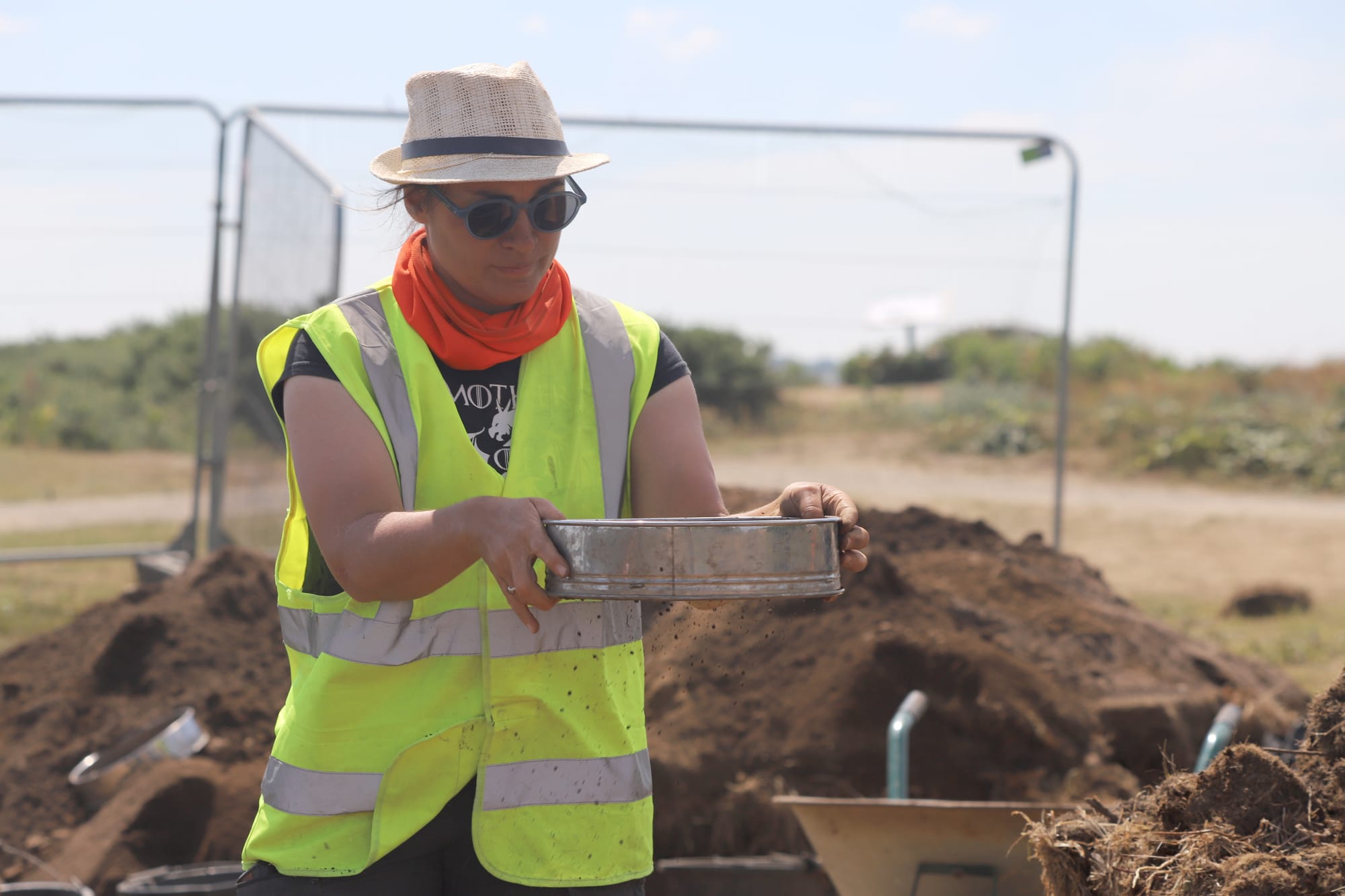
“When you make a pot, you know why you're making it, for cooking, for serving, for storing, so depending on the use you have for it, you will definitely make different choices in terms of decoration, for instance.
“If you want a pot that is to be used for serving, you will need to make a lot of decoration, whereas for cooking, you don't mind about having decoration, and for storage, there's no point.
“When you make storage pots, you have to be sure that they are thick enough to hold the weight of wheat, of seeds, of barley, whatever they're actually using, so it has to be thick enough and sturdy enough, so that is basically what's turning up here.
“At the monument itself, the pottery is very fine, very nice, because this is a special burial deposit, whereas here it's slightly different, because it's a settlement site, so obviously they're just living here, so they don't really care about the look.”
When Kinnes excavated Les Fouaillages he had theories about a probable settlement in the vicinity because they found crushed pottery and tools in the mounds covering the monument - essentially rubbish that was more likely to have come from nearby, than the other side of the island.
The hunt for the settlement began with test pits two years ago and last year. Archaeologists honed in on one area where they found some archeological features like a ditch, pottery and flint.
“We decided this year to again extend the area, and this is promising because we're getting more and more information.
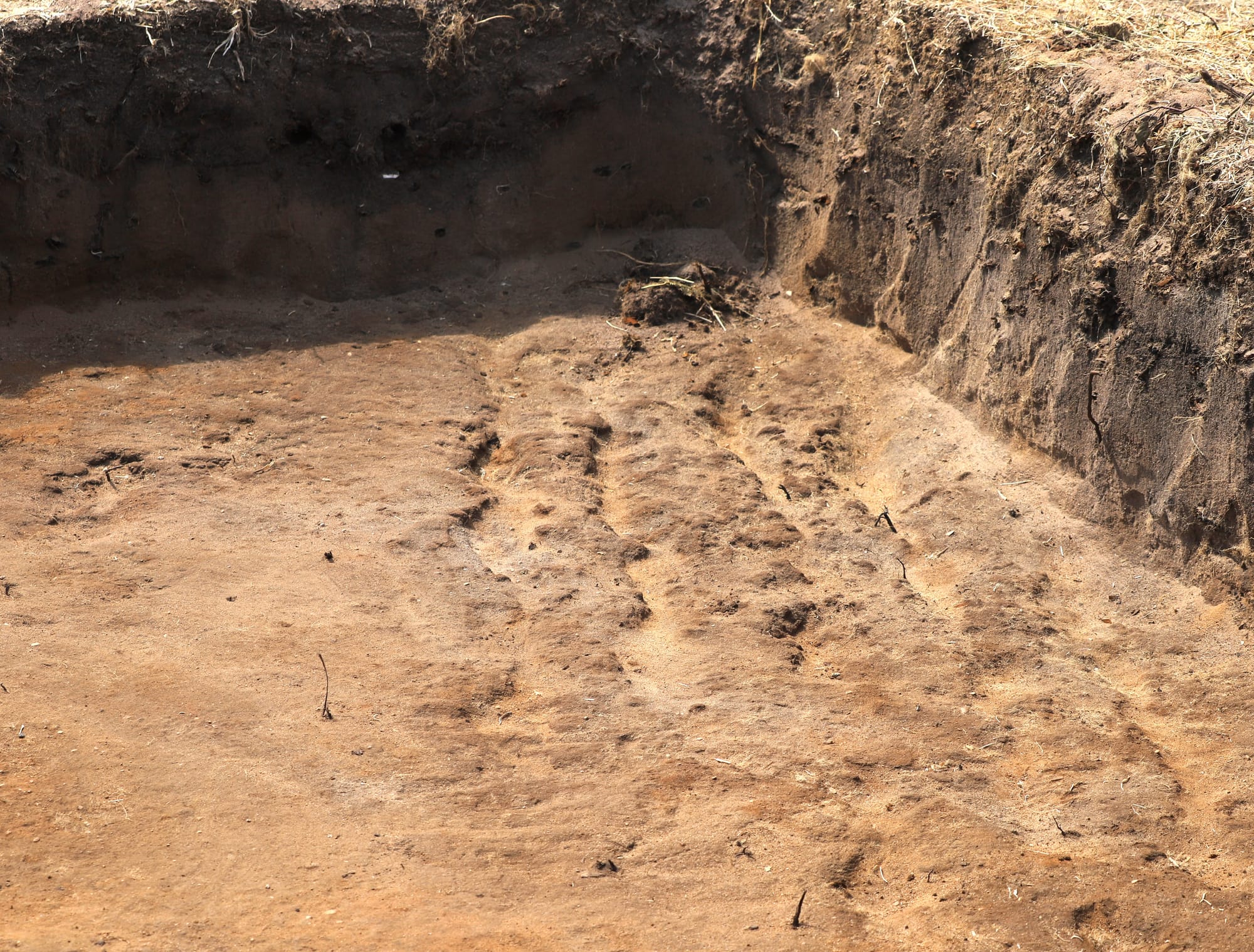
“First of all, a hearth, so basically a fireplace. We know that through the charcoal that is in this feature, through all the burnt flints that are in the feature as well, and all different tools that were found, which are burnt. Obviously, there's been some heat going on.
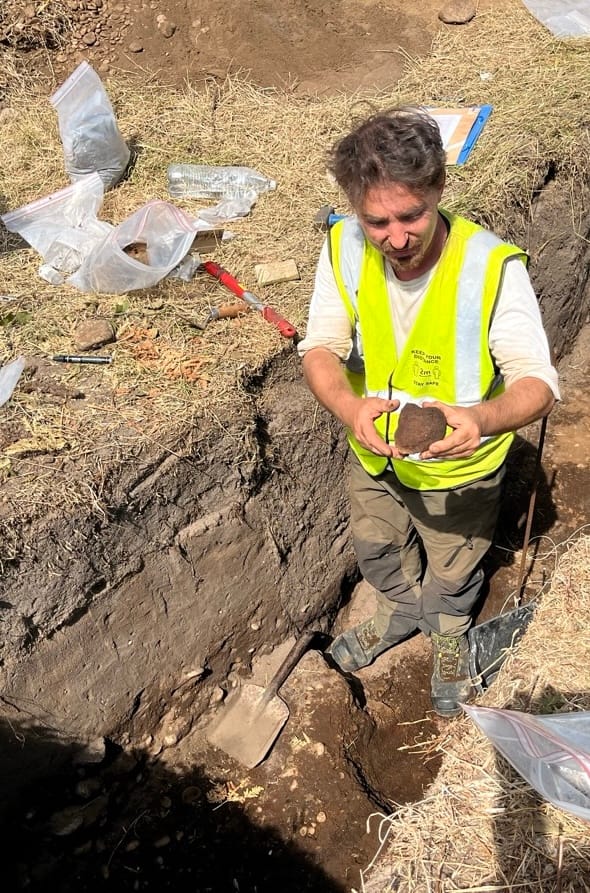
“We managed to follow the ditch that we had found last year, and this ditch had a lot of material. At the very bottom of it, we found some pottery, some flint, some charcoal.
“So we had a lot of information. All this material is definitely related to a settlement, because it's material that is found where people live.
“We have remains of flint that tell us that they were knapping here, they were making tools. The pottery is cooking pottery, we've got fine pottery as well, we've got storage pottery, which means we definitely are facing something quite interesting here.”
How the settlement relates to Les Fouaillages is open to debate.
“We were looking for the settlement going with the first phase of the monument, but in fact it seems that we are mostly facing something dating back to the late Neolithic, so it's roughly speaking about between 3000 to 2500 BC.
“So we are later than the monument, but we have other monuments, such as the La Platte Mare [about 100m north of Les Fouaillages] for instance, that is slightly later as well. Maybe that's not related, but maybe it is. Maybe when they built the monument, the settlement was still existing. We don't really know that, at least for the moment. We might have some answers very soon.”
La Platte Mare, dated to around 2500BC, has a rare example of what has been described as tomb art, with 12 cup shaped marks on the northern side stone.
The archaeologists aim to come back again next year if they can continue to get financial support from the French Ministry of Foreign Affairs.
Chris Scarre, emeritus professor at Durham University Archeology Department, has a particular interest in the monumental tombs from the Neolithic period. His links to the Bailiwick stretch back to extensive work done between 2008 and 2011 on Herm.
Durham University has a laboratory to process results from a technique called optically stimulated luminescence which can date sediments.
Its benefit over radiocarbon dating is that it can date the sediments themselves, not isolated pieces of bone or charcoal that may have moved through the layers over time.
“Luminescence dating is very effective, and if you can get a sequence going down then you can get several dates and narrow the range down. You see the evolution of the landscape through 6000 years.”
During this visit a small trench was dug at Les Fouaillages in an area where photographs of the original Kinnes led excavation indicated had not been touched.
“It should give us some indications, but until we've actually run the dates and my colleagues have run the analysis, I can't be sure exactly what the result would be.”
Depending on how busy the lab is, it could take anything from a couple of months to up to a year to get the results.
 Nick Mann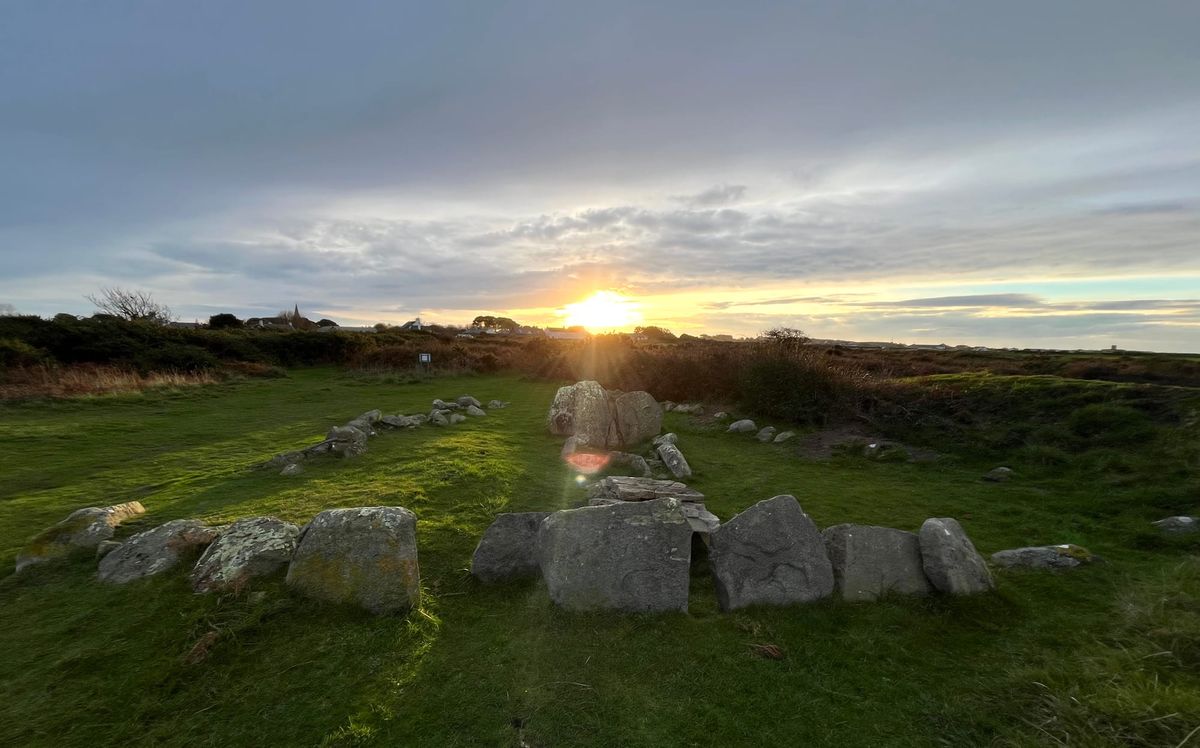
Evidence from previous radiocarbon dating and pottery indicates that Les Fouaillages is one of the very earliest of the monuments to use large stones.
“We think we know where to place it in time, but it would be nice to have more to substantiate that.”
There are some other sites in Northwest France, mainly in the southern parts of the Morbihan, Carnac area, which seem to be giving similar dates of around 4600/4700 BC.
Les Fouaillages has a box-like chamber, which is something you find from the Swiss Alps all the way up to northwest France, into southern France and the Iberia, in different time periods.
The almost triangular mound is also something you can find in continental France, an example in the plain of Caen has recently been dated to about 4600/4700 BC.
“The megalithic element is original to here, but the shape, the idea of an elongated mound with funerary structures attached could be related to what's happening in Normandy.
“So you've got the early megalithic tradition in the southern Morbihan, you've got the long mounds in Normandy and all it all comes together here, so we're interested to know more about it.”
Evidence from DNA analysis shows farming was brought to the region by people coming up through Europe from central and southeast Europe, a process that went from the southeast to northwest as they mixed with the local populations, reaching Normandy in around 5000 BC.
“There are some early sites on Guernsey, which show that the colonisation by those early farmers occurred quite early, about the same time it happened in Normandy, then monuments like Les Fouaillages follow potentially only three or four centuries later.”
Farming got introduced to Britain a millennium or more later, with the stone funerary monuments there also following a few centuries after that.
Evidence from Britain also suggests how the society was structured.
“With DNA analysis of the human remains you can look for the relationships of the burials within the chamber.
“Where a tomb has been well excavated, if you've got 20 or 30 people buried, you can work out if they are interrelated, and the evidence suggests that they do tend to be, and furthermore, they are sometimes related to families from other monuments, 20 or 30 kilometers away.
“So it looks as if you've got a pattern in which there are probably leading families in each area who are behind the construction of these tombs, and they're linked by marriage relationships, kinship relationships, to the leading families in other areas doing the same thing.
“That's certainly what seems to be happening in some of Britain, and it's probably a phenomenon which is quite widespread.”
It is not clear why it took so long for farming and monument building to cross the English Channel.
It may simply be down to the difficulty of transporting animals.
“I've sometimes speculated that it's a question of maritime technology, it was the invention of a slightly better class or size of vessel that suddenly made it easier to take whole families and livestock across the Channel.”
States Archaeologist Phil de Jersey has a limited budget which tends to be concentrated on sites that are under threat, so he is pleased to be able to welcome visiting teams to study in Guernsey.
They often bring expertise not on the island, while their work also raises the tantalizing prospects of what else remains to be found.
“You look at L’Ancresse now and think it's a pretty inhospitable landscape, but an awful lot of sand has blown in in that time, so as well as getting back towards the early Neolithic, we are also finding other signs of settlement under here from later periods.
“This sort of question never goes away, but it makes me wonder again, what else is actually under the golf course on L’Ancresse, or even the bits that don't have the golf course on them? “This sand could be concealing another Fouaillages, it could be concealing another dolmen like La Platte Mare, perhaps nothing quite as big as La Varde, but we just don't know, because there's just so much sand over the top of it, and just to get a little bit of an insight into what might be here is great.”
One way of unpicking that question would be with ground penetrating radar, which could be used quickly over large areas without damaging the golf course, but that would mean external funding or a university group which has access to the technology coming over.
Another more specific target for a small excavation would be a Christianised menhir which lies in the grass near number 7 tower by L’Ancresse Bay, but in direct line of golf balls.
For now, the French team plan to come back in September to take some core samples on land further east of Les Fouaillages to look at environmental indicators to try and judge how much human activity there was, while also perhaps indicating some other areas not in the range of golf balls to dig.



Comments ()