
Guernsey building material costs can be double UK prices, the regulator has highlighted a path to lower bills
- Eight out of fifteen key building products in Guernsey cost at least double UK prices, according to a major study by the Guernsey Competition and Regulatory Authority.
- Ronez operates as a de facto monopolist for ready-mix concrete, the only supplier on the island, with profits 5-10 percentage points above its cost of capital over three years.
- Ready-mix concrete unit profits grew 60-70% between 2021-2024 while prices rose 37%, though the regulator found no breach of competition law on excessive pricing.
- The GCRA recommends increased transparency, including published pricing data and separate itemisation of concrete costs in government contracts worth an average £35m annually.
- Proposed solutions include mobile batching plants for large projects, streamlined worker permits, temporary accommodation for off-island workers, and open-book procurement for public works.
Building materials are significantly more expensive than in the UK, with some prices more than 100 percent higher, but the regulator has concluded there is not evidence of unlawful excessive pricing.
A major study by the Guernsey Competition and Regulatory Authority, found that for eight out of fifteen key building products, local prices are at least double.
The investigation into the supply of concrete and aggregates reveals a market where high profitability and limited competition have direct consequences for the cost of housing and public infrastructure like schools and hospitals.
At the heart of the issue is the supply of ready-mix concrete, a critical component for almost all modern building projects.
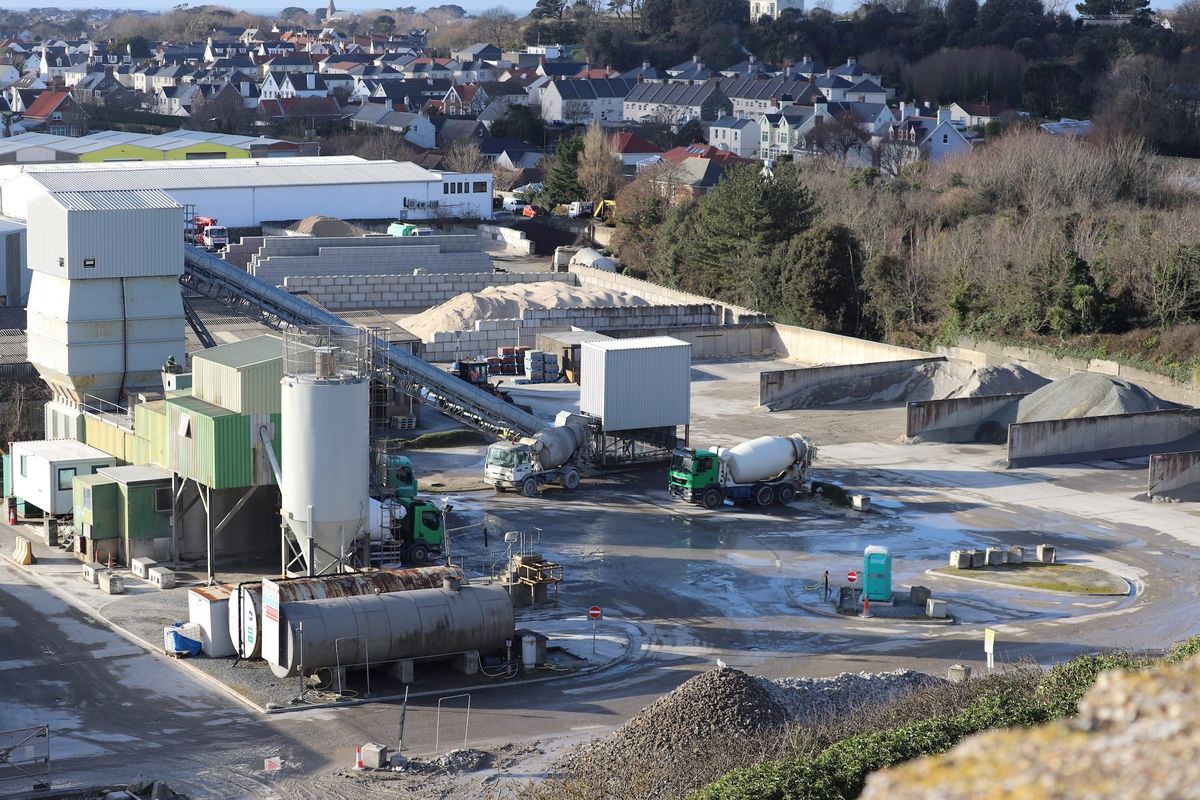
The report confirms that Ronez operates as a de facto monopolist in this area because it owns and operates the only concrete batching plant on the island.
Because ready-mix concrete must be used within roughly two hours of being mixed, it cannot be imported from off-island, leaving local builders with little choice but to use the single on-island supplier.
The regulator's analysis shows that the supplier has earned profits well above its cost of capital.
Over a three year period, the return on capital employed for Ronez Channel Islands was between 5.0 and 9.99 percentage points above its weighted average cost of capital. Between 2021 and 2024, the unit profit for ready-mix concrete grew by an estimated 60 to 69.99 percent, while the cumulative price for the material rose by approximately 37 percent.
Despite these high figures, the GCRA concluded that the company has not breached competition law.
Legal thresholds for "unlawful excessive pricing" typically require price increases of several hundred or even several thousand percent, often implemented abruptly without cost justification.
In this case, price movements were more progressive and were at least partly linked to rising costs for labor and raw materials.
Michael Byrne, Chief Executive of the GCRA, said: “This review confirms that concrete costs in Guernsey are shaped by structural challenges rather than unlawful behaviour. There is no single quick fix, but it highlights clear ways that the States can help improve how the market works, addressing long-standing barriers to supply, strengthening competition over time, and delivering better outcomes for consumers and taxpayers.”
To address these challenges, the study identifies several practical ways for the States to intervene and improve market conditions.
A primary focus of these proposals is a significant increase in transparency regarding pricing and financial performance.
The regulator suggests that the government could require targeted reporting for products where competition is constrained, such as cement and energy.
This would include the publication of average realised prices and clear rules for surcharges, such as those applied to small loads or waiting times, which would reduce the scope for opaque price changes.
The report also explores how to make the Guernsey market more accessible to new players.
While establishing a second permanent concrete plant may be difficult due to the island's scale, the government could encourage the use of mobile batching plants for specific large-scale projects. Furthermore, ensuring that land and storage facilities are available for the import of raw materials could help reduce the current reliance on local supplies.
The mobility of labor is identified as another area where government action could lower building costs. The study proposes streamlining the recognition of off-island qualifications and granting project-based permissions for specialized tradespeople. To further assist off-island firms in competing for local contracts, the report suggests the creation of a construction village to provide temporary accommodation for non-local workers.
Perhaps the most direct way to influence the market is through the government's own spending.
As a major customer that spends an average of £35m. per year on construction, the States is in a unique position to set the standards for the rest of the industry.
The regulator recommends that for all major public works, the government should stop accepting single lump-sum prices from contractors. Instead, they should require ready-mix concrete to be priced as a separate element of the contract. This would allow the government to demand open-book information, including supplier invoices and delivery tickets, ensuring they are not overpaying for essential materials.
By setting strict rules in its own contracts for how price movements are calculated and using whole-life costing to prioritise long-term value, the States could force a change in behavior across the supply chain. The GCRA believes that while there is no immediate solution, this combination of transparency and smarter procurement could significantly reduce the financial burden on the Guernsey taxpayer and the wider economy.
Q&A
Q: Why are building materials so expensive in Guernsey compared to the UK?
A: The high costs are driven by structural market challenges, particularly limited competition. Ronez operates as the only supplier of ready-mix concrete on the island because the material must be used within two hours of mixing, making imports impossible. This monopoly position, combined with high profitability and barriers to new entrants, results in eight out of fifteen key building products costing at least double UK prices.
Q: Did the regulator find that Ronez broke any laws with their pricing?
A: No. While Ronez earned profits 5-10 percentage points above its cost of capital and concrete unit profits grew 60-70% between 2021-2024, the GCRA concluded there was no breach of competition law. Legal thresholds for unlawful excessive pricing typically require price increases of several hundred or thousand percent implemented abruptly without cost justification, whereas Ronez's price movements were more progressive and partly linked to rising costs.
Q: What are the main solutions proposed to reduce building material costs in Guernsey?
A: The GCRA recommends several interventions: requiring transparency through published pricing data and clear surcharge rules; making ready-mix concrete a separate line item in government contracts with open-book accounting; enabling mobile batching plants for large projects; streamlining recognition of off-island worker qualifications; creating temporary accommodation for construction workers; and leveraging the States' £35m annual construction spending to set industry standards through smarter procurement practices.



Comments ()