
We launched a dedicated election site in a morning - why is the States struggling to keep up?
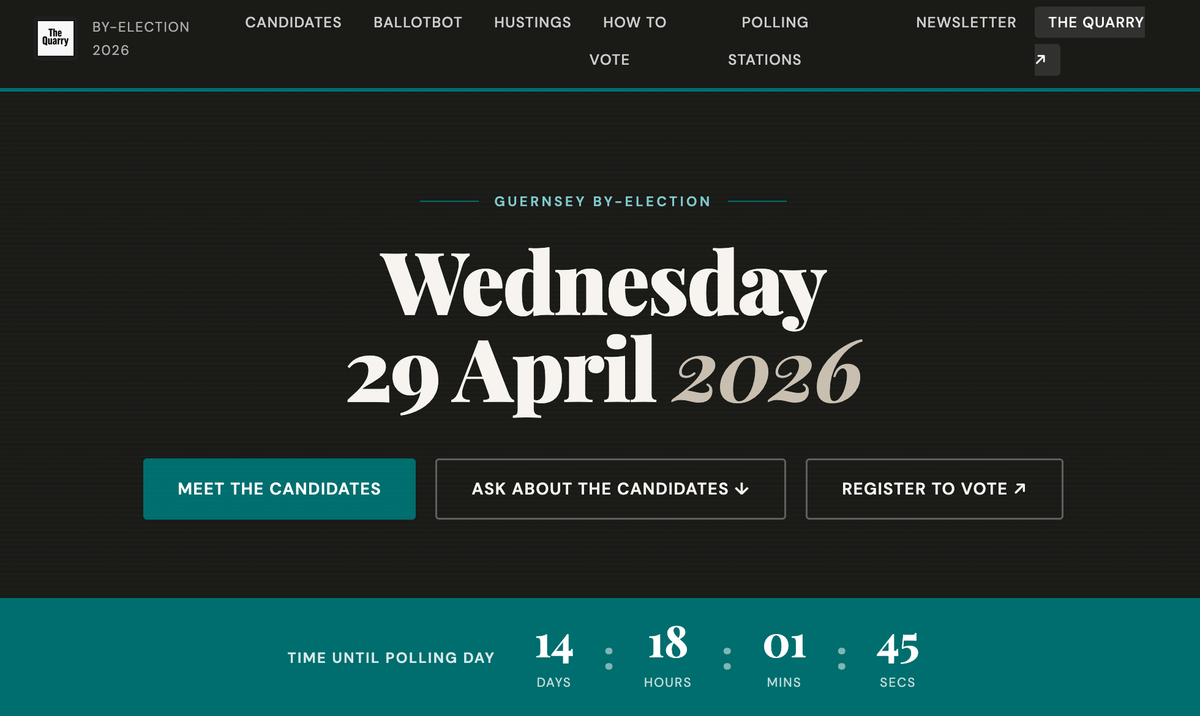
- The Quarry created election2026.gg in one morning while the official States election site still lacks information for 3 of 11 candidates
- The micro newsroom's site features candidate profiles, manifestos, polling data, and an election chatbot called BallotBot
- The site aggregates information from multiple verified sources to help voters compare candidates on key issues
We launched a dedicated election site in a morning - why is the States struggling to keep up?
Maybe it shouldn’t be a surprise.
We’re now more than two weeks into the campaign period and as this is published if you go on to the "official" by-election site set up by the States you will find information about only eight of the 11 candidates.
If you were looking at Easter, there was nothing.
Nominations closed on 25 March, the vote takes place on Wednesday 29 April.
That is a democratic deficit.
It is one we and other media outlets are rightly filling.
The Quarry spun up election2026.gg and went live in a morning.
We iterated through some design decisions, what key information we wanted to surface for people and how, and began testing our election chatbot, BallotBot, deciding how its knowledge would be updated and with what.
When the States voted to confirm the by-election date we registered the domain, it follows the same format as the government usually registers but no-one had done so.
At the time, if we had the spare cash, we could have registered byelection2026.gg too.
For us it is vital that the public get to know as much as they can about the candidates - and setting up a dedicated page pulling in information from other reliable sources as a one-stop-shop is the backbone to our unique offering.
From the first day of the election period you could find out what those who have stood in the past have said about key issues, how they have polled, and we quickly also pulled in background information on new faces.
Now we’ve been able to add their positions taken in manifestos published on their own sites, as well as how they answered questions on different topics in the Guernsey Press election podcasts.
This is a rich data set which you can quiz using BallotBot - or simply read in their profiles - which surfaces changing positions and nuances in a way that just using one source is not possible.
It also easily allows you to compare candidates on different topics.
There are some strict guardrails in place to ensure we’re only pulling answers from verified data - and always with someone checking data before it goes live.
And if you need to know more about registering to vote, how the election day works, where to go, all the basics, that is there too.
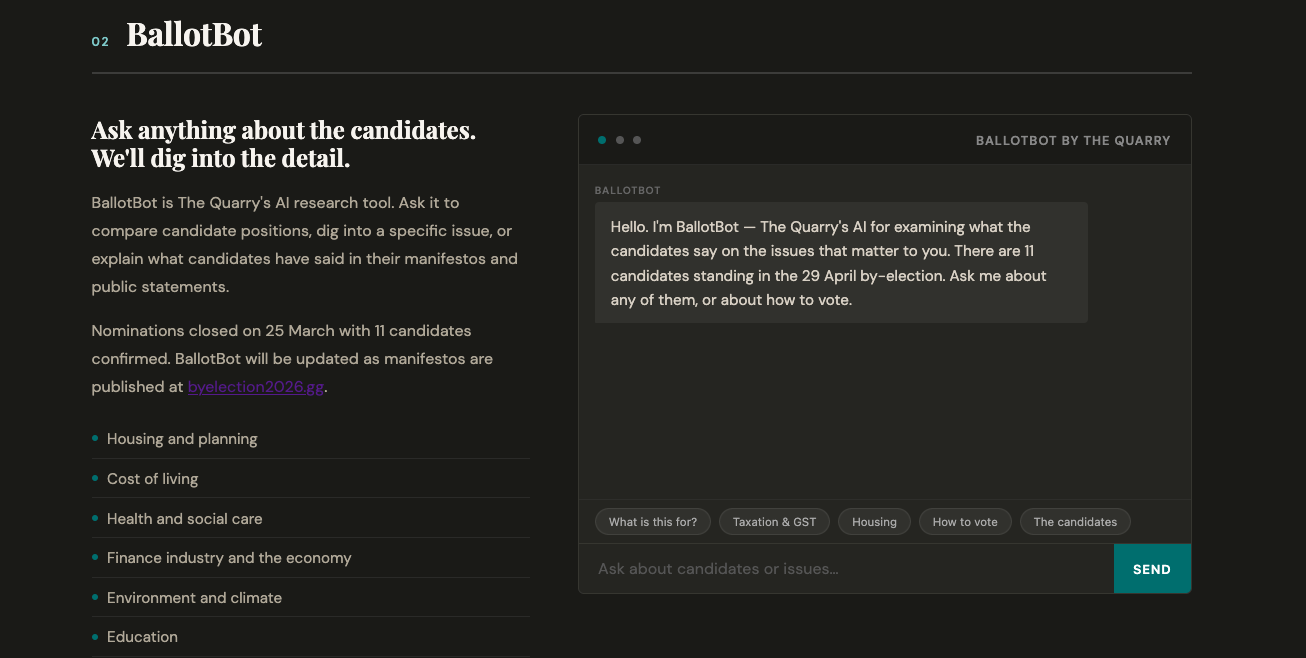
We created the site to fill an information blackhole and it will continue to be updated as the hustings are held.
We’re a micro newsroom, this was created and is being managed by one journalist alongside all our other work.
There is a lesson there for what is now achievable - both in terms of speed, features and cost if you are agile and embrace technology.
In some ways we’re glad the States is sticking to a rigid platform where candidates need to email in their details on a word document for it to be published “as soon as practicable after submission” to a static webpage.
The reality is, though, if that was set up correctly, it should be instant.
Clearly the States has layers of bureaucracy it has to work through, and limitations in what it can do with one eye on impartiality.
We’ll have an eye ourselves on the breakdown on its election spending and how its online presence cost compares with ours.
We’re not arguing for government to tread all over the toes of the local media here - it already is competing with private enterprises in this space and that is unhealthy in itself.
But there is something wrong - either with its processes, or the candidate’s organisation - for there to be these obvious gaps.
Q&A
Q: How long did it take The Quarry to create their election website?
A: The Quarry created election2026.com and went live in a single morning, managed by one journalist alongside their other work.
Q: What information is missing from the official States election site?
A: The official by-election site only shows information about 8 of the 11 candidates, more than two weeks into the campaign period, and had nothing during Easter.
Q: What features does The Quarry's election site offer that the official one doesn't?
A: Their site includes candidate profiles with past positions, polling data, manifesto information, answers from election podcasts, an election chatbot called BallotBot, and allows easy comparison between candidates on different topics.

Comments ()