
Transformed: the seven year project to turn La Grande Mare's golf course into a world class attraction
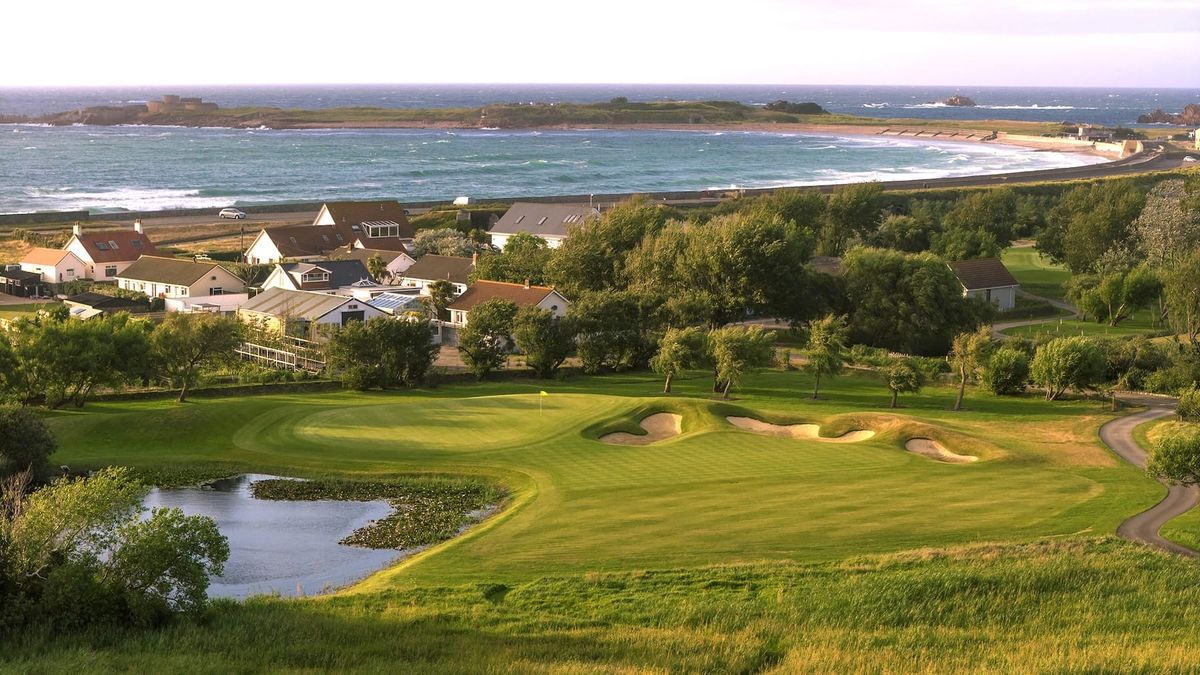
- La Grande Mare's golf course has undergone a seven-year, multi-million pound transformation, opening to players on 1 August with £200 green fees and no membership required initially.
- The renovation removed decades of waste including cars and refrigerators from an old tip, cleared 40 years of silt from lakes, and installed advanced drainage systems including pumps to combat flooding.
- The redesigned course is now 600 yards longer at 5,367 yards with par 69, featuring strategic design inspired by world-famous courses like Seminole and St Andrews.
- Owner Stephen Lansdown's vision was to create a European Tour or Ryder Cup-quality venue that Guernsey can be proud of, with the site expected to employ over 100 people when the country club opens in 2027.
- Advanced engineering including GPS-guided construction, wall-to-wall irrigation, and 10 hectares of sand create world-class playing conditions designed to remain playable even after flooding.
On 1 August, players will stand on the tee of the seventh and look out on a green landscape moulded to challenge and deceive.
What they won’t see is the cars, refrigerators, boilers and rocks that were removed from what was once a tip.
That was just one of the opening challenges from a transformation project that began in 2019, others included removing 40 years worth of silt that had accumulated in the lake at the 11th and 12th holes, which is now a key part of the water storage solution for the course.
They have worked through the Covid-era, through floods, drought, at times crossing their fingers, to arrive at the point where a world-class golf course is ready for the opening rounds.
Robin Hiseman, Golf Course Architect, European Golf Design, made his first visit in 2019.
It then took a year to build the concept and detailed planning through 2021 and 2022, before course construction began at the end that year.
The course remains at 18 holes, but is longer (by 600 yards at 5,367) and more challenging (par 69 compared to 64) than before.
The landscape aesthetics is also very different, gone are many of the Saltcedar trees, and there are fewer douits to dodge, even if it is still possible to find water on every hole.
Among the inspirations for the design were Seminole, a private club in Florida, while the philosophy of St Andrews in Scotland was followed with the use of double fairways with no rough between them.
Hiseman also looked at the 10th hole of The Belfry when designing the 7th which has a very similar orientation.
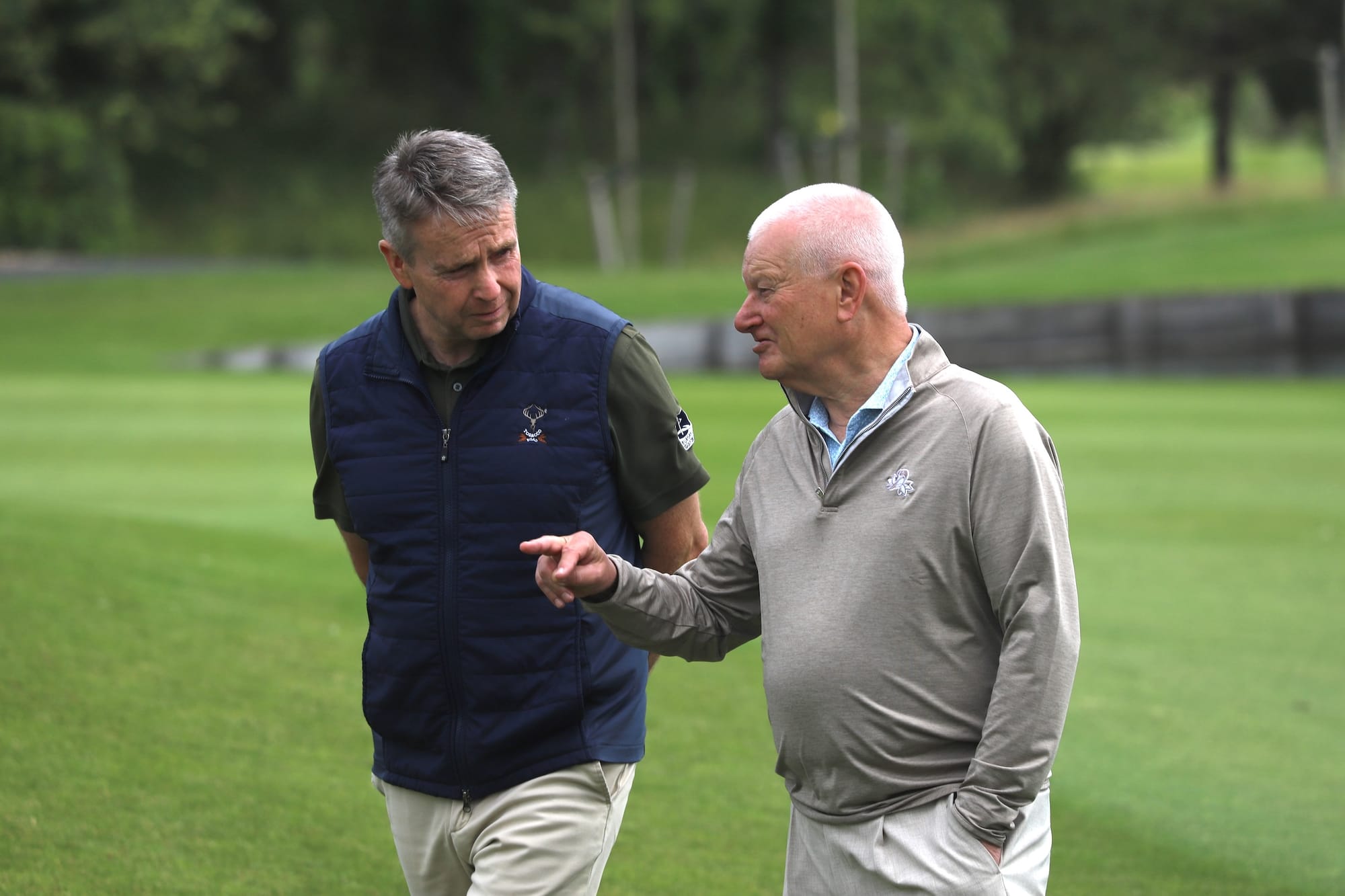
When Hiseman was brought in, the brief from owner Stpehen Lansdown was to bring the level of design and quality that you would find at a European Tour or Ryder Cup venue.
He discovered an unremarkable course which had been built on a shoestring, but a site with enormous potential which had now been realised.
Why has it been described as world class?
“I think people will play the golf course, and they will immediately see that it's been very thoughtfully put together.
“It's a very strategic golf course, and then it's the quality of the physical construction with the drainage we've put in here, the wall to wall irrigation, 10 hectares of sand that we've put down to to grow the best grass, and then on top of that is investment in the maintenance team and the employment that's burgeoning here to present that to the best of its ability.
“The whole thing works together in what you see in the finished product here. The grass is just the top of the cake, there's an awful lot under the ground that you won't see, and all that combines to give you the potential to present something of a world-class quality.”
Creating a golf course is much more like a road construction project than it first appears.
GPS and CAD design combined with other modern technology and heavy machinery to shape the contours, then there is science behind managing the grass, soil and water to create the ultimate playing conditions, changing how the ball bounces and rolls.
Drainage, as you might expect given the name of the area, was a major challenge.
“I think this is possibly the most complex project I've ever worked on, and I've built golf courses in deserts, mountains, clay bogs, all sorts of things, but the challenge here is basically the golf course is built on a delta, so there's a lot of water courses converging on La Grande Mare, and that delta is below the high tide level, so we have to factor that all into the way in which the golf course drains.
“When you have a spring tide here, the water in the golf course cannot get out, but we've engineered solutions to that. We've got pumps that kick in when the float valves trip off, we've moved the water around the site in a very efficient way to try and ensure that it remains playable.”
With the old course, when it flooded, it could be shut for months at a time. Now pumps should mean it can reopen if not within hours, then within a day or two.
The course is technical, with a lot of angles at play.
Golf, when it is good, is not a series of straight lines, but diagonals, where hitting one side of the fairway will give you a better route into the green.
Bunkers are all placed to influence where you play your shot. The course has optical illusions that mess with depth perception. Then there’s the water to add a further challenge for the golfer.
“I want them to enjoy it, but I want them to be mentally engaged as they're coming around here. And that's maybe the difference between this and the old La Grande Mare. You're really going to have to plot your way around here carefully.”
Stephen Landsdown first came to the island in 2010 and joined La Grande Mare Golf Club.
He enjoys golf (although says he is not very good at it), being out in the open air, taking in the scenery and it is a game that can be handy when it comes to doing business.
When La Grande Mare came up for sale the decision making process was simple:
“I thought this is an opportunity for me to mess about with a golf course.”
What has transpired is a multi-million pound investment to create something that will rival the best in the world in terms of the quality and condition of the course.
“The vision, as I said from the very beginning, when we started on this project, is to create somewhere that Guernsey will be proud of.
“I think it will help to help the economy of Guernsey, we will see a lot of people come and visit us, just to play the golf course, come to stay here.
“Vazon Bay is an absolutely fantastic area with the coast and the beach, and now the golf course. So I think it will achieve an awful lot that the island will benefit from.”
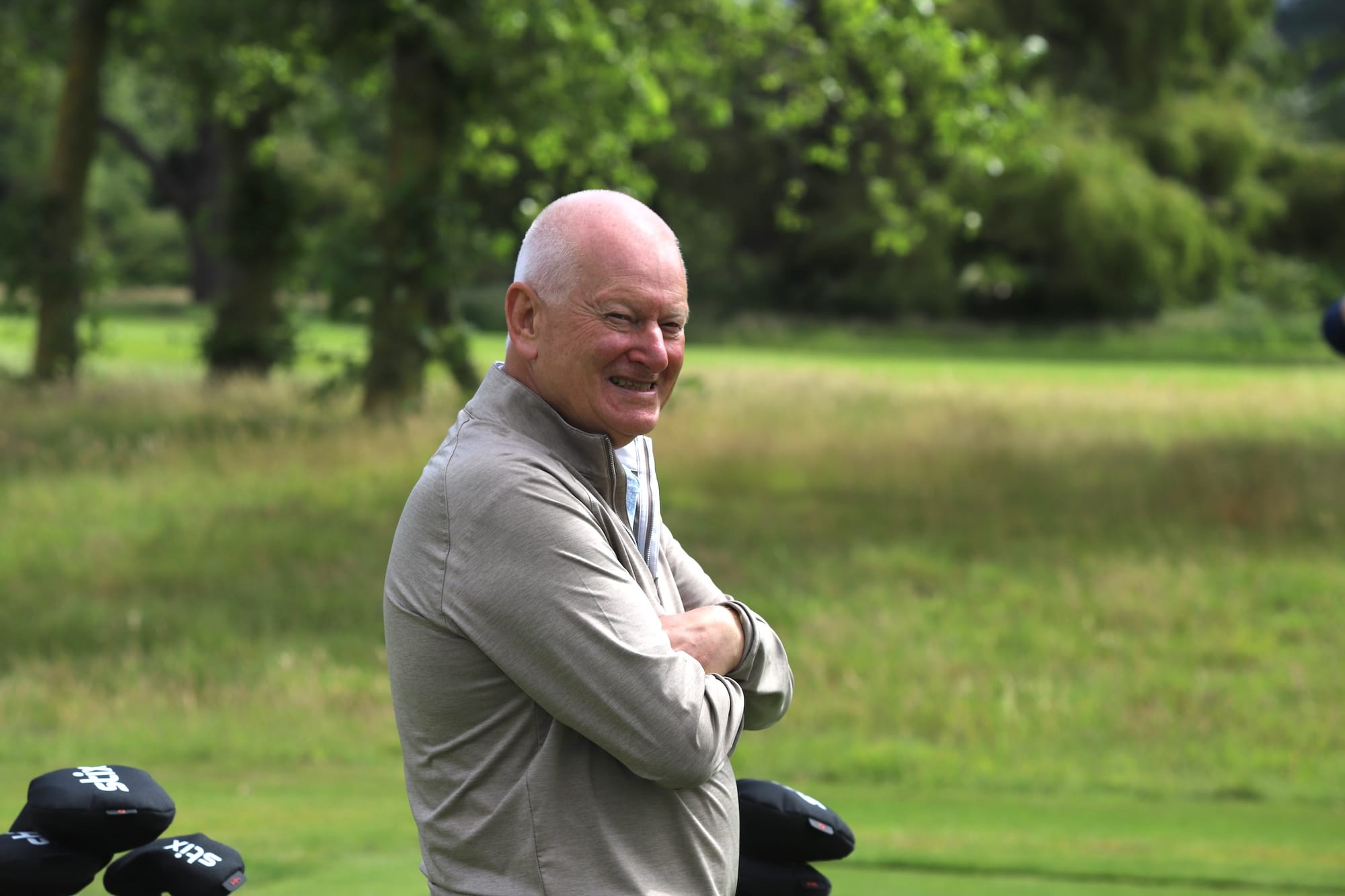
When the country club opens next year the site will employ more than 100 people, from hospitality roles to green keepers.
“We think about playing golf and what shot we can hit and what putt we can make, but we don't actually realise the long tail and that comes back to where the economic benefit is, not only is it jobs, but it's the suppliers and everything else that goes with it. So it's a mega economic boost, I think, to Guernsey.”
It was a project which meant taking a risk, like starting auy business.
“When I took this project on, I was under no illusions, it was going to be a long-term project, and there was going to be peaks and troughs. I didn't know what they were going to be. But then you meet those, and then you deal with them, and you move on to the next one.”
Once the county club is complete in September 2027, the lodges for accommodation will follow.
Improving Vistas, something he described as a fabulous little success story, is also on Landsdown’s mind.
Tee slots will be available to book on a “pay and play” basis from Saturday 1 August. At this stage no membership is required and green fees will be £200 a round.
Q&A
Q: When does the transformed La Grande Mare golf course open and what does it cost to play?
A: The course opens on 1 August 2026 with tee slots available on a 'pay and play' basis. Green fees will be £200 a round, and no membership is required at this stage.
Q: How has the course changed from its previous design?
A: The course remains at 18 holes but is now 600 yards longer at 5,367 yards total. It's more challenging with par 69 compared to the previous par 64. Many Saltcedar trees have been removed, there are fewer douits, and the landscape aesthetics are very different, though water remains a feature on every hole.
Q: What makes this golf course 'world-class' according to the architect?
A: According to Robin Hiseman, the golf course architect, it's the combination of thoughtful strategic design, quality physical construction including advanced drainage, wall-to-wall irrigation, 10 hectares of sand for optimal grass growth, and significant investment in the maintenance team. The infrastructure beneath the surface, though invisible to players, enables world-class presentation and playing conditions comparable to European Tour or Ryder Cup venues.

Comments ()