
Solar panels required on all new housing and commercial developments
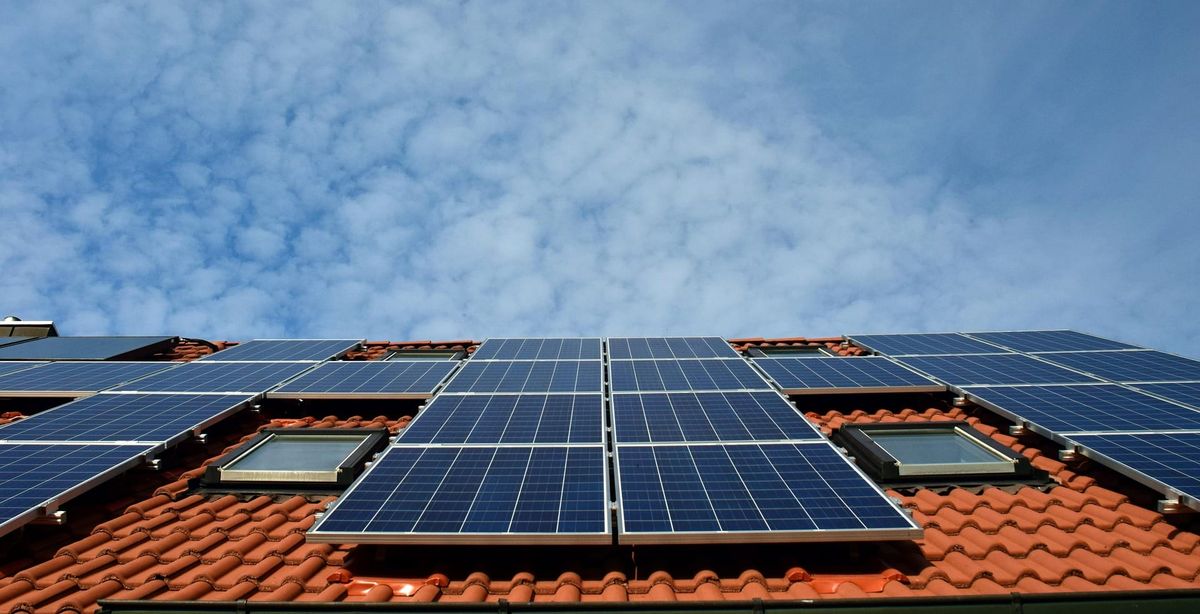
- Solar panels or alternative renewable energy technology now mandatory on all new housing and commercial developments in Guernsey
- Decision made by Development & Planning Authority following States-approved Electricity Strategy from 2023
- Alternatives include non-roof mounted solar products, air source heat pumps and battery storage
- Sites will be assessed case-by-case to ensure suitable renewable energy provision
- Measure aims to boost on-island electricity generation and support energy security targets
Solar panels, or alternative renewable energy technology, will now be mandatory on all new housing and commercial developments in Guernsey following a decision by the Development & Planning Authority (DPA).
The requirement comes after the States agreed Guernsey's Electricity Strategy in 2023 and directed the Committee for the Environment & Infrastructure, in consultation with the DPA, to explore ways to facilitate the installation of solar panel arrays to increase on-island electricity generation.
Policy GP9 within Guernsey's current Island Development Plan already encourages installing ways of harnessing renewable energy. From now, roof-mounted solar panels, or appropriate alternatives, will be required to meet this policy.
Measures such as non-roof mounted solar products, air source heat pumps and battery storage can be considered as alternatives to, or in addition to, roof-mounted solar panels. Sites will be assessed on a case-by-case basis to ensure suitable provision can be made.
Deputy Neil Inder, President of the DPA, said: "Making solar panels mandatory on new developments is good for our environment and is good for our energy security, all in line with the States-approved Electricity Strategy."
"It's good that some developers already do this as standard, but making it mandatory means that we're making the most of the opportunities that new developments pose. It's also cheaper to install these during the build rather than fitting them somewhere down the line."
Deputy Adrian Gabriel, President of the Committee for the Environment & Infrastructure, said: "In 2023, through the Electricity Strategy, the States made a clear long-term, strategic decision for Guernsey to pursue additional interconnection while also increasing the amount of energy generated locally through renewable sources.
"I welcome the DPA's supportive decision to make solar panels or alternative renewables mandatory on new developments. Making this the norm will undoubtedly help Guernsey in achieving its renewable energy targets."
Q&A
Q: What renewable energy technologies are acceptable under the new requirement?
A: Roof-mounted solar panels are the primary requirement, but alternatives include non-roof mounted solar products, air source heat pumps and battery storage. These can be considered as alternatives to, or in addition to, roof-mounted solar panels.
Q: When does this requirement come into effect?
A: The requirement is effective immediately from 12th May 2026, applying to all new housing and commercial developments going forward.
Q: Why has this policy been introduced?
A: The policy follows the States-approved Electricity Strategy from 2023, which directed authorities to explore ways to increase on-island electricity generation through renewable sources. It aims to improve environmental outcomes and energy security for Guernsey.



Comments ()