Les Fouaillages may be about to reveal another of its secrets - just how old it is
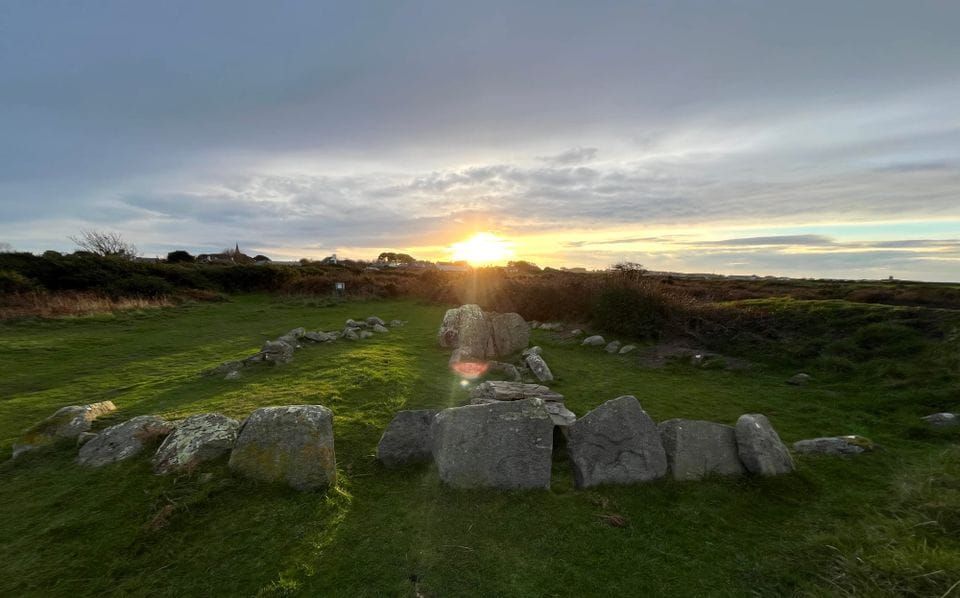
Les Fouaillages, a neolithic tomb discovered in 1976 after a gorse fire on L'Ancresse Common, may finally get an accurate date
The monument has been dated to approximately 4800BC, but charcoal samples from 1979-1981 excavations were not in secure contexts
A planning application proposes using optically stimulated luminescence dating to determine when minerals were last exposed to sunlight
The technique involves inserting a small tube into soil beneath the dolmen to extract a sample kept dark for laboratory processing
A small trench of about one metre will be excavated near the tomb's south-west end if planners agree, avoiding unexcavated deposits, then backfilled
Listen to this article
0:00
/0
Key terms
Neolithic
The Neolithic period, also known as the New Stone Age, refers to a prehistoric era from approximately 4000-2500 BC in northwest Europe when human societies began farming, domesticating animals, and building permanent structures including monumental tombs. This period saw the construction of dolmens and passage graves like Les Fouaillages.
Guernsey has an exceptionally rich concentration of Neolithic monuments including Les Fouaillages, dated to around 4800BC, making it one of the earliest monuments in Europe. These sites are key to understanding the islands' first permanent settlers and their burial practices.
Radiocarbon dating
Radiocarbon dating is a scientific method that determines the age of organic materials by measuring the decay of carbon-14 isotopes. It can date materials from approximately 500 to 50,000 years old, providing objective age estimates for archaeological specimens like charcoal, bone, or plant remains.
The article notes that charcoal samples from Les Fouaillages were previously dated using radiocarbon methods, but some samples were not from secure contexts, making those dates potentially unreliable. The new OSL dating technique is being proposed to provide more accurate chronological information for Guernsey's prehistoric monuments.
Optically stimulated luminescence dating
Optically stimulated luminescence dating is a scientific technique that determines when mineral grains like quartz or feldspar were last exposed to sunlight by measuring trapped energy released as light. Unlike radiocarbon dating which dates organic materials, OSL dates inorganic sediments and can span from a few years to hundreds of thousands of years.
OSL dating is being proposed for Les Fouaillages to overcome limitations of previous radiocarbon dating attempts. This method could provide more reliable dates for when the tomb was constructed by dating the soil beneath the dolmen, helping establish a firmer chronology for one of Guernsey's and Europe's oldest monuments.
In situ
In situ is a Latin term meaning 'in place' or 'in the original position.' In archaeology, it refers to artifacts, features, or deposits found in their original, undisturbed location, preserving crucial contextual information about spatial relationships and chronological sequence.
The planning document mentions that deposits were left in situ during the 1979-1981 excavations of Les Fouaillages, meaning some archaeological material was deliberately left in place. The new OSL sampling aims to use these undisturbed deposits while avoiding excavation of any unexcavated archaeological layers, preserving the site's integrity.
Secure contexts
In archaeology, a secure context refers to the stratigraphic relationship between an artifact or sample and the deposit or feature being dated, ensuring they are reliably associated. Material not from secure contexts may have been moved, contaminated, or otherwise disturbed, making age estimates potentially inaccurate.
The States Archaeologist notes that charcoal samples from Les Fouaillages were not all in secure contexts, meaning some may have been displaced or mixed with materials from different time periods. This is why new dating using a different technique is needed to establish a more reliable chronology for this important Guernsey monument.
Les Fouaillages is one of the oldest monuments to the dead, but there remains questions about just how old it is.
The neolithic tomb was discovered in 1976 after a gorse fire on L’Ancresse Common.
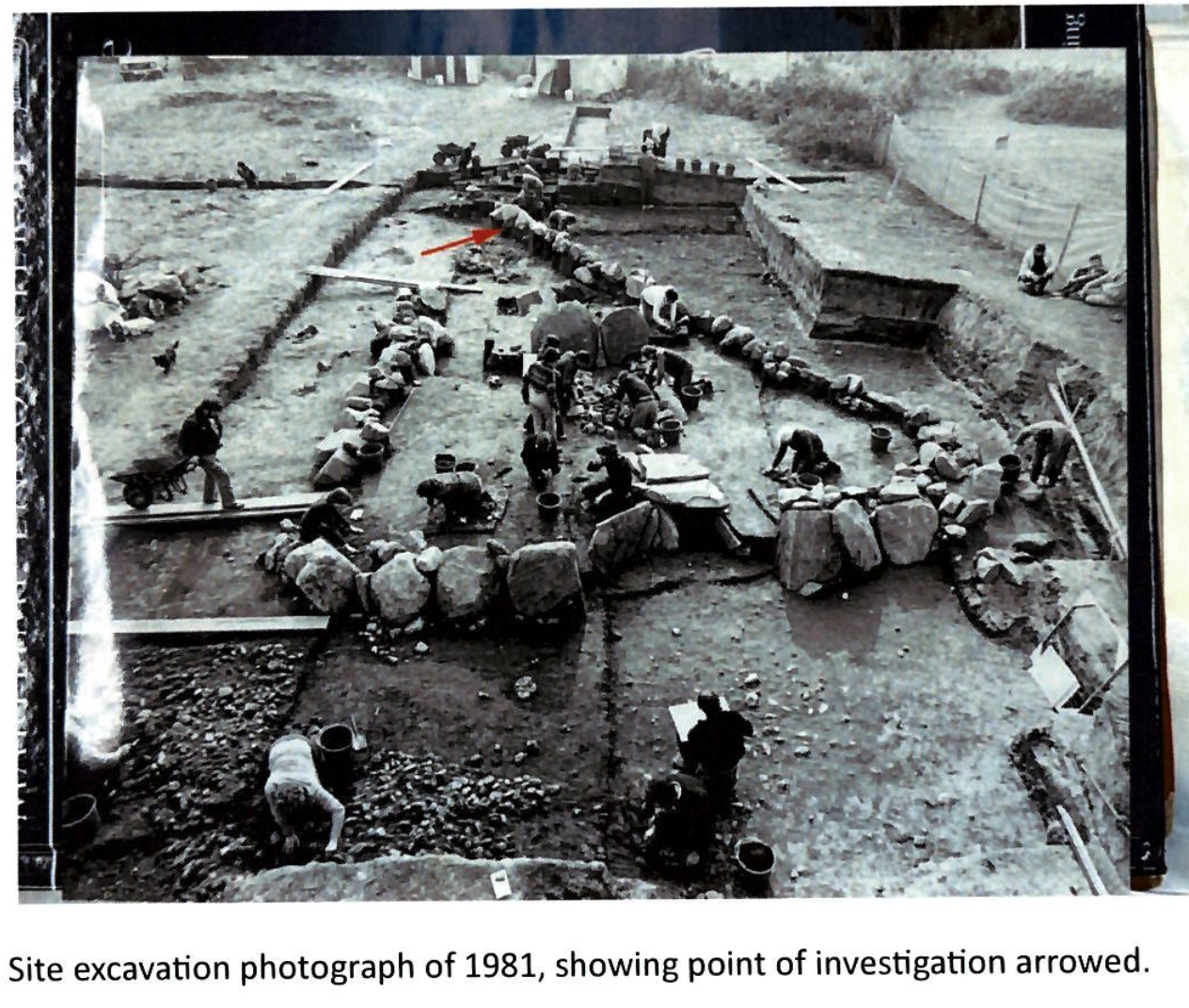
Archaeological excavations from 1979 to 1981 started to piece together some of its varied story, and while it has been dated to approximately 4800BC, that has, according to States Archeologist Phil de Jersey, always been problematic.
A planning application has now been submitted to take a small soil sample to help firm up the dating.
“Charcoal samples taken at the time of the excavation were not all in secure contexts, and thus the radiocarbon dates obtained may be inaccurate,” he said in a supporting document to the application.
“The proposal which is the subject of this application presents an opportunity to obtain further dates, via a different technique, with minimal disturbance of the deposits left in situ in 1981.”
Optically stimulated luminescence dating will be used, which determines when mineral grains, quartz or feldspar, were last exposed to sunlight.
It is proposed that a small tube will be inserted into soil beneath one section of the dolmen. A soil sample is taken within the tube and kept dark before being processed in a laboratory.
The sampling will be taken near the south-west end of the tomb.
To get to it, the proposal is for a small trench, about one metre by less than one metre, to be excavated immediately by the boulders.
Q: Why is the current dating of Les Fouaillages considered problematic? A: The charcoal samples taken during the 1979-1981 excavations were not all in secure contexts, meaning the radiocarbon dates obtained may be inaccurate. This has led to uncertainty about the tomb's true age.
Q: What dating technique will be used to get more accurate results? A: Optically stimulated luminescence dating will be used, which determines when mineral grains like quartz or feldspar were last exposed to sunlight. A soil sample will be taken in a tube kept dark and then processed in a laboratory.
Q: How was Les Fouaillages originally discovered? A: The neolithic tomb was discovered in 1976 after a gorse fire on L'Ancresse common in Guernsey. Archaeological excavations followed from 1979 to 1981 to piece together its history.

 Nick Mann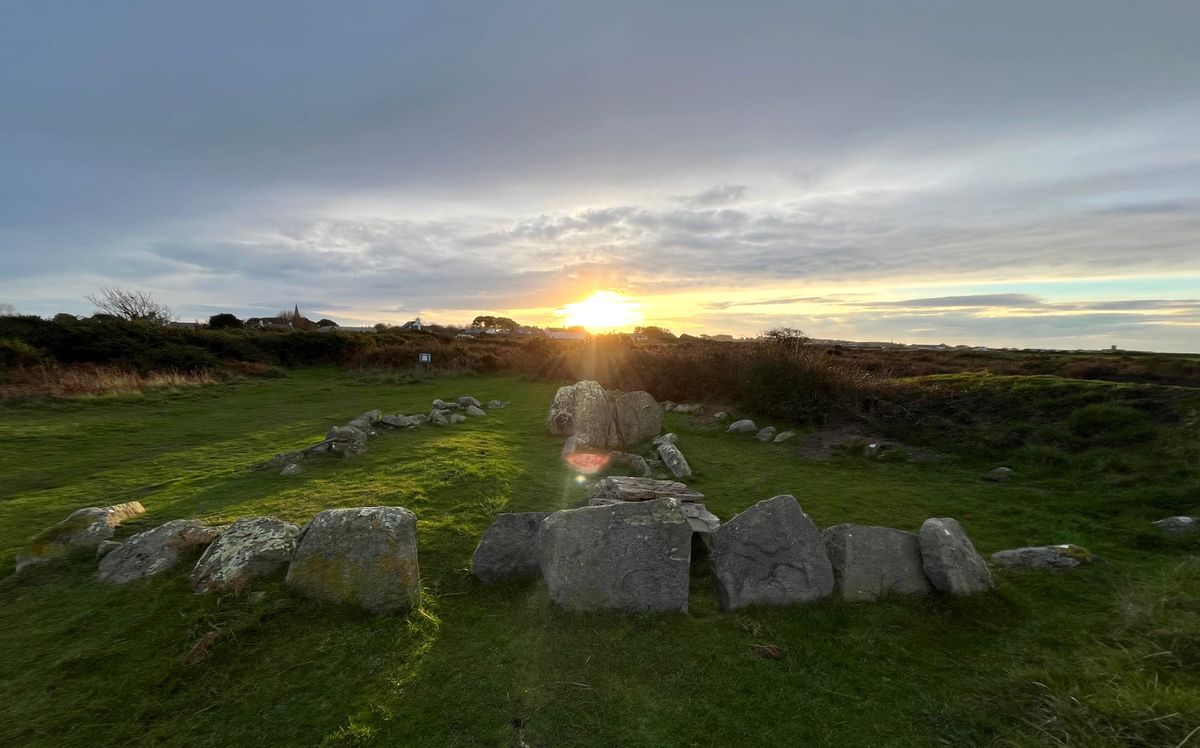
 The Quarry


Comments ()