
Hesitation is paralysis: insurance industry must evolve to build global resilience, experts warn
- Insurance must evolve into a forward-looking resilience strategy rather than a reactive payout mechanism to address emerging global risks, experts warn at London seminar
- Paratus chief executive Gus Majed cautions that geopolitical fragmentation since the 1970s has begun to unwind, creating systematic risk in energy markets
- Industry practitioners discuss using captive insurance structures to incubate emerging risks that might otherwise be considered uninsurable
- Growing affordability challenge highlighted in climate-exposed regions, particularly in Asia, where protection gaps are widening as risks escalate
- Guernsey's regulatory sandbox approach enables safe piloting of innovative insurance models, with jurisdiction hosting £280 billion in fund assets
Insurance must evolve from a reactive payout mechanism into a forward-looking resilience strategy to address emerging global risks, industry experts have warned at a major sustainable finance seminar in London.
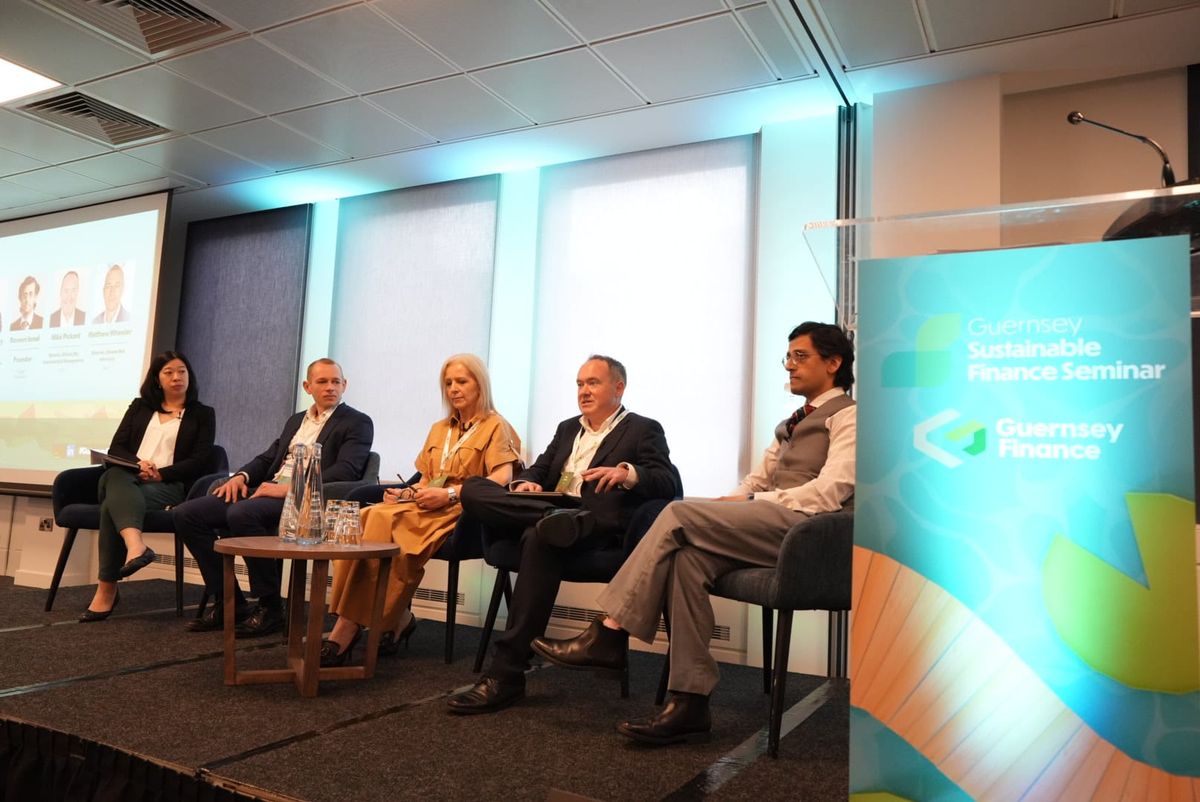
The event, Sustainable Finance in Action: Insurance, brought together specialists from the insurance, investment and sustainable finance sectors to examine how the industry is adapting to systemic changes driven by climate volatility, geopolitical fragmentation and economic uncertainty.
Hosted by Guernsey Finance, the seminar explored how traditional insurance mechanisms are being challenged by new forms of risk and the urgent need for innovative, financeable solutions that can mobilise capital whilst managing emerging exposures.
Gus Majed, chief executive and founder of Paratus, the world's first reinsurer underwriting energy price risk to support the transition to net zero, delivered the keynote address. He warned that the failure to adapt insurance structures would leave critical exposures unaddressed, stating that "hesitation is paralysis".
Drawing on Paratus' experience in structuring climate and disaster risk solutions, Majed highlighted fundamental shifts in global energy markets. "What we're seeing is a genuine change and breakdown of the order that has been governing the energy markets. I would say, geopolitical fragmentation since the 1970s - the institutional architecture itself has begun to unwind in real time, and that's starting to create systematic risk," he said.
Majed emphasised the need to reposition insurance as a tool for resilience rather than purely response. "Being able to price risk and create resilience is paramount, and to have insurance as less of a backward-looking protection, but rather, more than anything, enable [insurers] for growth and development," he said.
The subsequent panel discussion featured industry practitioners sharing practical examples of how traditional insurance techniques are being reapplied to new and emerging forms of risk.
Mike Pickard, director of global (re)insurance and ILS management at Aon, explained the approach. "We're connecting this to capital using existing techniques, using existing structures and solutions. We're just applying to different risks and trying to find solutions to the problems," he said.
One solution discussed was the use of captive insurance structures to incubate emerging risks that might otherwise be considered uninsurable or prohibitively expensive.
This approach allows models to be tested and insurance to be placed within established frameworks, providing a pathway for risks that fall outside traditional underwriting appetite.
Panellists highlighted the growing affordability challenge in regions most exposed to climate risk.
Matthew Wheeler, director of climate risk advisory, pointed to the widening protection gap in markets where risks are escalating fastest.
"As the risks increase, as they become more acute and concentrated in certain areas, we know, for example, in Asia, some of the risks are increasing significantly, and those are the countries who also can't support the financial protection that's needed.
"And so, I think it's working with government, figuring out the right mechanisms to make capital as affordable as possible," Wheeler said.
He added: "Maybe there is an argument to be made for if we all pool the risk together, and those who need it most can still get it at an affordable price, and we all pay a little bit more as a society in order to help those setting up those mechanisms in a profitable way."
The need to balance innovation with risk appetite was echoed by Raveem Ismail, founder of Trigger Parametric, who discussed the challenges of attracting capital when risk profiles are perceived as unstable.
"The trouble is that risk capital sometimes suspects that the domain isn't static, and when that's the case, we become very conservative… so we have to find creative ways which don't become pure volatility, but also include some of the infrastructure that are available to solve these problems," Ismail said.
The discussion underscored the importance of jurisdictions that provide regulatory flexibility to support innovation.
Caroline Bradley, co-director of authorisation and innovation at the Guernsey Financial Services Commission, highlighted how the regulator's sandbox approach enables new business models to be piloted safely.
"It might be limited in duration, it might be limited in scope, it might be limited in how much business you can write, for example, so that you can pilot something, knowing that… this is a way to give people comfort that actually things may go wrong in the sandbox. And that's the whole point of it, to work those things out," Bradley said.
Majed cited Guernsey's regulatory approach as a core reason for domiciling Paratus in the jurisdiction.
Throughout the seminar, Guernsey's role as an international centre for sustainable finance and innovative insurance solutions was reinforced, including its track record in humanitarian catastrophe bonds, reinsurance structures and ESG-aligned captives.
Stephanie Glover, director of strategy and sustainable finance at Guernsey Finance, emphasised the need for a fundamental shift in approach.
"For many years, much of the conversation around risk has understandably focused on response - how we respond to an event, how we absorb losses, how we recover from disruption once it has already happened.
"But if our approach to climate risk is primarily reactive, then we are always one step behind the problem," she said.
Sustainable Finance in Action: Insurance is the first of two sustainable finance seminars hosted by Guernsey Finance in 2026, with a second, funds-focused seminar scheduled for October.
Guernsey, located in the Channel Islands between the UK and France, is a Crown Dependency of the UK. The jurisdiction is home to approximately 150 licensed trust and company providers, with around £280 billion total net asset value of Guernsey funds. Guernsey-based funds currently channel £58 billion of investment from around the world into the UK economy, a figure that has increased by 14 per cent year on year since 2020.
Q&A
Q: What is Paratus and why is it significant?
A: Paratus is the world's first reinsurer underwriting energy price risk to support the transition to net zero. It was founded by Gus Majed and is domiciled in Guernsey, partly due to the jurisdiction's regulatory sandbox approach.
Q: What are captive insurance structures and how are they being used?
A: Captive insurance structures are being used to incubate emerging risks that might otherwise be considered uninsurable or prohibitively expensive. This approach allows models to be tested and insurance to be placed within established frameworks, providing a pathway for risks outside traditional underwriting appetite.
Q: What is the protection gap mentioned by Matthew Wheeler?
A: The protection gap refers to the widening affordability challenge in regions most exposed to climate risk, particularly in Asia. As risks increase and become more concentrated in certain areas, countries that need financial protection most are often unable to afford it, creating a gap between risk exposure and insurance coverage.

Comments ()