
Guernsey States accounts criticised for being inaccessible to public despite technical compliance
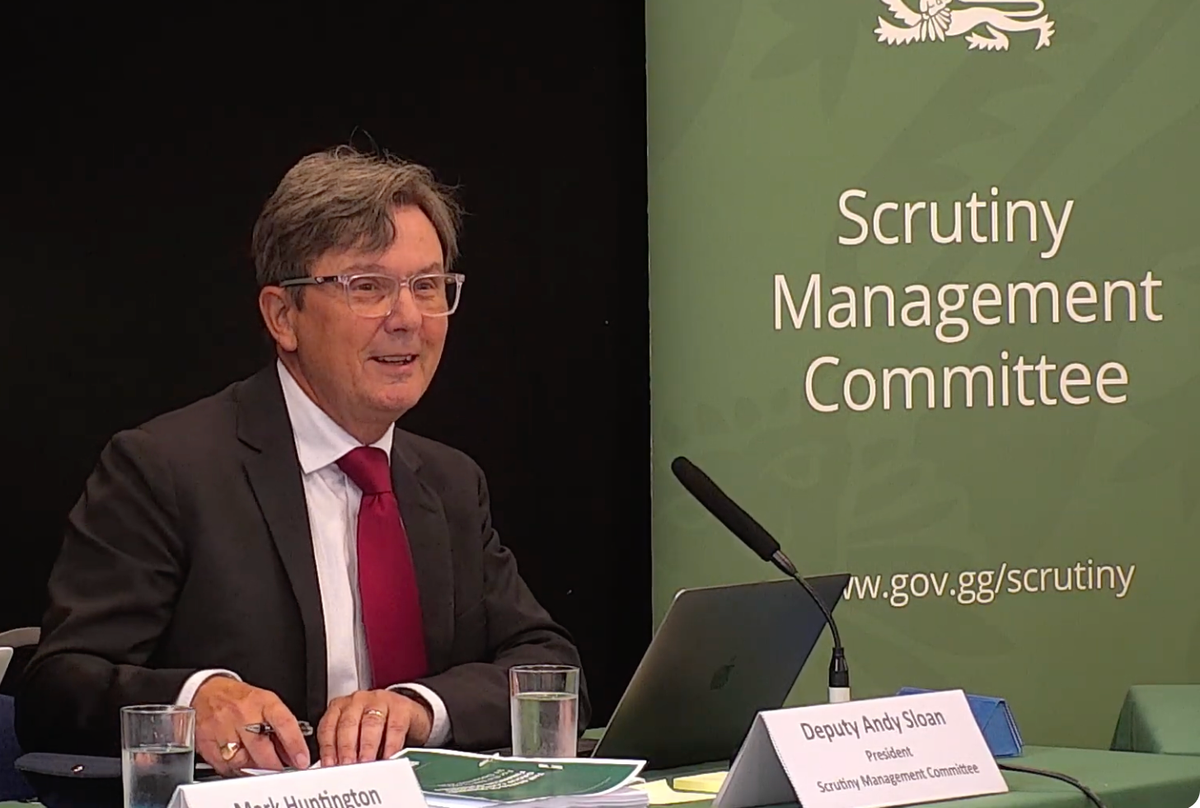
- Scrutiny Management Committee finds States 2025 accounts technically compliant but insufficiently accessible to Deputies and public
- Committee questions treatment of unrealised investment gains, which are included in £106 million surplus but excluded when discussing £50 million funding gap
- Absence of independent Audit Committee criticised as risk to public confidence in governance framework
- Members found it difficult to identify capital expenditure and reconcile operating surplus with structural funding gap warnings
- Committee recommends plain-English public-facing financial summary including 'Where Your Tax Goes' statement for future accounts
The Scrutiny Management Committee has raised significant concerns about whether the States of Guernsey's 2025 accounts are sufficiently accessible to Deputies and the public, despite acknowledging they meet international accounting standards.
In a letter of comment submitted to the Presiding Officer on 19 June 2026, the committee concluded that while the accounts are "technically robust and compliant", technical compliance alone is not sufficient to satisfy accountability expectations.
The Scrutiny Management Committee, through its Public Accounts Sub-Committee, held a public hearing on 11 June to examine the States Accounts 2025.
The hearing focused on whether the accounts fulfil their primary democratic purpose of enabling Deputies and the public to understand the financial position, performance and sustainability of the States of Guernsey.
The accounts report a group surplus of £106 million, yet also reference a core government surplus, an operating surplus and an estimated underlying funding gap of approximately £50 million. The committee noted that readers are directed towards multiple different measures, requiring extensive narrative interpretation.
"The Committee's principal concern is not whether the Accounts are technically correct, but whether they are sufficiently accessible and understandable to those for whom they are ultimately intended," the letter states.
The committee identified several key questions that an interested taxpayer would struggle to answer from the accounts, including whether government is living within its means, where tax revenues have been spent, how much of reported surpluses are attributable to operational performance as opposed to investment market movements, what level of reserves is genuinely available, and how major projects have affected the overall financial position.
A particular concern highlighted was the treatment of unrealised investment gains. Whilst their inclusion is required under International Public Sector Accounting Standards and provides a complete accounting picture, the committee noted these gains are subsequently excluded when discussing the States' longer-term structural financial position.
"During the hearing, unrealised gains were defended as a legitimate component of the reported surplus and an important indicator of the States' overall financial position. However, when explaining the existence of an underlying funding gap, those same gains were excluded on the basis that they do not represent recurring revenues available to support public services," the committee stated.
The committee considers this simultaneous use of different approaches illustrates the difficulty faced by readers attempting to determine the States' true underlying financial position, creating a risk that headline figures may mislead rather than inform without careful interpretation.
Governance arrangements also drew criticism. Evidence presented confirmed that the Policy & Resources Committee receives audit findings directly, engages with external auditors and approves the accounts. The Scrutiny Management Committee remains concerned that the absence of an independent Audit Committee risks weakening public confidence in the governance framework.
During the hearing, members of Policy & Resources indicated that additional oversight and scrutiny could be beneficial and that the issue merits further consideration.
The committee welcomed a positive response to its suggestion that the Public Accounts Sub-Committee should engage with external auditors annually as part of exercising its functions, considering this additional independent challenge an important component of good governance.
The relationship between capital expenditure and the reported funding gap also proved problematic. Members found it surprisingly difficult to identify the current year's capital expenditure from the accounts, noting that whilst the information is present, it is contained within detailed notes and is not immediately apparent to non-specialist readers.
Capital expenditure during 2025 was broadly consistent with the States' long-standing objective of investing approximately 2% of GDP in infrastructure. However, equivalent levels of capital investment are also cited as a significant contributor to the structural funding gap facing the States in future years.
"The Committee does not dispute that such a funding gap may exist. However, it found it difficult to reconcile the reported operating surplus, the achievement of the States' infrastructure investment objectives during 2025, and the assertion that equivalent levels of capital investment are a principal contributor to the structural funding gap going forward," the letter states.
Transparency around major projects, internal controls and expenditure growth was also explored. Members found it difficult in some instances to identify clearly within the accounts the full financial implications of significant programmes, including major digital transformation initiatives.
The committee expressed concern about the extent to which expenditure growth appeared to be presented as an inevitable consequence of demographic pressures, service demand and increasing organisational complexity, characterised as "demand-driven" and largely outside the control of policy makers.
"The Committee considers that expenditure growth remains a matter of political choice, prioritisation and management," the letter states, noting the accounts provide limited insight into how expenditure growth is being challenged, what productivity improvements have been achieved, or how additional expenditure is being linked to demonstrable improvements in outcomes.
The committee has recommended that a concise, plain-English, accompanying public-facing financial summary be developed and published alongside future accounts. Such a document need not replace the statutory accounts, but could provide clearer explanation of the underlying operating position of government, the relationship between reported surpluses and the structural funding gap, how tax revenues are spent, the position of reserves and liquidity, and major project expenditure and commitments.
"The Committee believes that a concise 'Where Your Tax Goes' statement and a simplified explanation of the States' financial position would significantly enhance public accountability whilst preserving full IPSAS compliance," the letter states.
This suggestion was discussed during the hearing and received a broadly positive response.
The committee acknowledged the significant work undertaken by officers and the Policy & Resources Committee in producing the accounts and noted they have received an unqualified audit opinion. The hearing also confirmed that the adoption of IPSAS has improved the quality, consistency and transparency of financial reporting compared with historical arrangements.
In its conclusion, the committee stated that explanations of the States' financial position during the hearing repeatedly required reference to adjusted measures, exclusions, alternative presentations and separate policy documents.
"The challenge for future years is not to produce more information, but to present existing information more clearly so that the States' true financial position and financial sustainability can be readily understood. Public accountability depends not only on the accuracy of financial reporting, but on its clarity and accessibility," the letter concludes.
The letter was signed by Deputy Andy Sloan, President of the Scrutiny Management Committee.
Q&A
Q: What was the main finding of the Scrutiny Management Committee's review of the 2025 States accounts?
A: The committee found that whilst the accounts are technically robust and compliant with international standards, they are not sufficiently accessible and understandable to Deputies and the public, failing to satisfy broader accountability expectations.
Q: What concerns were raised about unrealised investment gains in the accounts?
A: The committee noted that unrealised gains are included when reporting the £106 million surplus as a legitimate indicator of financial position, but are excluded when discussing the underlying funding gap on the basis they don't represent recurring revenues, creating confusion about the true financial position.
Q: What solution has the committee recommended?
A: The committee has recommended developing a concise, plain-English public-facing financial summary to accompany future accounts, including a 'Where Your Tax Goes' statement that would explain the underlying operating position, the relationship between surpluses and funding gaps, and major project expenditure whilst preserving full compliance with accounting standards.


Comments ()