
Disconnecting the Fort George sea outfall was not going to happen for at least a decade, then it broke and posed a £2m. question
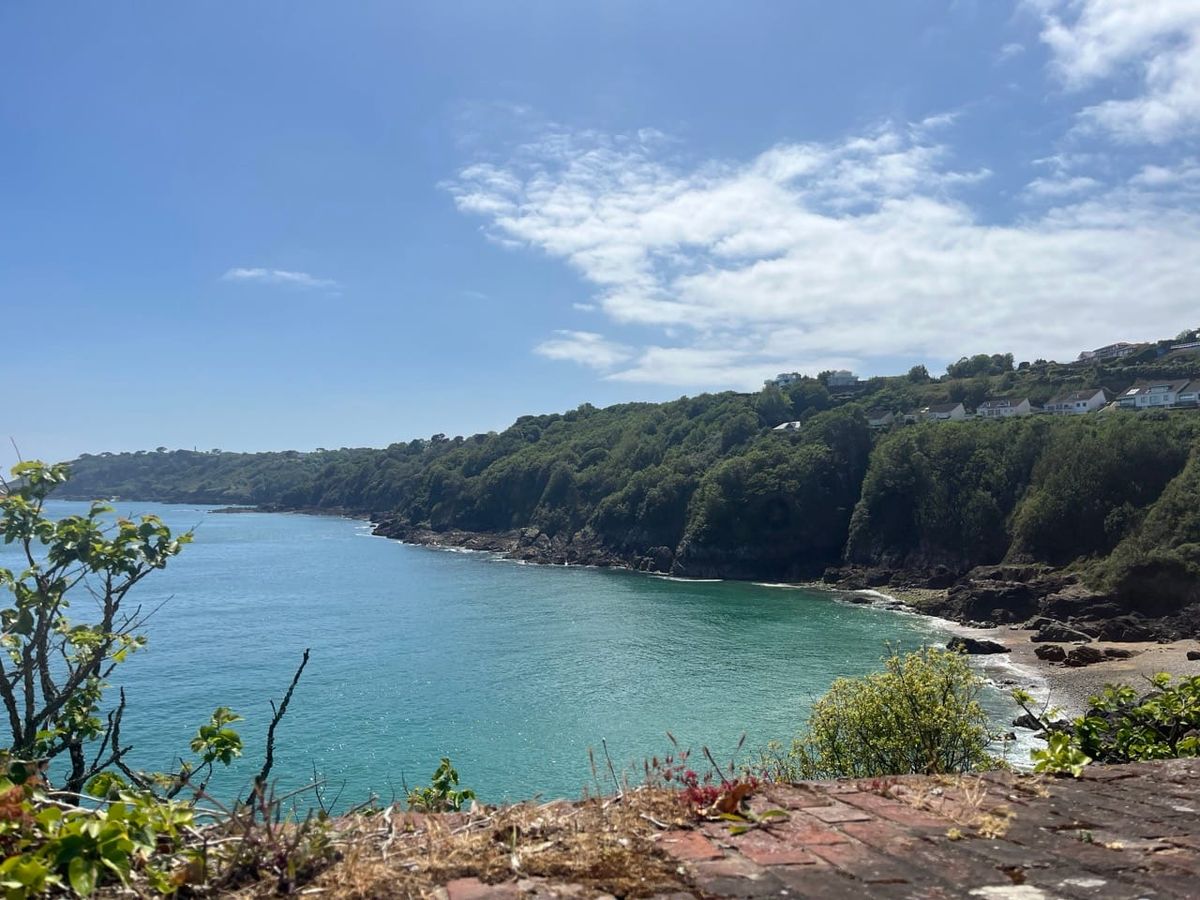
- A broken inspection chamber at Guernsey's 60-year-old Fort George sea outfall is leaking wastewater just 30 metres from the cliff
- Connecting Fort George to the main drain, estimated at £1.5m in 2021 with £200k annual running costs, was deferred and then excluded from last year's £130m 12-year investment plan
- Guernsey Water is now reconsidering
- Despite the break, nearby Fermain and Havelet beaches maintain 'Excellent' bathing water quality ratings
- Previous modelling suggested extending the outfall to 310m would improve Soldiers Bay from 'Poor' to 'Excellent' classification
Only last year, Guernsey Water unveiled a £130m. investment plan that stretched over 12 years.
It was comprehensive, heralded some price rises to help fund it, and put on ice any further plans to connect more properties to the main drain because of the costs.
But this plan will now need to be reviewed in light of what has happened at the near 60-year-old Fort George sea outfall, where an inspection chamber has broken leaving wastewater escaping from it 30 metres from the cliff.
To put that in some perspective, in 2017 a study considered extending the pipe to improve bacterial water quality at Soldiers Bay and suggested it would hit
Excellent under EU bathing water standards if it was 310m long.
That report came more than a year after delivery of a decade-long Wastewater Centre project when £35m. was spent on pumping stations, storage, screening and replacing the long and short sea Belle Greve outfalls which were 45 and a 100 years old respectively.
A screen has since been installed at Fort George too before wastewater enters the outfall.
Soldiers Bay is not a bathing beach and is officially closed because of the dangers of rockfalls from the cliffs.
Swimmers still use the area, getting there from Fermain or Havelet.
Monitoring over the last four years has seen Fermain and Havelet classified as Excellent under the EU Bathing Water Quality Directive 2006, including in sampling taken on 19 May when the pipe had already been broken.
This directive tests for two bacteria indicative of pollution from sewage and manure: Escherichia coli (E. coli) and Intestinal enterococci.
Samples are not routinely taken at Soldiers Bay. Modelling has concluded it would usually be classified Poor - so not meet minimum standards and bathing there would be advised against.
Guernsey follows this EU guidance.
Not a quick fix
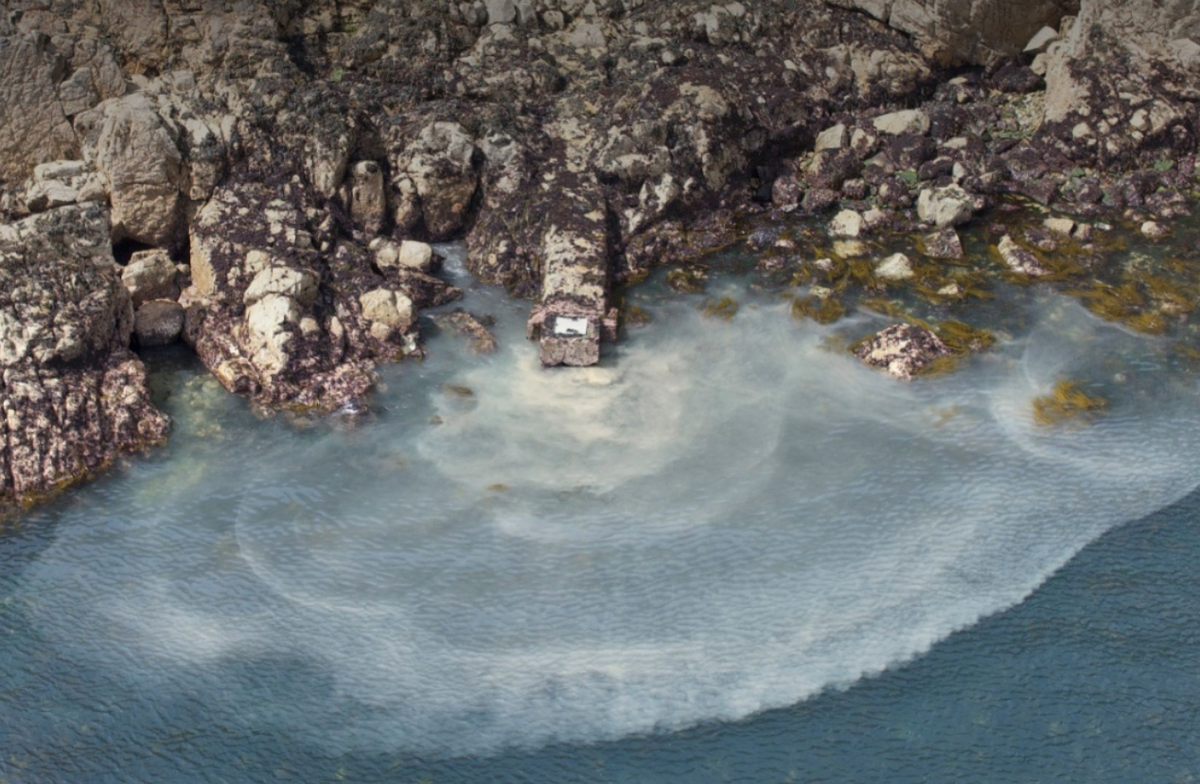
The problems at the Fort George outfall were discovered when the BBC shared a drone photo with Guernsey Water.
That sparked an investigation using an aerial and underwater drone, CCTV sewer robot and specialist dye which indicated a fault in the inspection chamber partway along the outfall.
This chamber is only accessible at very low tide.
On Monday 18 May, teams from Guernsey Water could go and look directly, which confirmed the pipe was not blocked and the damage was at the inspection chamber.
Divers from Guernsey Harbours have now been asked to remove seaweed that covers the pipe below the low water line so it too can be inspected.
Guernsey Water has said it is “unlikely to be a quick repair”.
What modelling has said about the outfall's impact
In the past, Guernsey Water has commissioned reports to understand the wider impact of the Fort George outfall and how it disperses.
In 2014, Intertek produced a modelling report on bathing water quality under different scenarios - what was then the current regime of untreated effluent from 75 properties, what it would be from 20 properties and if the outfall also took discharge from storm spills in the catchment.
“Analysis shows that the current discharge from Fort George shows no significant impact on any surrounding bathing water,” that report said.
Under all the scenarios the largest impact was at Fermain Bay and all would still meet the Excellent standard of the Bathing Water Directive, it concluded.
On 9 October 2015 a report based on chemical dispersion modelling was produced.
It concluded that discharges from Fort George outfall were not predicted to cause breach of any of the UK Environment Agency’s Environmental Quality Standards or the aesthetic standard for fat, oil and grease.
In April 2017, the company produced analysis of what would happen to bacterial water quality at Soldiers bay if the outfall was extended.
“Recent study by Intertek suggested that more than 80% of the total impact at Soldier’s Bay is caused by the Fort George outfall, located 200m from the beach,” its introduction said.
Its modelling predicted the water quality would be classified as Poor under the bathing water directive with the current outfall.
An Excellent standard was predicted if the outfall stretched 310m from the coast instead.
Main drain connection stalled and then dropped on cost grounds
What is the future?
Is connecting Fort George to the main drain the answer?
Or an expensive solution to protect water quality in a bay that is not officially recognised for bathing.
Guernsey Water Managing Director Steve Langlois said that the remaining lifespan of the outfall will depend on the success of the remediation works being planned, along with maintenance.
“Connecting the area to the main drain was last discussed in depth in 2021, when estimated costs put the project at £1.5 million, with £200,000 a year running costs,” he said.
“As these estimates are now five years old, they would have increased substantially. At the time, the Guernsey Water board had agreed to prioritise the scheme, but it was deferred in the subsequent two budgets. Any works are funded by all bill payers.”
If the project cost has risen in line with Guernsey inflation, it would now stand at close to £2m.
“Last year we unveiled our 12-year, £130 million strategic investment plan, centred around managing water supply risks.
“Connecting Fort George to the main drain was not prioritised for inclusion in the plan due to resourcing and customer affordability constraints.
“However, the plan is reviewed on an annual basis and we will consider again whether it should be included.”
Q&A
Q: How was the Fort George outfall break discovered?
A: The BBC shared a drone photo with Guernsey Water, which sparked an investigation using aerial and underwater drones, a CCTV sewer robot, and specialist dye. This revealed a fault in the inspection chamber partway along the outfall, which was confirmed by direct inspection on May 18.
Q: What would it cost to connect Fort George to the main drain?
A: The project was estimated at £1.5 million in 2021, with £200,000 annual running costs. Accounting for five years of Guernsey inflation, the cost would now be close to £2 million, funded by all bill payers.
Q: Does the Fort George outfall affect bathing water quality at nearby beaches?
A: According to 2014 modelling, the current discharge shows no significant impact on surrounding bathing waters. Fermain and Havelet beaches maintain 'Excellent' EU ratings. Soldiers Bay, which is officially closed, would be classified as 'Poor' under current conditions but could reach 'Excellent' if the outfall was extended to 310 metres.

Comments ()