
Islanders asked to 'track don't trample' Asian hornets
- Record 205 queen Asian hornets trapped across Guernsey and Herm during spring season, with nine primary nests destroyed
- Public urged to photograph, track and report hornets via email or WhatsApp rather than disturbing them
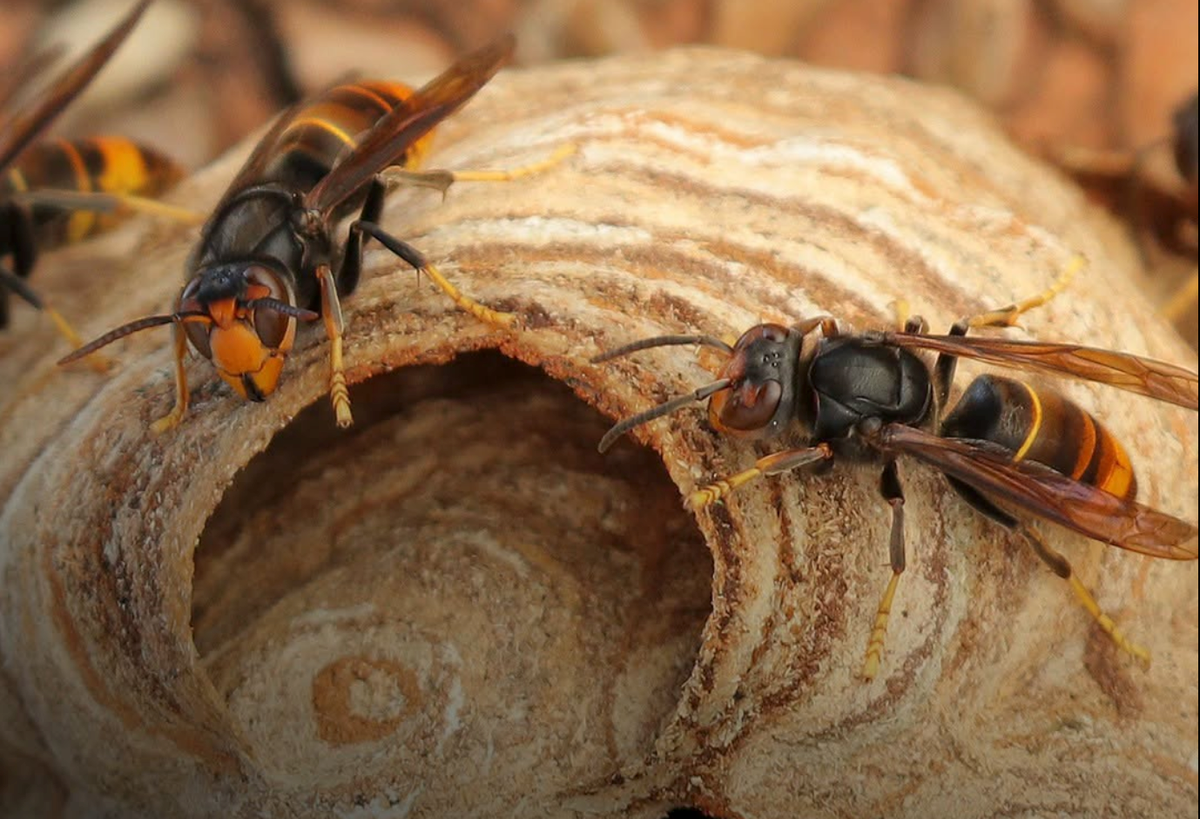
- Nests containing thousands of hornets can be found in trees, hedges, brambles and man-made structures
- Hundreds of volunteers checked traps daily throughout two-month spring trapping period
- Information from public sightings helps authorities track worker hornets back to nests for safe removal
People are being urged to help prevent the spread of Asian hornets by tracking and reporting sightings rather than disturbing the invasive species, as authorities work to protect pollinators and the island's biodiversity.
The "Track Don't Trample" campaign comes after a record-breaking spring trapping season, during which 205 queen Asian hornets were caught and nine primary nests destroyed across Guernsey and Herm — more than any previous year.
Despite this success, queen Asian hornets will have already begun constructing their large main nests, which can contain thousands of hornets. Authorities are now asking islanders to remain vigilant and report any sightings immediately.
Anyone who spots an Asian hornet should take a photograph if possible, note the direction the hornet travels in, and send this information to [email protected] or call or WhatsApp 07839 197082. This data enables tracking teams to follow worker hornets back to their nests.
Nests can be located in a variety of places, from tall trees to hedges and brambles, as well as man-made structures including stone walls, barns and attics. Gardeners and contractors are advised to check carefully for signs of activity before cutting back hedges or vegetation.
The spring trapping programme relied on hundreds of volunteers who checked traps daily throughout the two-month period, capturing queen hornets as they emerged from hibernation or arrived from France and possibly other islands. The volunteers were also responsible for releasing any beneficial insects that accidentally entered the traps.
Annelotte Baas-Jehan, Invasive Non-Native Species Policy & Coordination Officer, said: "It is amazing to see the success of our trapping volunteers. Their work is incredibly important and without them we would not have achieved the success of capturing more than 200 queen hornets this spring. We're also grateful for the wider public who report potential Asian hornets or suspected nests to us."
"If you see what you think might be an Asian hornet, please send us a photo via WhatsApp or email. Note the location and the direction of travel. Providing an address or what3words location is also extremely helpful."
"With this information we can track hornets back to their nests and ensure that those nests are being treated and removed safely and efficiently."
The Asian hornet is a non-native invasive species that poses a threat to honeybees and other pollinators, as well as public health and local biodiversity. The coordinated island-wide response aims to control the population before the main nesting season reaches its peak.
Q&A
Q: What should I do if I see an Asian hornet?
A: Take a photograph if possible, note the direction it travels in, and send this information to [email protected] or call or WhatsApp 07839 197082. Include the location, ideally with an address or what3words location.
Q: How successful was this year's spring trapping programme?
A: It was the most successful year on record, with 205 queen Asian hornets caught and nine primary nests destroyed across Guernsey and Herm during the spring queening phase.
Q: Where might Asian hornet nests be located?
A: Nests can be found in tall trees, hedges, brambles, or man-made structures such as stone walls, barns and attics. Gardeners and contractors should check carefully for signs of activity before cutting back vegetation.

Comments ()