
Dig This: Frances Hesselbein - a quiet revolutionary whose leadership is still changing our world
“For me, ‘leadership is a matter of how to be, not how to do.’ A great leader does not preach about their values; they live them. In the end, it is the quality and character of a leader that determines their performance and results. It is all about ethics, collaboration and transformation.” Frances Hesselbein, speaking to Forbes in 2022.
When Frances Hesselbein was asked to become a troop leader of a Girl Scouts Troop in Johnstown Pennsylvania she initially said no.
It was the early 1960s in a small mountainous coal mining town, she had a young son and said she didn’t know anything about little girls.
But she was persuaded and it led to a remarkable and influential journey in developing and living leadership principles that are as relevant now as they have ever been.
She went on to be CEO of the Girl Scouts of the USA, won the Presidential Medal of Freedom, and was described by Peter Druckler, who's widely regarded as the father of modern management, as the greatest leader he had ever met.
Frances died in 2022 aged 107.
Now her story has come to Guernsey with a screening of a documentary which aims to preserve and spread her influence, Defining Moments.
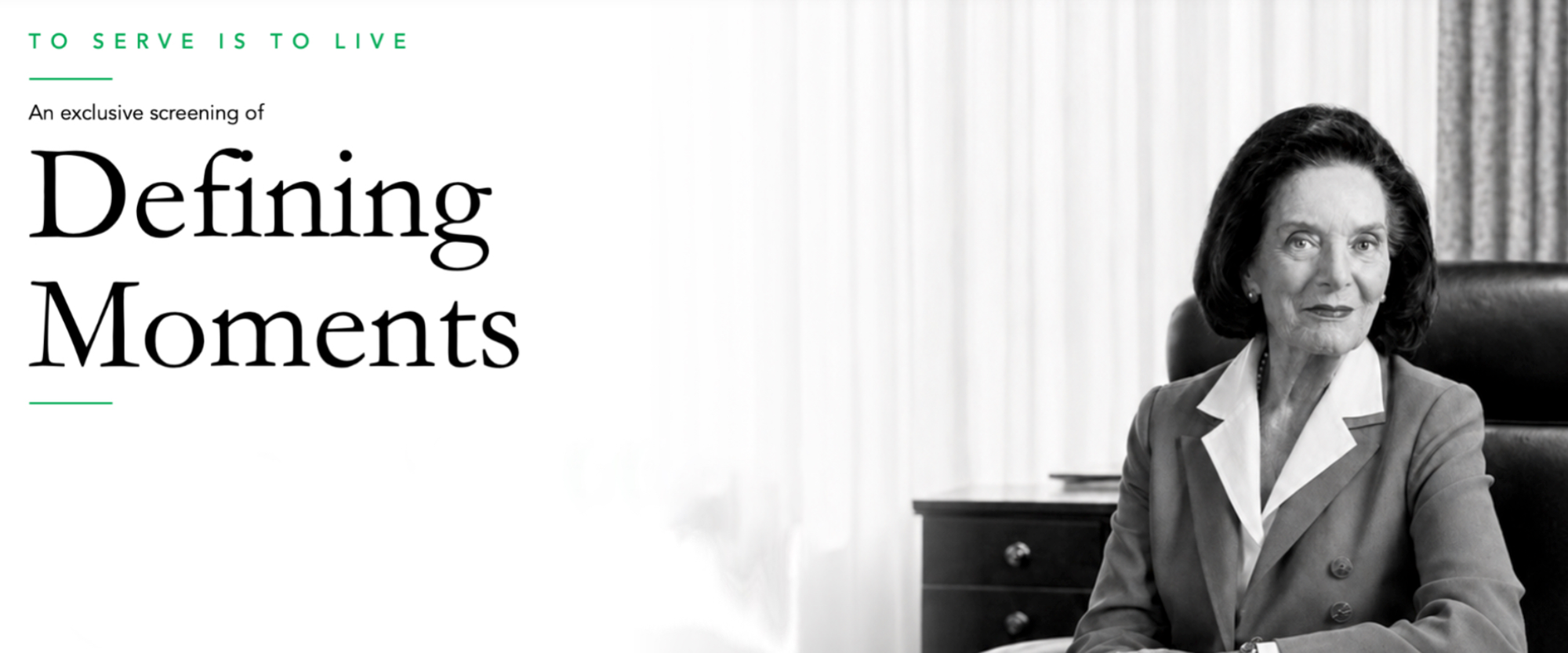
Executive producer Sarah McArthur spent three decades getting to know Frances and said that spending time with her was fun, but at the same time a wonderful learning experience.
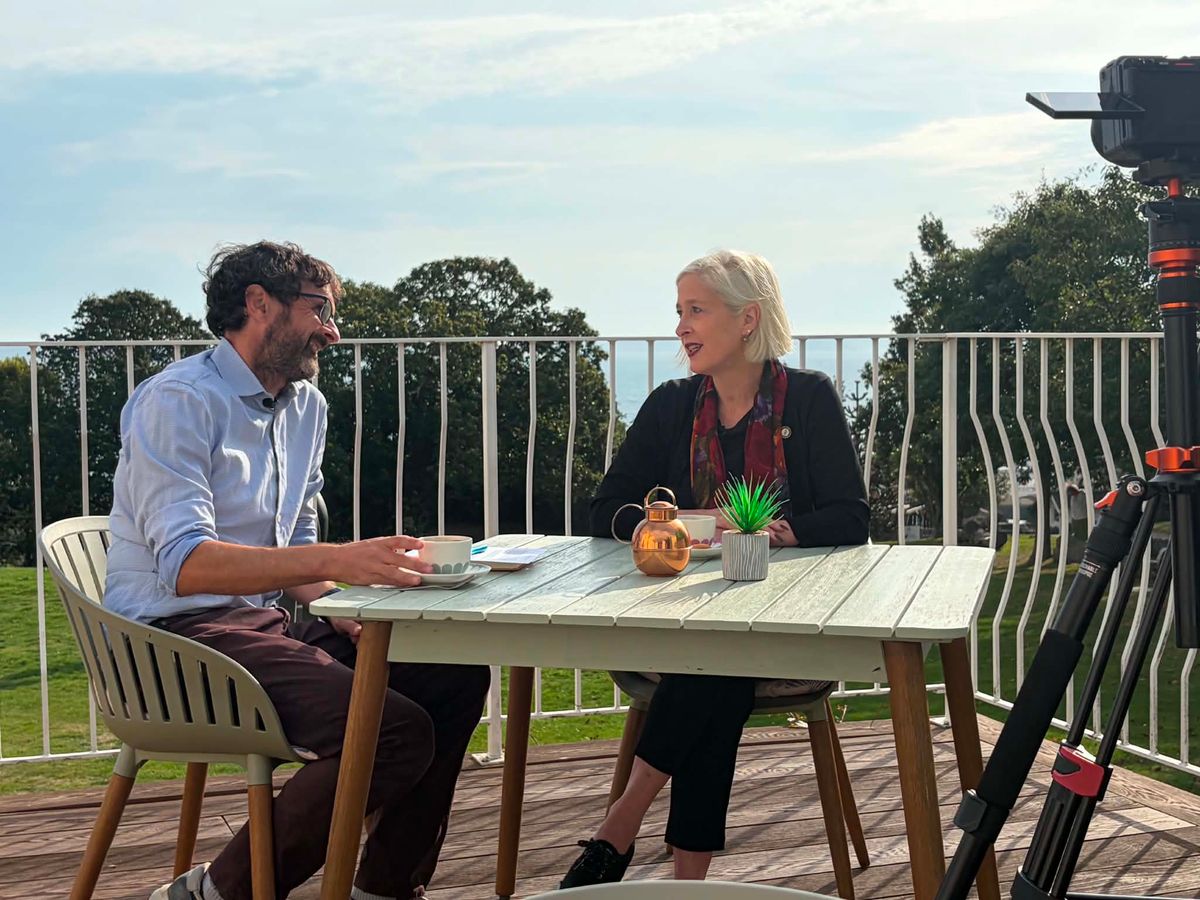
“What's so remarkable about Frances's leadership is that she included everyone,” said Sarah, speaking on the latest episode of Dig This, a podcast by The Quarry.
“Under her leadership [1979-1990], the Girl Scouts became a very inclusive organisation, tripling minority membership. Frances was leading a staff of 780,000 volunteers. That's people who do not have to be there, and she led the rise in total membership of Girl Scouts to 2.25 million girls. So under Francis's leadership, the organisation grew immensely in a very positive, including all people, all girls, way.”
When she became a troop leader, there was segregation.
“She thought that was just silly. The first thing she did as a troop leader was to have included as her partner in the leadership an African American woman, the first there, and so wherever she was, no matter what she was involved in, she wanted to include everyone.”
Frances would not have thought about the role in terms of ease or difficulty.
“Frances taught us and showed us that if a door is shut, you find the next door that's open, and you go through the open door. So she was like the flowing of waters.
“She also said, [quoting] Ralph Waldo Emerson, ‘be ye an opener of doors’, and then she would add on to it ‘and bring someone with you’. So Frances was always bringing someone with her to go through that door, and then creating through that door, positive character-based organisations.”
Frances would talk about having invisible tattoos.
One was “ask, don’t tell”, a term coined by Peter Drucker.
Another was “respect for all people”.
Another, “to serve is to live”.
“I would follow her around, write these down, and they would change. “She had these ways of phrasing her leadership philosophy. When she was CEO of the Girl Scouts, she was there and she led the organization to serve the girls. She wasn't there to serve something else or herself. She was there, and everybody under her leadership was there to serve the girls, and that was Frances, a life of service.”
In the 1990s she left the Girl Scouts and thought she was going to retire back in Pennsylvania,
“Within a couple of weeks, Peter Drucker said, ‘Let's start a foundation to help the social sector in leadership’. He really believed that it's the social sector that will save society because the social sector organisations have this mission to serve all of us. And so she did that with Peter Drucker and a couple of other people for the rest of her life.”
Initially called the Peter F. Drucker Foundation for Nonprofit Management, it eventually became the Frances Hesselbein Leadership Institute after he asked her to use that name.
“He wanted Frances to be seen and remembered for her great leadership, he thought she was the greatest leader he had ever met.
“And through the institute, she consulted with the military in the United States because her outlook on leadership, service-oriented, was very similar to the military in the United States. She advised military educators, universities, private corporations, corporate America. Who she was and what she was teaching, permeated.
“Most people haven't heard of Frances. The subtitle of the film is ‘the life and leadership of a quiet revolutionary.’ That leadership was about including everyone, not top-down, command and control, but creating value and growth for all.
“Francis is one of the very first people in the industrial era who led this way and who was so respected by so many people and changed so much for all of us in going in that direction.”
Some people have asked whether Frances was ahead of her time.
Sarah frames it differently.
“These are always principles. Character, service, creating value for all, these are always things that are important. Sometimes people haven't heard them or haven't seen the example of what can happen when we have this, so that's why it's important to me that I continue and we continue to share this as broadly as possible.”
Sarah is a writer and a publisher.
She moved to Easton Pennsylvania to be closer to Frances and having recorded conversations with her, thought about writing a book.
But then the idea of a documentary took hold.
A friend met someone who was part of a production team and suggested she could help.
Talks with Beverly Jacobson-Schler, a producer, and her director husband David followed.
They met six months later in Nashville and interviewed people that had know Frances.
The trailer that followed brought Sarah to tears.
“That's it. They understand. They have got it, and even now I get chills thinking about everything. It just worked out so well. This beautiful trailer, and so I said, ‘great, let's go. We're in. Let's keep it going’.
“And so we did. And then about a year and a half later, we had done all these fun interviews. I loved the interviews because I got to hear all these stories of Frances.
"My vision for the film is that it is about who Frances was, how she led, the impact that she has had on all of us. And the impact that we in turn have on others.
“So we interviewed people like Alan Mulally, the former CEO of Boeing and Ford, who was so influenced by Frances and her leadership, and he's a great leader himself. Marshall Goldsmith, renowned executive coach, dear friend of Frances, so impacted by her and doing so much in the world through coaching and writing and speaking. Sally Helgesen, premier thought leader on women in leadership. Even the person who took Frances around every day, her driver, what did he think? So it was an incredible experience.”
It is a story that has engaged audiences around the world and now it is here.
Tickets are still available for the documentary screening at The Princess Royal Centre for the Performing Arts on Wednesday [30 September] night.
The evening will also include an introduction from Sarah, a guest appearance via live video link from Marshall Goldsmith, one of the world’s leading executive coaches, and an audience Q&A.
Q&A
Q: Who was Frances Hesselbein and why was she significant?
A: Frances Hesselbein was CEO of the Girl Scouts of the USA and a Presidential Medal of Freedom recipient. Peter Drucker, considered the father of modern management, described her as the greatest leader he had ever met. She pioneered inclusive, service-oriented leadership principles that transformed the Girl Scouts and influenced leaders across military, corporate, and nonprofit sectors.
Q: What were Frances Hesselbein's 'invisible tattoos' and what did they mean?
A: Hesselbein's 'invisible tattoos' were core leadership principles she lived by, including 'ask, don't tell' (coined by Peter Drucker), 'respect for all people,' and 'to serve is to live.' These phrases encapsulated her leadership philosophy that emphasized collaboration, inclusion, and service over command-and-control management styles.
Q: What impact did Frances Hesselbein have on the Girl Scouts organization?
A: Under Hesselbein's leadership, the Girl Scouts became highly inclusive, tripling minority membership and growing total membership to 2.25 million girls. She led 780,000 volunteers and was the first to include an African American woman as a partner in leadership in her Pennsylvania troop, breaking down segregation barriers in the early 1960s.
Comments ()