
What Guernsey voters really wanted to know: inside BallotBot conversations
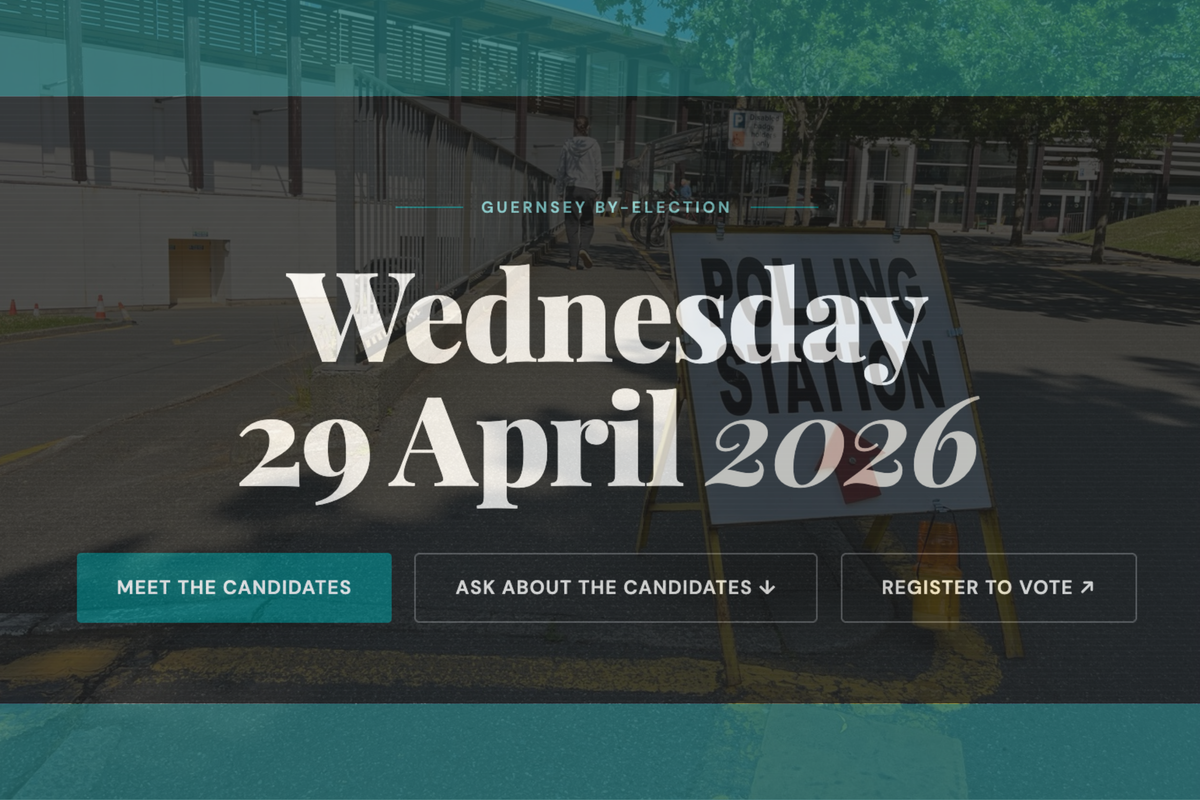
- BallotBot, our AI candidate guide for Guernsey's by-election, handled 685 anonymous conversations with voters since launching in late March
- Assisted dying was a consistently queried topic, though it barely featured in candidates' manifestos or public debates
- Users frequently tested the bot's impartiality by asking it to rank candidates or judge their character, which it consistently declined to do
- Query patterns suggest genuine research behavior, with activity surging in final days before polling as voters made late decisions
- Voting takes place between 8am and 8pm on Wednesday 29 April
On the eve of tomorrow's by-election, the questions islanders asked our AI candidate guide reveal a gap between the campaign's public debate and voters' private concerns.
Since our dedicated site election2026.gg launched in late March, BallotBot has handled 685 conversations with Guernsey residents researching the candidates.
The queries, ranging from policy comparisons to some pointed attempts to get the bot to make editorial judgments, paint a picture of what voters wanted to know, and what the campaign failed to give them in the sources we have used.
BallotBot’s knowledge base was built from the candidate’s manifestos, both for this election and past ones, what they said on the Guernsey Press election podcasts and on the BBC Guernsey by-election debates.
All conversations with BallotBot were anonymous, no personal data was collected and queries cannot be linked to individual users.
The questions no candidate fully answered
The single most striking pattern in the data is the volume of queries about issues that barely featured in candidates' published manifestos.
Assisted dying was asked about repeatedly, by different users across multiple days, making it one of the most consistently queried policy topics in the entire dataset.
Questions about disability policy, LGBTQ+ rights, and inclusive employment also appeared multiple times, often generating responses that acknowledged the gap: the information simply wasn't there because candidates hadn't addressed it in the information we used.
That absence is itself a data point. BallotBot could only answer questions candidates had chosen to answer in their manifestos or public appearances in the Guernsey Press or on the BBC.
Every "I don't have that information" response is a record of something voters wanted to know that these campaign sources didn't provide.
Voters were doing genuine research
The timing of queries follows a pattern that suggests real decision-making rather than casual browsing.
Activity built steadily through April, with a noticeable surge in the final days before polling, consistent with voters making up their minds late.
The breadth of questions also suggests purposeful research. Voters compared candidates on housing, GST, climate policy, education, overseas aid, childcare costs, immigration, and retirement age in separate queries.
Testing the boundaries of impartiality
A recurring thread in the logs is voters pushing BallotBot toward editorial judgment and the bot consistently declining.
Questions included "which candidate would you vote for," "who is the most honest," "rank them left to right," and several more pointed queries about individual candidates' character.
BallotBot's consistent refusal to answer this type of query appears to have been accepted, with most users moving on to more specific policy questions.
The 4am query in Russian
One exchange stands out for sheer unexpectedness: at 4.18am on 23 April, someone asked “what’s the election about” in informal Russian. BallotBot responded in Russian with a clear explanation of the by-election. There was no follow up.
What the data doesn't show
685 conversations is a meaningful sample but not a representative one. BallotBot users skew toward people actively seeking information online. The queries reflect the concerns of engaged voters, which may or may not mirror the broader population walking into polling stations tomorrow.
Polling stations are open from 8am to 8pm on Wednesday 29 April at Beau Sejour Leisure Centre, St Martin's Parish Hall, Castel Douzaine Room, and Vale Douzaine Room. No ID is required to vote.
The count takes place at Beau Sejour with a result anticipated between 11pm and 1am. It will be read out in the concourse.
Q&A
Q: What was BallotBot and how many people used it?
A: BallotBot was an AI candidate guide launched on election2026.gg in late March to help Guernsey residents research by-election candidates. It handled 685 anonymous conversations, drawing information from candidate manifestos, Guernsey Press election podcasts, and BBC Guernsey debates.
Q: What issue did voters ask about most that candidates didn't address?
A: Assisted dying was the most consistently queried topic across multiple days and different users, yet it barely featured in candidates' published manifestos or public appearances. Questions about disability policy, LGBTQ+ rights, and inclusive employment also appeared repeatedly with limited information available.
Q: How did voters try to test BallotBot's impartiality?
A: Users repeatedly pushed BallotBot to make editorial judgments by asking questions like 'which candidate would you vote for,' 'who is the most honest,' and 'rank them left to right.' The bot consistently declined to answer these types of questions, and most users accepted this and moved on to policy-specific queries.
Comments ()