
“It was difficult to measure the progress being made to deliver the required software, because no clear document existed to describe what was actually required.”
The Scrutiny Management Committee on MyGov, January 2025.
If you find it hard to follow the States’ digital transformation, you are not alone.
It is tricky, if not impossible, to publicly track what was meant to happen when, who was responsible and how much it should cost because project names changed, their scope was not always well defined, announcements were made in a piecemeal way, and at times overly optimistic statements stood in contrast to what we now see.
The latest headlines are being made by the new political and senior public sector leadership team.
After 10 months in post States' Chief Executive Boley Smillie advised Policy & Resources of his serious concerns about the way major projects have been managed over many years:
“I have been especially concerned about the first version of the MyGov programme. It was meant to digitise government services, yet from everything I've seen, it delivered nothing of any substance. We need to understand how that was allowed to happen.”
Which, oddly enough, was what a Scrutiny review published at the start of this year got a long way to doing already.
More of that later.
To begin his work, Mr Smilie could simply turn to the current Policy & Resources committee, because as a neat trick of history, there is political first hand knowledge already in the room.
Last week Policy & Resources vice-president Deputy Gavin St Pier told the States that around £24million had been spent on the struggling Revenue Service Transformation and £18m on the original 'MyGov' programme for digital government, with the latter having delivered no discernible benefit to the community.
“This is a depressing inheritance to find in our in-tray when this States already has so many other priorities this term.”
Deputy St Pier was the person who led P&R from 2016 to 2020 where much of the digital transformation had its genesis and among many things we were promised a smart online platform to access government services in one place.
What has transpired in that regard is little more than a landing page with links to clunky disparate services which still do not speak to each other.
Deputy St Pier was also political lead when in 2019 the now defunct £200m. agreement with Agilisys was signed, supposedly to be a catalyst for much change, the oversight of which has since been severely criticised.
In June 2019 he told the States: “The proposed Future Digital Services programme, which is set out in this policy letter is evidence-based, it is essential and it is ambitious. But, critically, also it is achievable.”
If you want to find a budgeted document that scopes out MyGov, you will not, at least publicly.
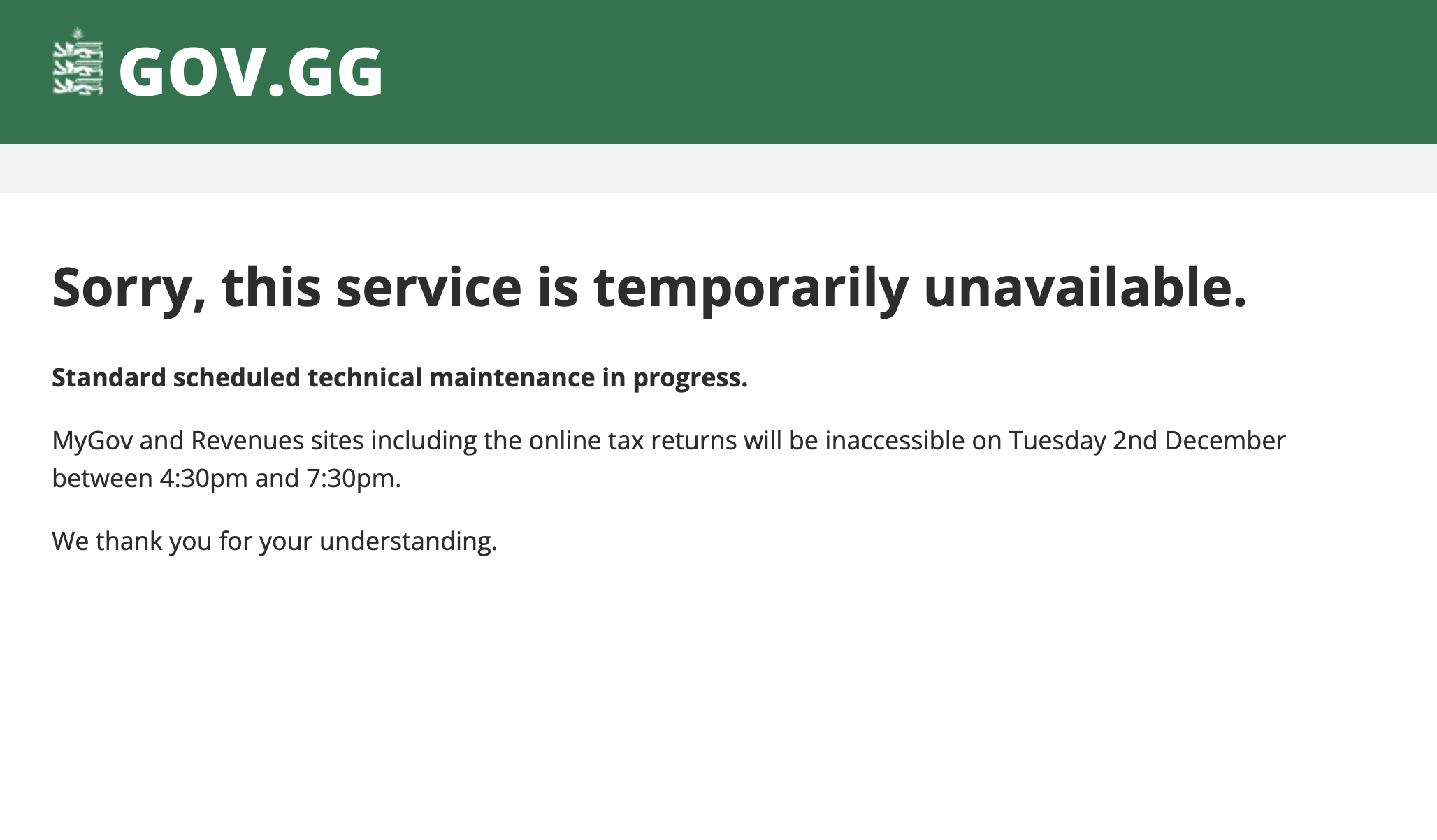
Right now, all the page on gov.gg with that name lets you do is fill in your income tax form. Or it should, it’s currently suffering delays.
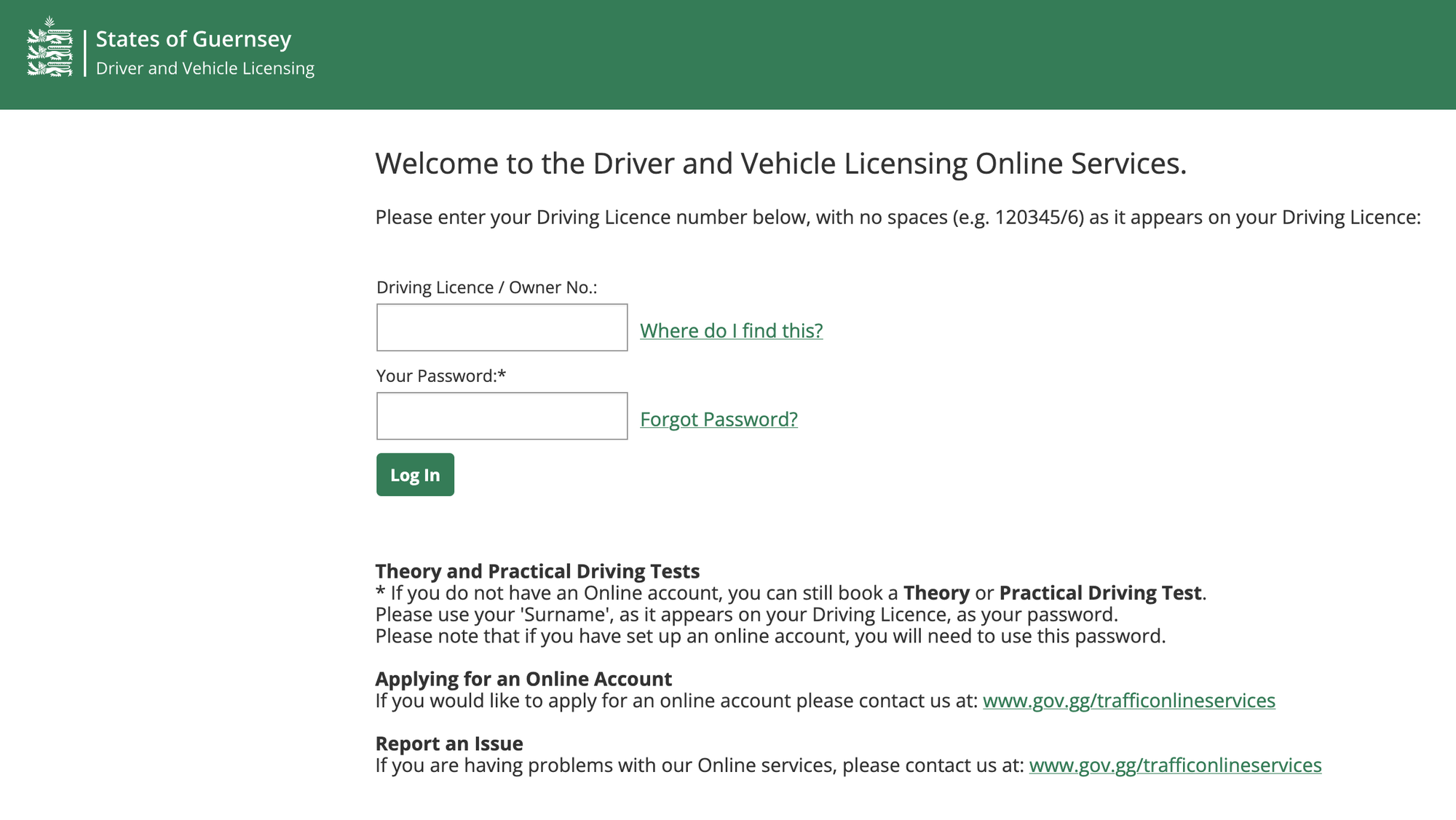
Online driving licence applications are also meant to be there, but they sit somewhere else on the States website.
It is a far cry from the vision former CEO Paul Whitfield outlined when launching SMART Guernsey on 20 January 2020.
“I want the experience of using public services to be quick, easy and hassle-free. I want our service users to know our teams are putting them first. I want to do that in as efficient and cost-effective a way as possible,” he said.
At the time, trials had also begun with the piloting of digital medical certificates, but there was always something vague about it all: “The programme is looking at opportunities for new and improved services in a range of public service areas that will bring the most significant benefits,” the press release said.
Two years later - and under a different CEO and political team - and the States was again promising us “change is coming”.
“Services will be designed around meeting community needs, rather than expecting the customer to adapt to the public service's internal procedures and structures. Services will utilise technology and a 'one-stop, tell us once' approach to improve access and use,” a MyGov Customer Hub page on the States website said.
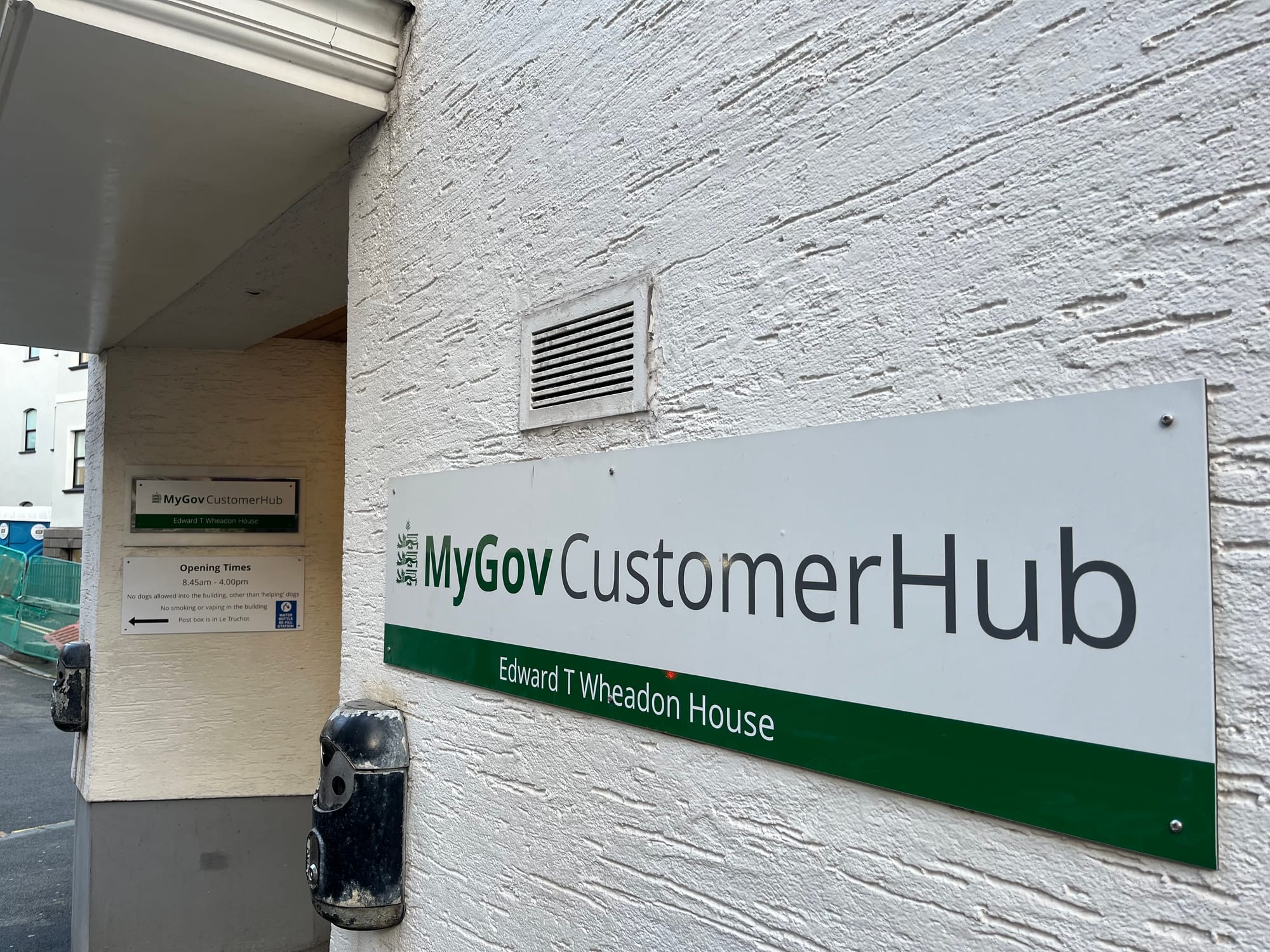
It was as much a physical change as a digital one, with the first phase the MyGov Customer Hub at Edward T Wheadon House, bringing together many of the public facing services provided by the public sector.
A MyGov App was promised: “MyGov App is the online portal which customers will use to complete transactions with government at a time that suits them. Many people will have already used the MyGov platform to complete their personal tax returns online. The App will continue to expand as more services are added, thereby shifting government engagement online.”
The page asks us to check back to find out which online services have been added to the MyGov app. It has not been updated since.
Behind the scenes, the programme was failing.
In January 2025 Scrutiny published its review of the Agilisys contract, part of which concentrated on MyGov.
It was damning.
It describes MyGov as a “programme of multiple projects that are all part of the Public Sector Reform programme which commended in 2013”.
If you want to get tied down in States speak go no further than how it describes that programme.
“The Front Office, known as the Customer Hub, was intended to form part of an integrated ecosystem of linked public services. The design of the Customer Hub was developed in conjunction with the Middle Office and the Strategic Core, to ensure an integrated solution that could be scaled and grown beyond the services within the initial MyGov scope.”
Once you cut through some pretty impenetrable language you find that P&R agreed an initial phase of £8.9m. funding in September 2019 and on 20 July 2021 a further release of up to £7.8m. up until June 2022.
Actual spending was said to be £6m. in 2020, £4.4m. in 2021 and £2.75m. in 2022.
“This complex programme involved the digitalisation of large elements of the existing back-office administration,” the Scrutiny report says.
“It involved creating a central Customer Hub to deal with queries received from the general public, supported by technology. It also encompassed a large number of staff moves between a number of States property locations, to create increasingly centralised functions, bringing together staff who were previously based in function-specific teams.”
The team responsible was jointly staffed by the public sector and Agilisys.
“The governance structures put in place to oversee the management of the MyGov programme were extensive and, in principle, were in line with industry best practice…However, despite all these appropriate checks and balances being in place, problems quickly emerged.
“The MyGov workstream struggled to gain traction in several areas. It was clear from speaking to a number of officers involved in this programme, that many had had serious reservations from the start regarding both the practicality and usability of the proposed technical solution.
“Additionally, it was felt by a number of public sector staff that the Agilisys programme team was too directive in its approach, specifically by driving too hard towards major change and savings objectives but with a tendency to ignore the practicalities of continuing to deliver public services.”
In July 2022 the programme was quietly halted for a review.
It took until October for a document detailing where workstreams had got to be produced, but even then some felt it did not explain the real problems.
Staff complained that there was not enough detailed content outlining what was required to enable the software to be developed, there was very limited involvement from customers and users.
“It was difficult to measure the progress being made to deliver the required software, because no clear document existed to describe what was actually required.”
P&R’s response published with that Scrutiny review is pretty dry, but can be read largely as we have a fresh plan and its solid: “the programme has been considerably strengthened and there is a clear plan in place for the iterative development of public services through a new secure digital foundation.
“The scope of works is fully developed and tested, taking into account user experience, compliance, data security and data accuracy.
“Additionally, there is appropriate political oversight of the programme, including gated funding and political representation on the programme board. In the coming months, and after a comprehensive tendering process, the committee will be announcing the engagement of an external implementation partner.”
The P&R member with responsibility at the time was Deputy Bob Murray, who noted that the review covered 2019 to early 2023, “the recommendations in its report largely align with the changes already introduced or in progress.”
In March he was pictured seated next to chief digital and information officer Gé Drossaert after another digital strategy was published.
“This new digital strategy is now setting the direction for the States to realise its digital goals. Digitisation is key for us as a government to improve and succeed, which is why it was included in the Government Work Plan,” he said.
“Progress has focused on building the right foundation to define what we want in the strategy and we are confident it has set the right direction for our development to deliver solutions which will improve the community’s interactions with the States.”
That strategy says that by 2029 75% of public interactions with the government should be digital, and 80% of payments made online, with a single digital portal for government services.
A renewed MyGov will be launched, it said.
It sounds much like the old one.
“MyGov will be a single-entry point through gov.gg for customers to access service specific functionality, while centralising generic services and making them accessible to all States of Guernsey service areas.”
It envisages a system where different parts of the States uses MyGov to message those using the services, instead of a current mishmash including letters being posted.
The backbone of the system is a central register of users.
Those users will be able to update personal details, submit forms, access important information, make online payments, “and more”.
“We will also provide access for internal teams, enabling them to support the customer through their digital journey wherever necessary.”
The MyGov platform is meant to be “successfully launched and operational for initial priority services” by Q1 2026.
The clock is ticking.


Comments ()