
States asked to approve £10.7m funding for QEII Marina gate replacement
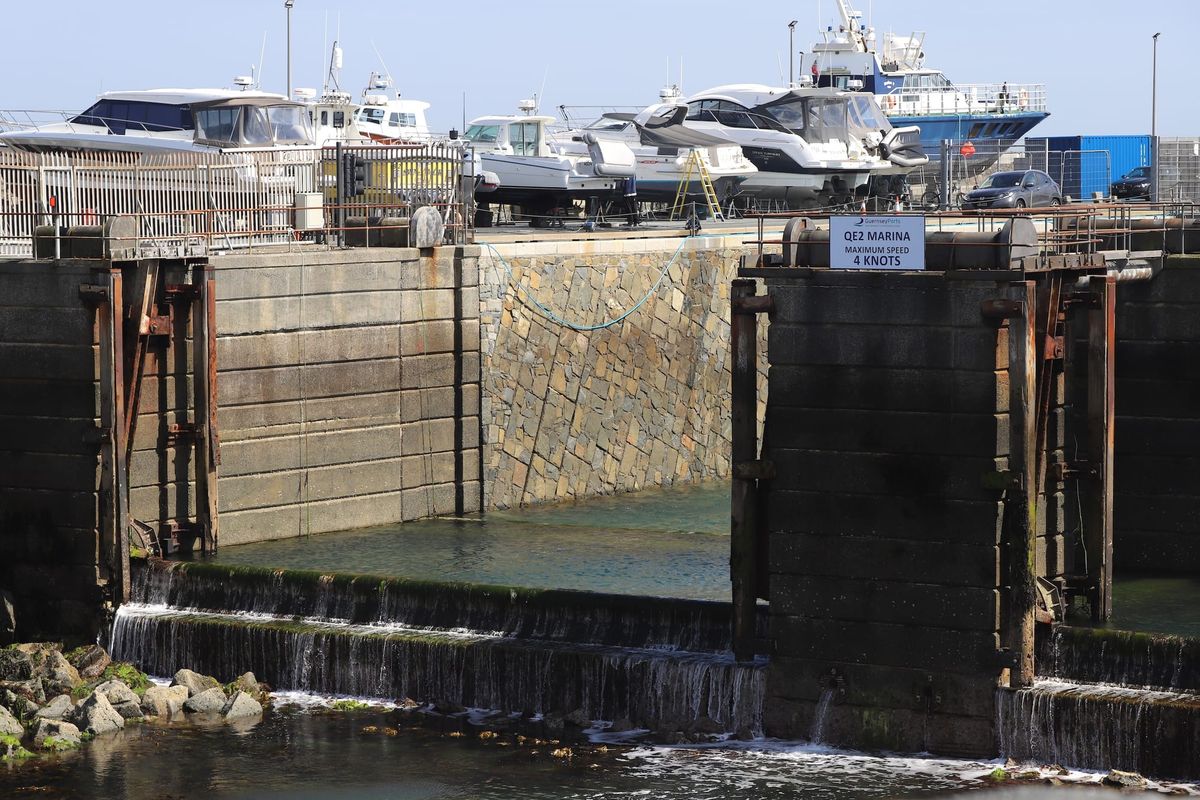
- States asked to approve up to £10.7m funding for replacement of 40-year-old QEII Marina gates, split equally between loan and grant
- Current gates have become erratic and unreliable, with 2022 survey concluding "significant risk of them failing permanently"
- Gate failure would reduce marina water levels by around one metre, making it unsuitable for most current berth holders and threatening £1.1m annual surplus
- Six options evaluated ranging from £5.2m to £10.7m, with new gate in new position offering longest 60-year design life
- Design-and-build procurement approach proposed, with full business case expected early 2027 and construction completed in 2027
The States of Guernsey is being asked to approve funding of up to £10.7 million for the replacement of the QEII Marina gates and associated infrastructure, which face serious defects after 40 years of operation.
The funding would be split equally between an interest-bearing loan of up to £5.35 million and a grant from the General Revenue Reserve of up to £5.35 million, under proposals submitted by the States' Trading Supervisory Board.
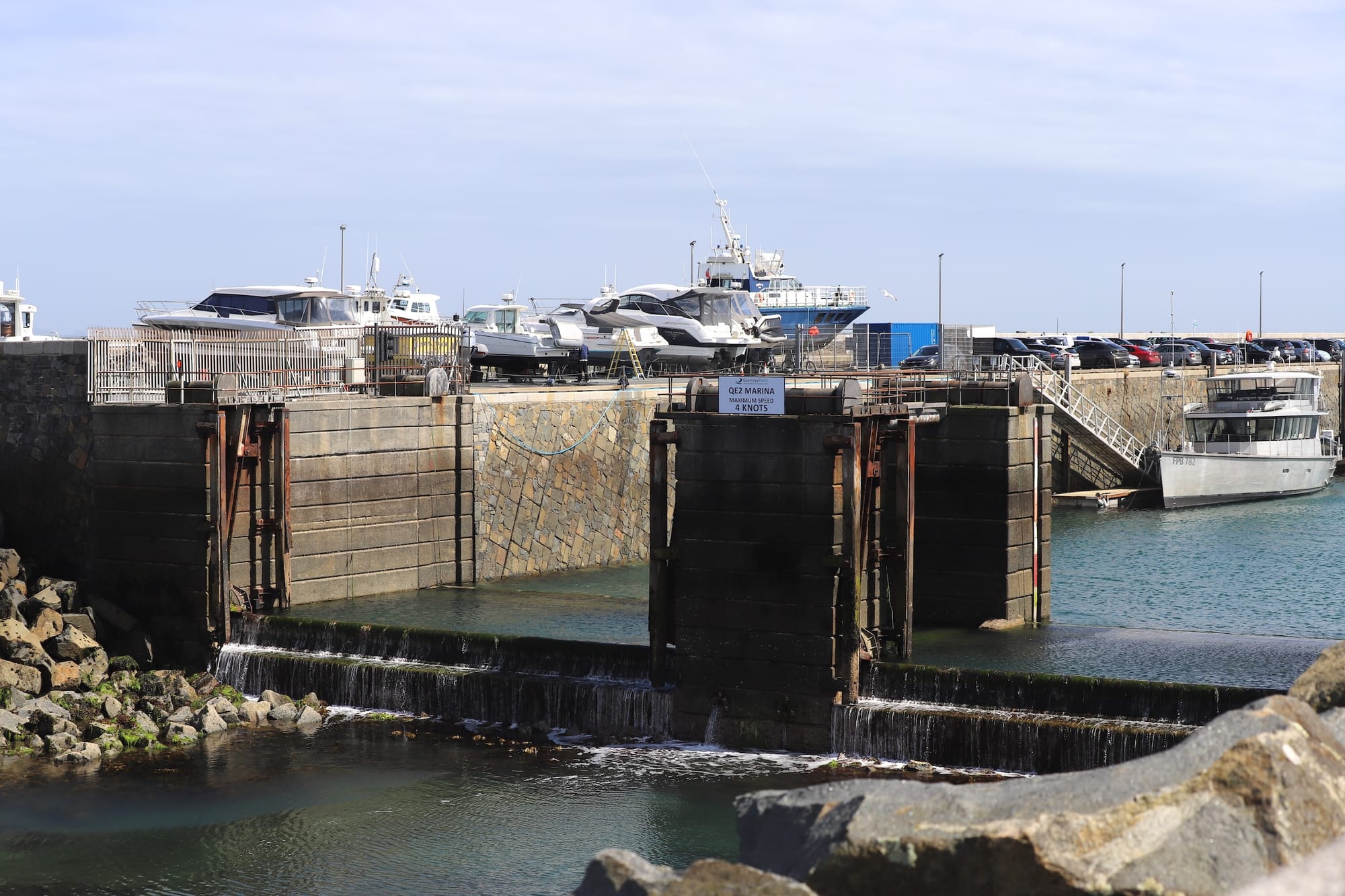
The QEII Marina is Guernsey's largest marina, providing berths for more than 700 local vessels of all sizes and accounting for more than half of all Guernsey Ports marina moorings. The marina was constructed in the mid-1980s and generates an operating surplus of approximately £1.1 million per year before depreciation and interest.
However, the 40-year-old gates and supporting infrastructure, comprising concrete sills, towers, pulleys, counterweights, sensors and control equipment, have become erratic and unreliable, presenting significant health and safety risks. The gates have either failed or been slow to rise or fall on multiple occasions, and have been observed to rise suddenly and quickly before expected, posing risks when boats are passing over them.
A 2022 condition survey concluded there was "a significant risk of them failing permanently" with the risk increasing over time. A 2026 survey identified further structural defects, particularly deterioration of concrete sills at the base of the gate mechanism. The condition will continue to deteriorate, making the gates work less well and become more unpredictable.
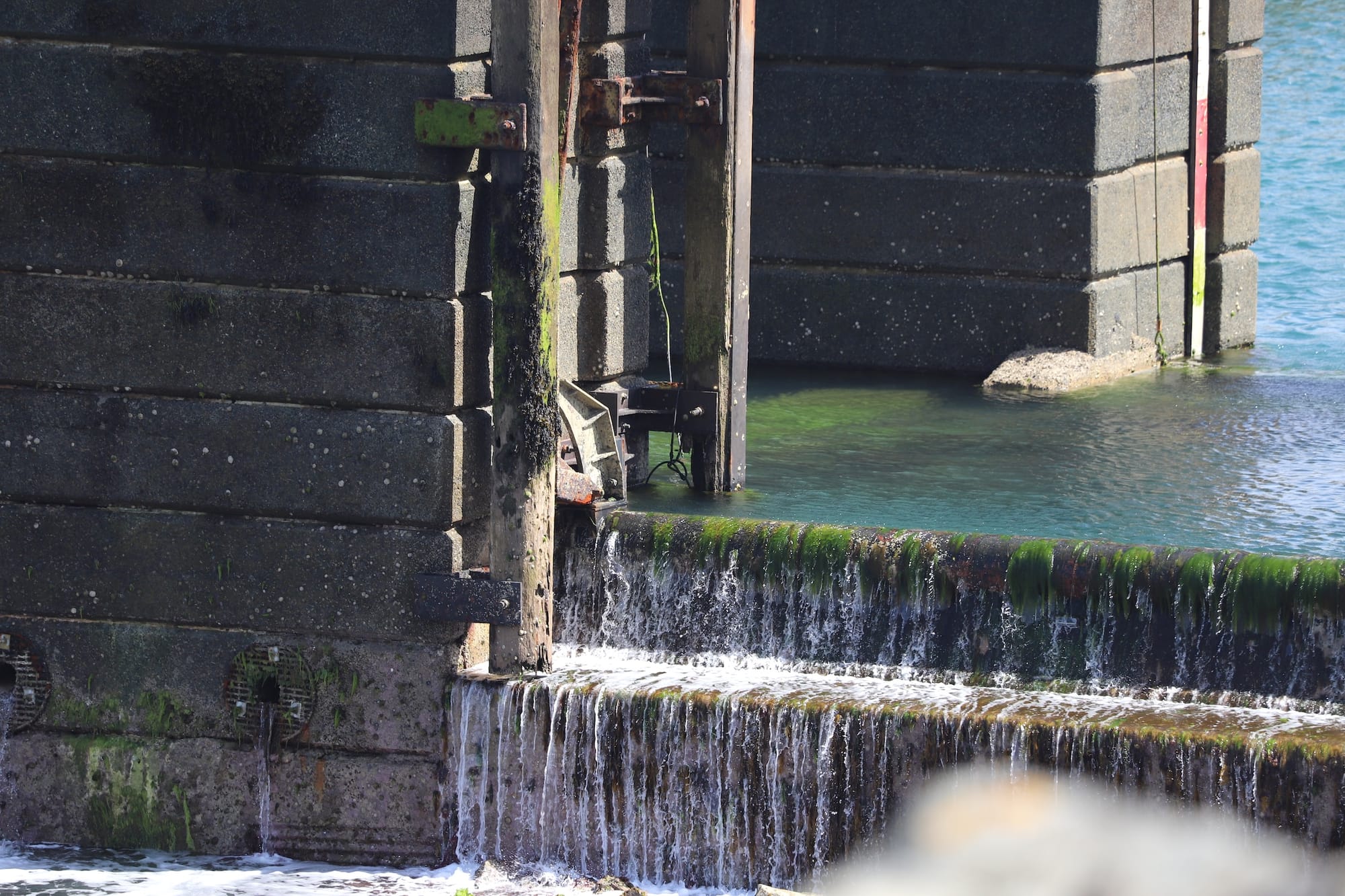
If the gates fail, the marina operation would be compromised, with water levels within the marina likely to be reduced by around one metre. This would render most areas unsuitable for vessels with standard draughts, and many vessels would not have sufficient clearance to enter or leave except on the highest spring tides.
The gates serve a critical function by acting as a moving sill at the entrance. At low tide, they sit above the level of the fixed sill, impounding more water to keep boats afloat and providing deeper moorings along the eastern seaward side. These deeper moorings are suitable for vessels with large draughts that may not otherwise be accommodated locally. When the tide rises, the gates lower to increase clearance height and extend the tidal window for vessels to safely leave or enter.
Gate failure would seriously impact the provision of facilities for local boat owners and would exacerbate already significant unmet demand for moorings. The waiting list stood at approximately 100 at the end of 2025. It would also likely impact more widely on the island's marine services sector and result in "considerable erosion of income", worsening Guernsey Ports' financial position. The policy letter notes that gate failure represents "a significant, material risk to Guernsey Ports finances" and would have significant reputational implications for the island.
The States' Trading Supervisory Board has evaluated a range of options but has not reached a conclusion on a preferred method. Options to do nothing or do minimum upgrade works were discounted due to their short anticipated lifespans of one to five years and five to 10 years respectively. An option to remove the gates and have a sill only would either reduce depths and capacity of the marina or result in severely limited access.
Four options have been shortlisted. Option three would repair and reinstate the outer gates with in-situ repair of outer civil works and replace outer operating systems with hydraulic cylinders, with the inner gates remaining submerged for possible future maintenance use. This carries an estimated cost of £5.4 million to £8.9 million and a 30-year anticipated life.
Option four would replace the outer gates with a similar approach, also with a 30-year anticipated life and an estimated cost of £5.2 million to £8.4 million. This option offers the advantage of prefabricating new gates off-site to reduce the site programme, with less risk from prolonged use of inner gates and lower cost as it does not require a second mobilisation of temporary works.
Option five would reconstruct outer sills and quoins with a prefabricated frame, achieving a 45-year anticipated life at an estimated cost of £6.0 million to £10.5 million. The advantages include prefabrication and assembly in workshop conditions to achieve tight tolerances, with meeting faces returning to as-new condition.
Option six would construct a new gate between the existing gates in precast sill structures, with new civil works and new cut-off walls beneath new sill structures. The inner gates would remain submerged for possible future maintenance use. This option has the longest anticipated life at 60 years and an estimated cost of £9.0 million to £10.7 million. It has the most detailed design developed, reflected in a narrower cost range, and is not reliant on assumptions regarding the condition of existing infrastructure. A significant amount of structure would be prefabricated off-site, minimising material contamination.
The policy letter notes: "A new gate in a new position offers a strong overall combination of design life, risk reduction, whole-life cost and deliverability, but is likely to require a higher initial capital investment."
All cost estimates include anticipated construction costs, allowances for risk and optimism bias, project management costs and professional fees. The large range in cost estimates reflects that they are based on concept design at this stage, except for option six which has more detailed design. They also rely on the condition of current infrastructure, which will significantly affect cost. For repair options, the actual cost, life and feasibility will depend on the condition of existing infrastructure.
Options depending materially on existing gate infrastructure or civil structures carry the greatest residual risk because the present condition of gates, sills and supporting structures is already known to be poor, and further defects or deterioration are likely to be identified during construction.
The States' Trading Supervisory Board intends to award a design-and-build contract based on a performance-related specification. This approach gives potential contractors full scope to develop a suitable design and construction method, encourages competition to deliver the project at best value, and transfers the risk of defects between design and construction to the contractor. With this contract approach, potential contractors will be free to base their proposals on any of the shortlisted options in putting forward a fully costed scheme.
Haskoning are the specialist technical advisers for the project and will assist in preparing tender documentation, expressions of interest, invitation to tender, the full business case, appointment of the contractor and works on-site. Professional fees for this are included in the high-level cost estimates.
The policy letter states: "The States is therefore not being asked to approve a fully settled technical design, but a strategic approach to ensuring the best whole-life value and risk profile, developed through design-and-build procurement and confirmed in the Full Business Case."
To enable the project to proceed to procurement, and in assessing cost implications, it would be prudent to allow for the replacement option at this stage. The option developed to the greatest level of detail indicates a total capital requirement within the range of £9.0 million to £10.7 million.
Guernsey Ports cannot fund this level of investment entirely from routine operating surplus and capital resources without there being a disproportionate impact on user fees or on other essential capital requirements. The anticipated cost of the project is of a scale which cannot reasonably be met from the routine Ports Capital Programme alone, which faces substantial demands on harbour and airport capital over the medium term.
The proposed funding split, which has been agreed with the Policy & Resources Committee, was the basis of funding set out in the Major Projects Portfolio policy letter. Recovery of the loan through QEII Marina fees alone would require an uplift in mooring charges of more than 15 per cent above RPI, which is considered "a disproportionate increase for a single category of customer". Therefore, a broader approach is proposed, with recovery achieved through harbour fees generally, spreading the cost across a wider user base.
It is recommended that the Policy & Resources Committee is given delegated authority to approve funding of up to £10.7 million on approval of a full business case. The final project cost will not be known until the tender of the design-and-build contract has been completed and any subsequent value engineering carried out.
Subject to States approval, procurement will proceed in 2026, with the full business case expected to be ready for approval in early 2027 following tender evaluation. Construction should be completed in 2027, depending on contractor and plant availability. Until construction begins, the existing gates will continue to be monitored and maintained "so far as can be done safely".
In April 2026, the States of Guernsey approved the Major Projects Portfolio, which included the QEII Marina Gates Replacement as an addition to the delivery stage. That identified a clear operational requirement to ensure continued safe and effective operation of the gates, and recognition that gate failure would create health and safety, economic and reputational risks.
The objective of the project is to provide safe access arrangements for the QEII Marina, maintain the current tidal window, ensure sufficient depth of water to retain the current operational capacity, protect income, reduce risks and minimise future operational and maintenance costs. Any solution should have a minimum design life of 25 years.
The Policy & Resources Committee has stated: "The Policy & Resources Committee supports in principle the submission of this Policy Letter and the progression of the project subject to a Full Business Case."
The proposition has the unanimous support of the States' Trading Supervisory Board and has been submitted to His Majesty's Procureur for advice on legal or constitutional implications. The policy letter was dated 18th May 2026.
Q&A
Q: How much funding is being requested and how will it be split?
A: Up to £10.7 million is being requested, split equally between an interest-bearing States loan of up to £5.35 million and a grant from the General Revenue Reserve of up to £5.35 million.
Q: What would happen if the marina gates fail?
A: Water levels within the marina would likely be reduced by around one metre, making most areas unsuitable for vessels with standard draughts. Many vessels would not have sufficient clearance to enter or leave except on the highest spring tides, making the marina unsuitable for a very large number of current berth holders.
Q: When is construction expected to be completed?
A: Subject to States approval, procurement will proceed in 2026, with a full business case expected in early 2027. Construction should be completed in 2027, depending on contractor and plant availability.

Comments ()