
On Saturday a unique ceremony will breath fresh life into the story of the Royal Guernsey Light Infantry
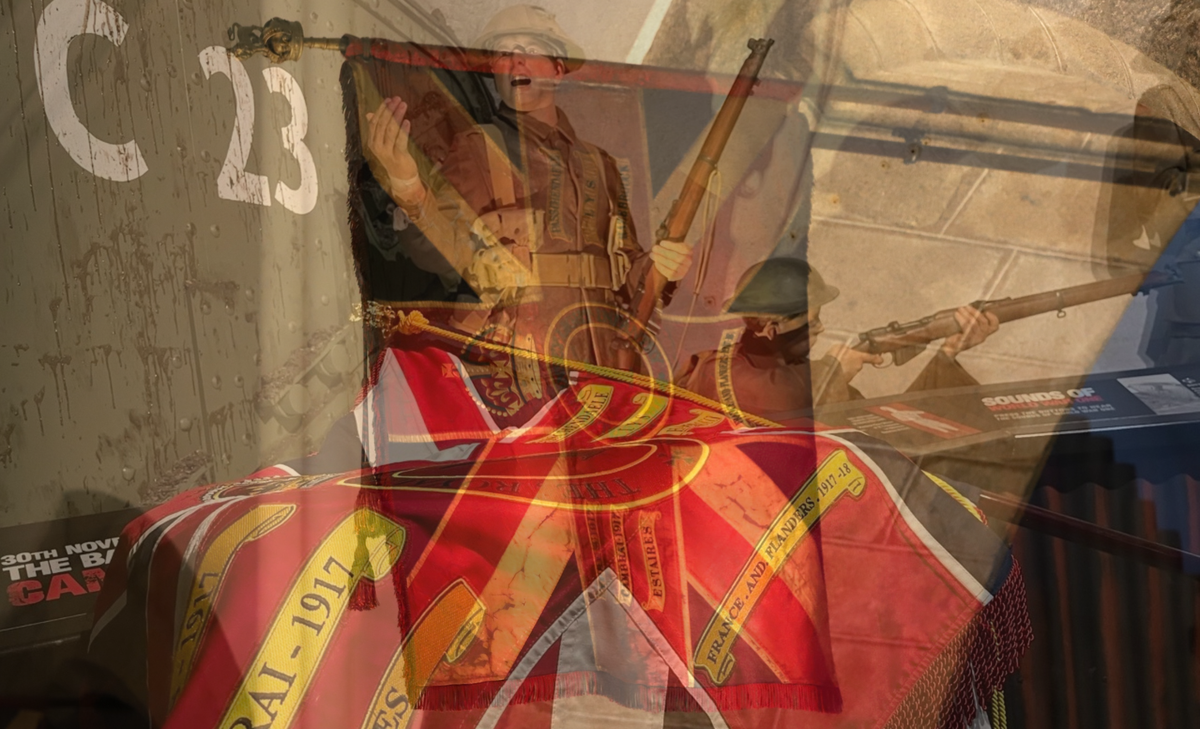
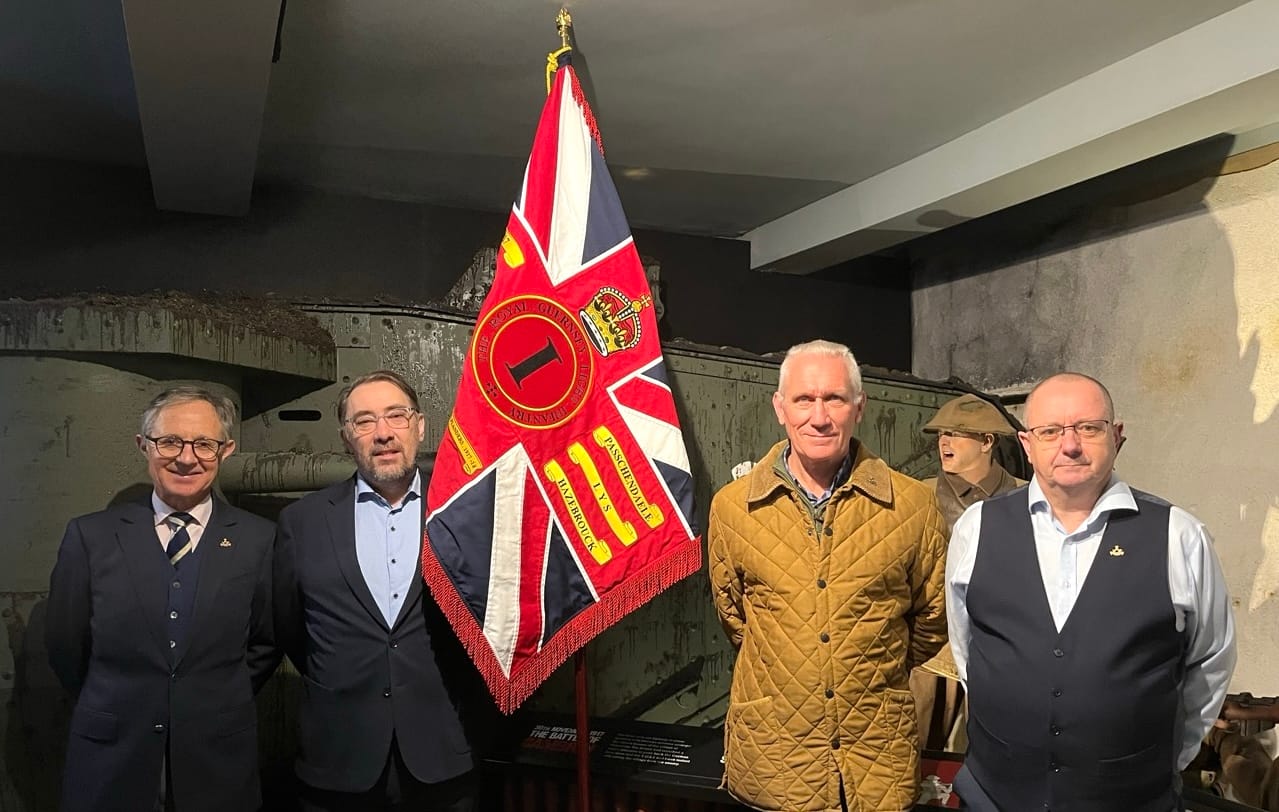
- A ceremony will be held on Saturday morning to consecrate a replica of the colours of the Royal Guernsey Light Infantry.
- The RGLI was Guernsey’s official response to World War One.
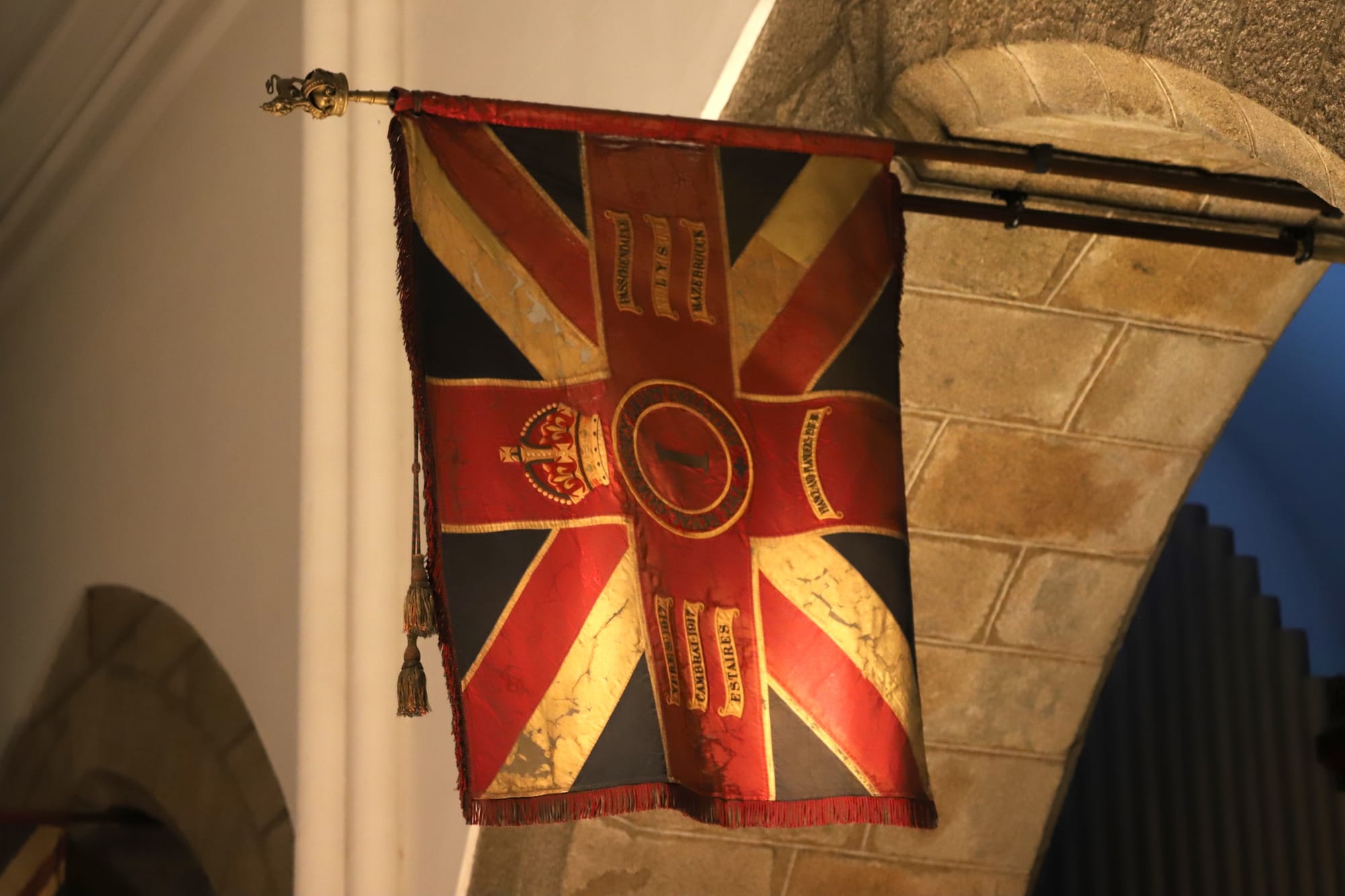
- The original colours hang in Town Church, carrying the battle honours of the regiment.
- It continues the work of the RGLI Trust, which has already installed twin memorials in France and Guernsey.
It is all too easy to overlook the significance of colours that hang silently above your head in the cool air inside Town Church.
With the passing of the years the collective conscience of the significance and impact of the First World War and Guernsey’s role in it largely fades like the cloth they are made from.
Two of the flags embody the spirit of the Royal Guernsey Light Infantry, the island’s official response to the war.
By 1919 some 2,430 Guernseymen had served with them - all households would have been touched by the deaths, injuries and also the long term impacts on the few that returned from the battlefields.
On Saturday a special service will be held in Town Church where a replica colour will be blessed and accepted by His Excellency the Lt Governor for use in remembrance and memorial events.
It is a ceremony steeped in history, the likes of which has not happened locally for more than a century, and perhaps uniquely will be carried out for a regiment that no longer exists.
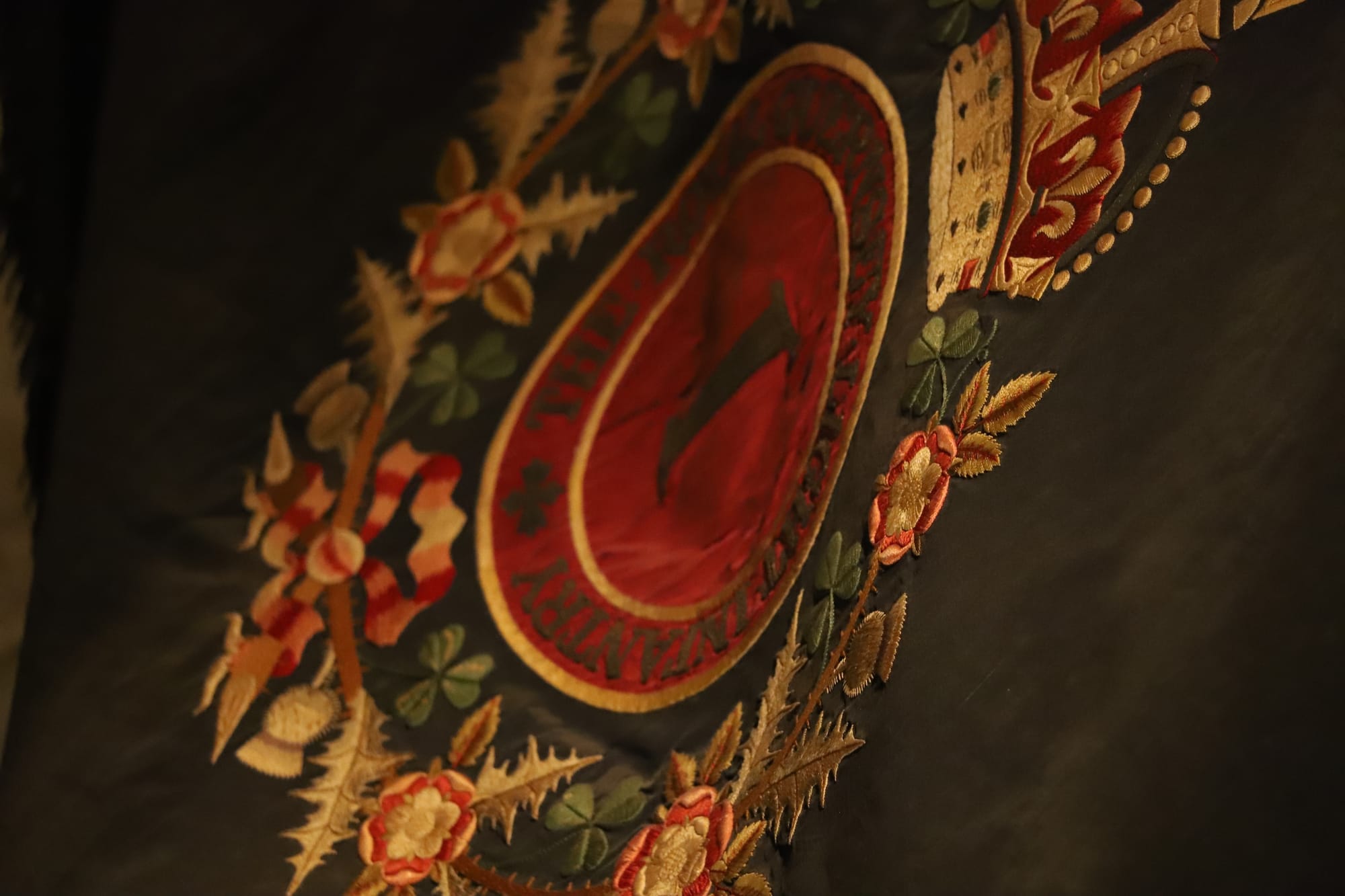
British regiments had two colours, collectively known as a stand.
The King's/Queen’s Colour was a union flag trimmed with gold fabric, and with the regiment's insignia in the centre, said to remind all ranks of their loyalty and duty to their sovereign.
The Regimental Colour was a flag of a single colour, again trimmed and with the insignia in the centre.
“Effectively the color was the life, the heart, the soul of the regiment,” said Marco Ciotti, the Secretary and Aide-de-Camp to the Lieutenant Governor.
“Up until the Boer War, they were actually carried into battle by soldiers. It's a rallying point in the fog of war, in the chaos, soldiers could see where the commander was, and as long as it was flying, then the battalion was still fighting.
“If it was lost, it was the ultimate dishonor, and it was usually carried by the most junior officer in the regiment, an ensign who traditionally was unarmed. That's why he had a color party with him, color sergeants who would escort him and protect him.
“They had almost mystical powers within a regiment. And historically, they would be carried to dying soldiers on the battlefield. They could call for the colors to be brought to them. And hence the expression serving the colors which people still use for regular service.”
The standards carry a regiment’s Battle Honours, awarded by monarchs to commemorate bravery on a campaign.
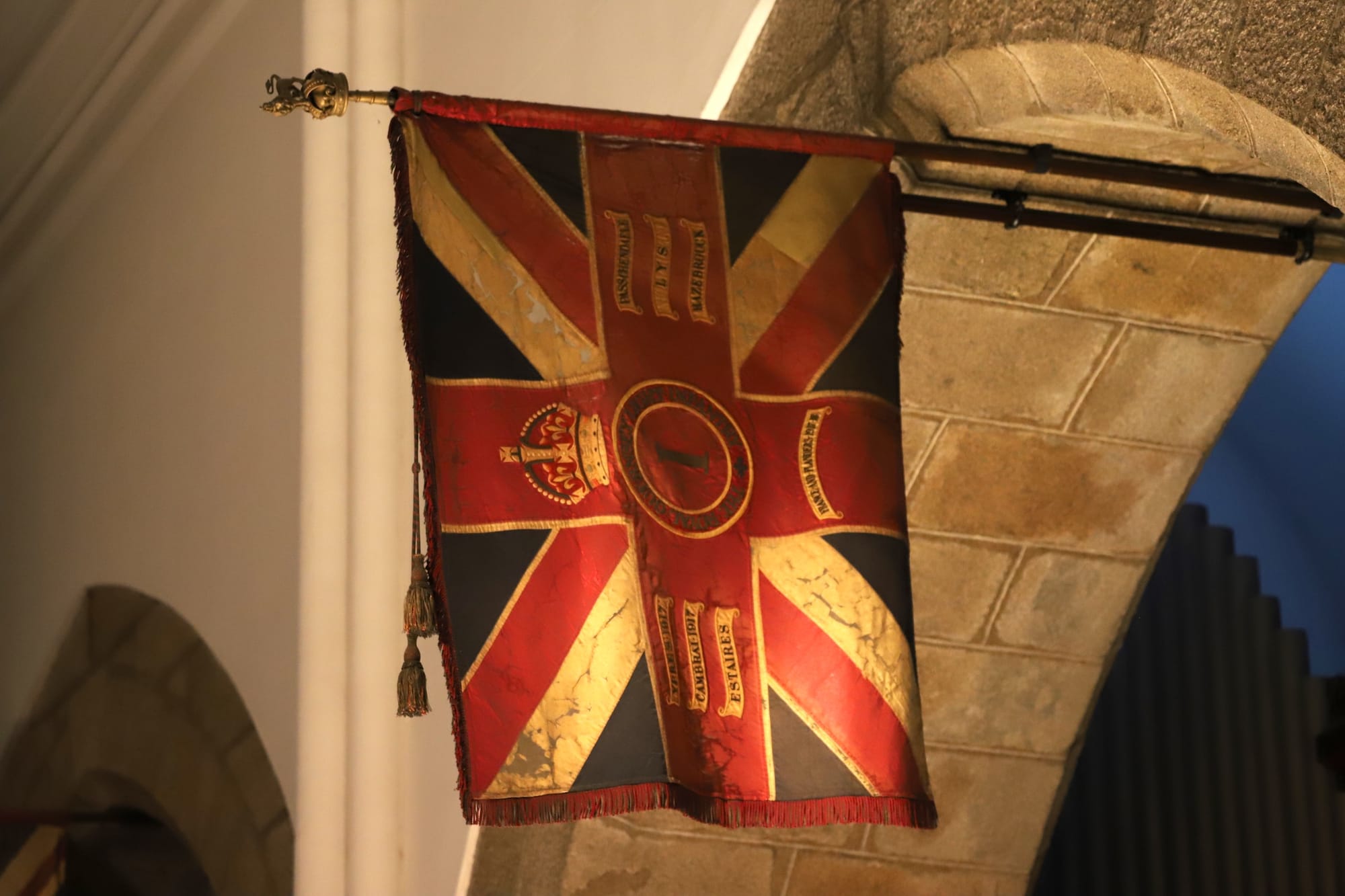
The RGLI colours carry the names of Ypres 1917 (for men who served with Royal Irish regiments), Passchendaele, Cambrai 1917, Lys, Estaires, Hazebrouck as well as France and Flanders 1917 - 1918.
The RGLI Trust was established a decade ago on the anniversary of the original formation of the regiment in December 1916.
At the time there were no physical memorials to the RGLI.
The trust installed the first one in Masnieres on 30 November 2017, a 100 years after the RGLI was locked in a deadly fight there as part of the Battle of Cambrai.
A year later a memorial, made from the same piece of Guernsey granite, was placed in the Sunken Garden.
A twinning event took place in 2018 and now there is an annual student exchange, memorial ride, regimental dinner - all events breathing life into what is a key part of the island’s cultural heritage.
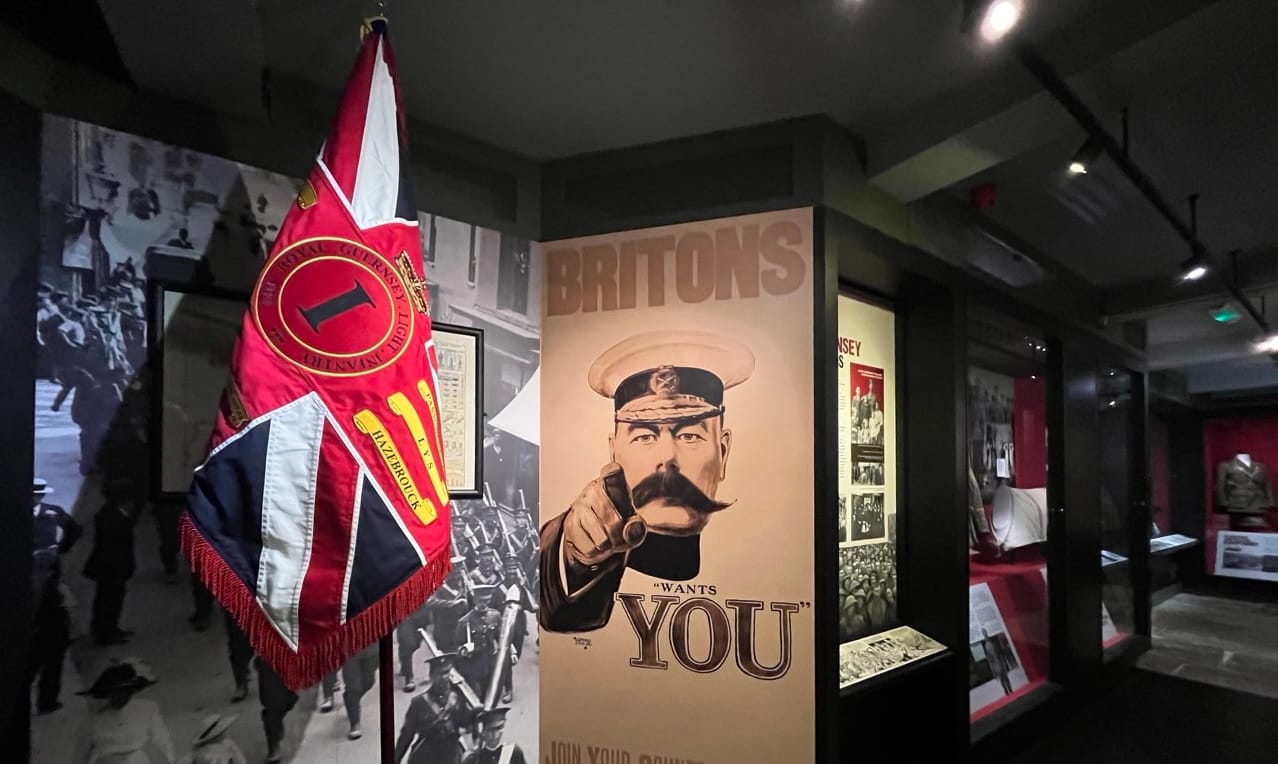
On Saturday the remade colours will be carried by a second lieutenant from the Princess of Wales Royal Regiment through the main door of Town Church.
They will be presented to the clergy on a table in front of the altar, laid with a Guernsey flag across it.
The Dean will bless them during the service of consecration.
After this the Second Lieutenant will pick them up and march them to the Lt Governor, who will reach out and grasp the bottom of the colours, accepting them on behalf of the King, before releasing them into the military.
They will be carried back out through the North Door into Church Square where a parade will be lined up and the event moves to the trooping of the colour.
“The trooping of the color is a hugely ancient tradition in many armies, but especially in the British Army,” said RGLI trustee Chris Oliver.
“The idea was that the newly consecrated colors would be paraded before the regiment, so that every man could see the colors that belonged to his regiment.”
When the trooping is finished, the newly consecrated colours will join the parade which will march up the High Street to the top of Smith Street.
The final part is the march off of the colours - they will be taken to the St Peter Port Constables Office.
The parade does not disband until that has happened.
“There is a massive amount of history, culture, ancient tradition in the establishment of the replacement colors, extraordinarily unusual to do this for a dead regiment, and you could say Guernsey or Jersey are one of the two places that you could possibly do this.”
He said this was an opportunity for those with connections to the RGLI to be part of an enormously historic and cultural event.
Anyone is welcome to attend the ceremony, which will start just before 11am. Those with family medals from the RGLI are encouraged to wear them on their right breast.
Footage of Guernsey soldiers on Belvedere Field and in St Peter Port, 1914. Before the formation of the RGLI, Guernseymen went to serve with the 16th (Irish) Division and the 9th (Scottish) Division.
For more about the RGLI and the battles it was involved in, visit here.
For details of the RGLI Trust, click here.
Comments ()