
Inside Guernsey Employment Trust: matching people and employers for long-term success while demand reaches record levels
It might be light touch, driving in with someone as they head to a job for the first time.
Maybe it is more hands on, sitting next to them through the working day, breaking down tasks to be more manageable.
But that support is priceless.
That allied to the work beforehand, trying to ensure people are matched to the right roles and employers, can mean permanent jobs for those that would otherwise struggle.
In a nutshell, that is the Guernsey Employment Trust.
And its success is backed not just by real life examples, but statistics that point to there being more demand than ever before.
For more than a decade, GET has supported disabled and disadvantaged people, as well as those who are neurodiverse, to prepare for, find and maintain work.
In 2025 it received 187 referrals, up 25% on 2024 which was already its busiest, a sign that there are still significant barriers to work but also that awareness about what it does has grown.
GET is currently working with 288 clients and the data shows that how it does that is successful - last year saw its highest number of paid outcomes.
It supported 107 placements last year and also hit a milestone of 850 job outcomes since it started in 2015.
But there is more.
The job retention figure is 77%.
“That's showing that we are getting it right. We're getting to know people. We're making those good job matches, and we are supporting both [the client and employer] well for it to be a long term success,” said GET Chief Executive Nikki Ioannou-Droushiotis.
Refreshing the Disability Charter
In 2017 as it found its feet, GET launched a Disability Charter which helped it engage with employers, finding out what their needs were but also offering something to guide improvements in the workplace.
It was aspirational and 70 organisations signed up.
In October 2023, legislation became active to prevent discrimination, which shifted what the charter needed to address.
“The first one was all about starting on a journey and aspiring to something, whereas organisations that sign up now are upholding the commitments of the charter, ‘we are doing this’.
“Also, we included some terminology in there that in 2017 wasn't used regularly, like neuro diversity, neuro divergence.
"A lot of clients that we support at GET are disabled, but not everybody's happy with that label or that term, but would say that they are neuro divergent. So we wanted to include that now commonplace terminology in there, so that it was then applicable to more people.”
The new charter was released at the start of January.
How GET works
BWCI is one of the companies who has been working with GET long term.
It has witnessed the successful progression of people being given supported part time work to becoming permanent staff members.
“All of the clients will have their individual needs, but Guernsey Employment Trust won't just place them with you and then walk away,” said BWCI's Alison Rimington.
“If ever there's a problem that you need any kind of clarification on, or you just want a little bit of support with, one of the employment support officers is always on the end of the phone, and quite often they're actually in the business, particularly in the early days.
“Sometimes they'll sit with a new employee for the first few weeks of their employment. Other times, they'll have regular meetings on premises, so they're always accessible. That, I think, is priceless.”
That is what makes GET different from other employment agencies.
Nikki expanded on that point.
“We use vocational profiling to really understand and take the time to delve into somebody's past work history, what went well, what didn't work well, education, but really understand what barriers that person faces. Information around their disability and health to really help form the picture of what support that person might need and what work might be suitable.
“But then it's the on the job support as well. So like Alison said, for some people, the support can be very light touch, almost invisible.
“So it could be that if someone is very anxious, maybe we're traveling to work with them, and then we're sat in the car, but it's knowing that we're there, or we're sat in a staff room, so we're not on the main office or shop floor.
“We're quite invisible, but having that regular interaction with the person and their line manager. Or maybe we're physically very hands on, we're in a shop setting.
"Maybe it's somebody with a learning difficulty that needs that work buddy with them, learning the role at the same time as them, but helping break the tasks down into manageable, bite sized chunks and checking in that they've learned what they need to, that they're at the right pace, and help with policies and procedures.
“So the support can be, if needed, very intensive, full time, one to one for a few months. But the ultimate goal, obviously, is reducing that support and aiming for independence in the workplace.”
Guernsey Post have a lot of people coming in on work experience in the sorting office, which can be a noisy and intimidating experience.
“For somebody that's not been in the work environment for a while, having that support when they come into our sorting office is so important,” said Guernsey Post's Tracey Le Cheminant.
“Sometimes they'll come on long term work experience on their first few days being very shy, very nervous, but by the end of it, really coming out of themselves and having so much more confidence about being able to go into different work environments.”
GET has both large and small businesses signed up across different sectors.
And it works with clients that also span a broad range, from those who did not finish school to graduates and people that have already had a professional career.
The changing employment landscape
A couple of years ago, a study with Grant Thornton looked to put a value to the community of GET’s work.
That included savings from people coming off benefits, potential income generation from tax and social security contributions, the value of voluntary and unpaid work if it was granted a minimum wage figure.
That came up with a social value figure of £3.6m. - a return on investment for the taxpayer of £3 for every £1.
Because of that study GET has a rich set of data on which sectors clients were working in and the outcomes.
When you map that against International Labor Ogranisation predictions, approximately 30% of those jobs are considered as at risk of being displaced by AI.
“While AI will create opportunities and make a lot of our jobs easier, it potentially leaves behind individuals that don't have the soft skills to scrutinise the data coming out of it," said Nikki.
“That is my concern. But the charter is all about getting employers to know that the discrimination ordinance is the absolute bare minimum of what we need.
“This is going beyond that and focusing on people and what people need to thrive. I'm hoping that more employers will listen to some of the story from today and reach out and very much get involved in that and that in time, this charter will become like a badge of honor and there is an expectation of employers that their organisations are signed up to it.”
You can contact GET through its website: https://www.get.org.gg/contact
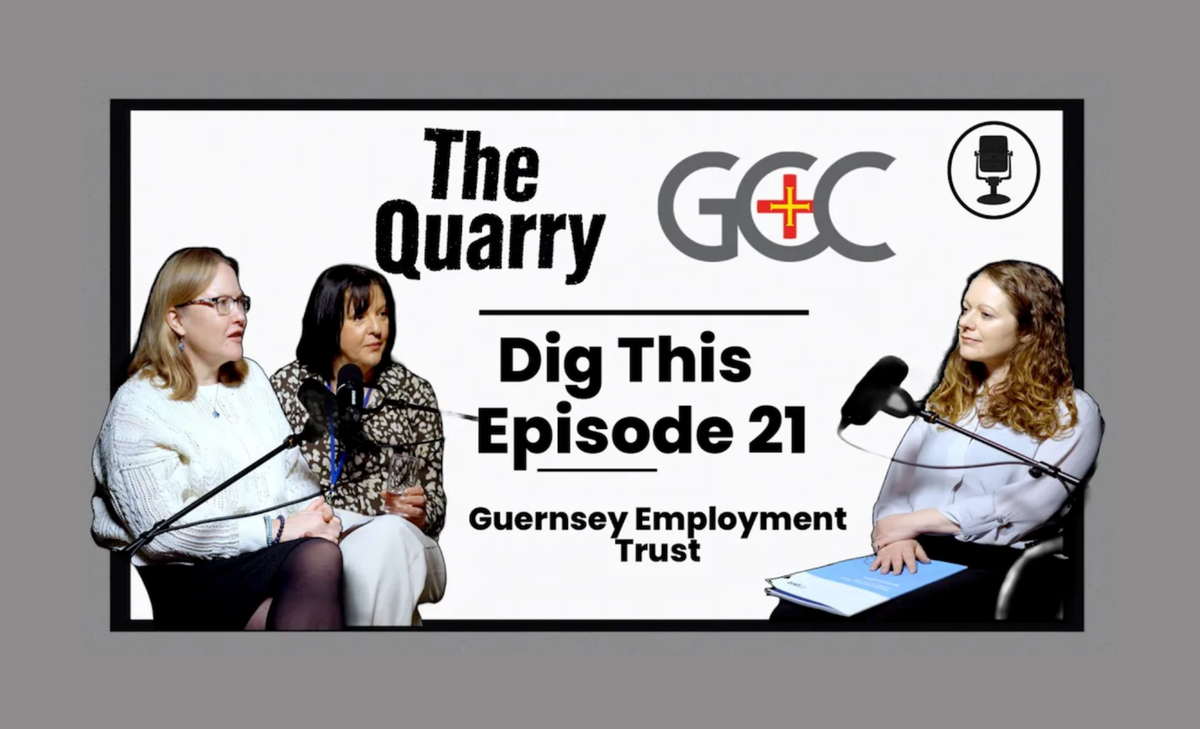
This episode of Dig This is part of a series where The Quarry has partnered with the Guernsey Chamber of Commerce People and Skills Working Group to deliver podcasts about the current workforce shortage and the future skills gap.
We're also committed to profiling the work of charities as part of our Spotlight series. Please contact us if you would like to feature.

Comments ()