
How fraudsters use fake Guernsey documents and a tell-tale website in advance fee fraud scheme

- Guernsey Financial Services Commission warns of fake documents bearing its name used in fraud scheme
- Fraudulent documents titled "Financial Regulatory Due Diligence / Financial Provenance Clearance" being circulated
- Scheme involves fake law firm Flaven Law Chambers and bogus bank ApexKrest Bank
- Both falsely claim to be Guernsey-based, adding to a list of fake entities
- Commission urges anyone who dealt with these firms to contact its Intelligence Team
The Guernsey Financial Services Commission has issued a warning after documents bearing its name were used to support an advance fee fraud scheme.
The fake documents are titled "Financial Regulatory Due Diligence / Financial Provenance Clearance" and have been created to give legitimacy to the bogus operation.
The scheme involves two fictitious entities that falsely claim to be based in Guernsey. The first is a fake law firm operating under the name Flaven Law Chambers, whilst the second is a bogus bank called ApexKrest Bank.
The Commission has confirmed that neither entity is genuine or authorised to operate in Guernsey, and both are being used as part of the fraudulent scheme to deceive potential victims.
Flaven Law Chambers' website is still online.
What is advanced scheme fraud?
Advance fee fraud schemes typically involve criminals requesting upfront payments from victims in exchange for promised larger returns or services that never materialise. The use of official-looking documentation and false regulatory credentials is a common tactic used to make such schemes appear legitimate.
How these schemes work
The structure of the operation reflects a broader pattern seen in international financial scams.
Victims are typically first engaged by an apparent investment firm or banking institution, after which they are informed that funds are subject to regulatory or legal restrictions.
At this stage, a purported law firm—such as Flaven Law Chambers—is introduced to provide legitimacy and to facilitate the release of funds.
Additional fees are then requested under the guise of legal, compliance, or tax requirements.
What are the giveaway signs?
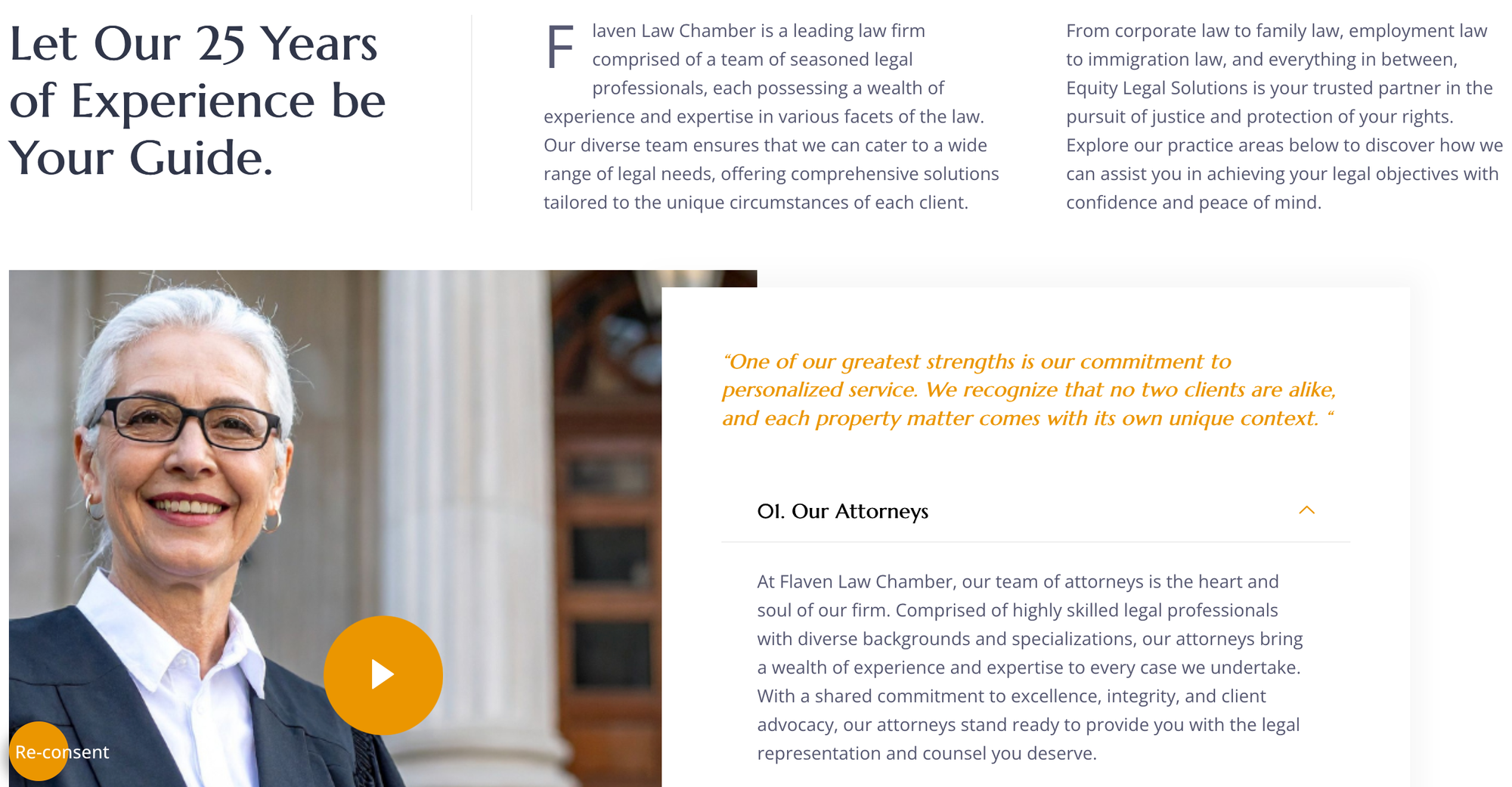
An examination of the Flaven Law Chambers website reveals multiple indicators inconsistent with a legitimate legal practice.
The site presents itself as operating across several jurisdictions, referring variously to the United Kingdom, Guernsey, and Lithuania, without clarifying the firm’s regulatory base or legal jurisdiction.
No verifiable office details, company registration numbers, or regulatory affiliations are provided. The PO Box number is linked to another Guernsey company.
The website also lacks identifiable legal personnel.
It does not name partners, solicitors, or barristers, nor does it provide professional credentials or bar admissions.
In established legal practice, such disclosures are standard, as legal services are tied directly to individually regulated practitioners.

Content across the site is generic and non-specific, describing broad areas of law—including civil, criminal, corporate, real estate, and human rights—without reference to jurisdiction, casework, or applicable legal frameworks.
Industry specialists note that this type of language is characteristic of template-generated content designed to appear authoritative while avoiding verifiable detail.
Further inconsistencies appear in the site’s internal structure. References to unrelated entity names suggest reuse of pre-existing templates, while numerical claims regarding years of experience and case success rates are presented without attribution or supporting evidence. Testimonials are similarly non-verifiable, lacking identifiable individuals or associated matters.
Technical indicators reinforce these concerns. The domain is recently registered, uses anonymised ownership details, and has no established digital footprint in legal directories, case law references, or professional listings. Such characteristics are commonly associated with short-lived or disposable websites.
Regulatory disclosures indicate that Flaven Law Chambers does not operate as a licensed or registered legal practice in Guernsey, despite claims on its website suggesting a local presence.
Steps are currently being taken to shut down the websites associated with these fake entities as part of efforts to disrupt the fraud operation.
The regulator is urging anyone who may have had dealings with either Flaven Law Chambers or ApexKrest Bank to come forward for assistance.
Those affected are encouraged to contact the Commission's Intelligence Team for further guidance on the matter.
Key terms
Q&A
Q: What fake entities are involved in this fraud scheme?
A: The scheme involves a fake law firm called Flaven Law Chambers and a bogus bank named ApexKrest Bank, both falsely claiming to be Guernsey-based entities.
Q: What should someone do if they have dealt with these fake entities?
A: Anyone who has had dealings with Flaven Law Chambers or ApexKrest Bank is encouraged to contact the Guernsey Financial Services Commission's Intelligence Team for further guidance.
Q: What type of fake documents are being used in the fraud?
A: The fraudsters are using fake documents titled "Financial Regulatory Due Diligence / Financial Provenance Clearance" that falsely bear the Guernsey Financial Services Commission's name.

Comments ()