
Housing supply strong, but delivery of affordable units and small homes lags strategic targets
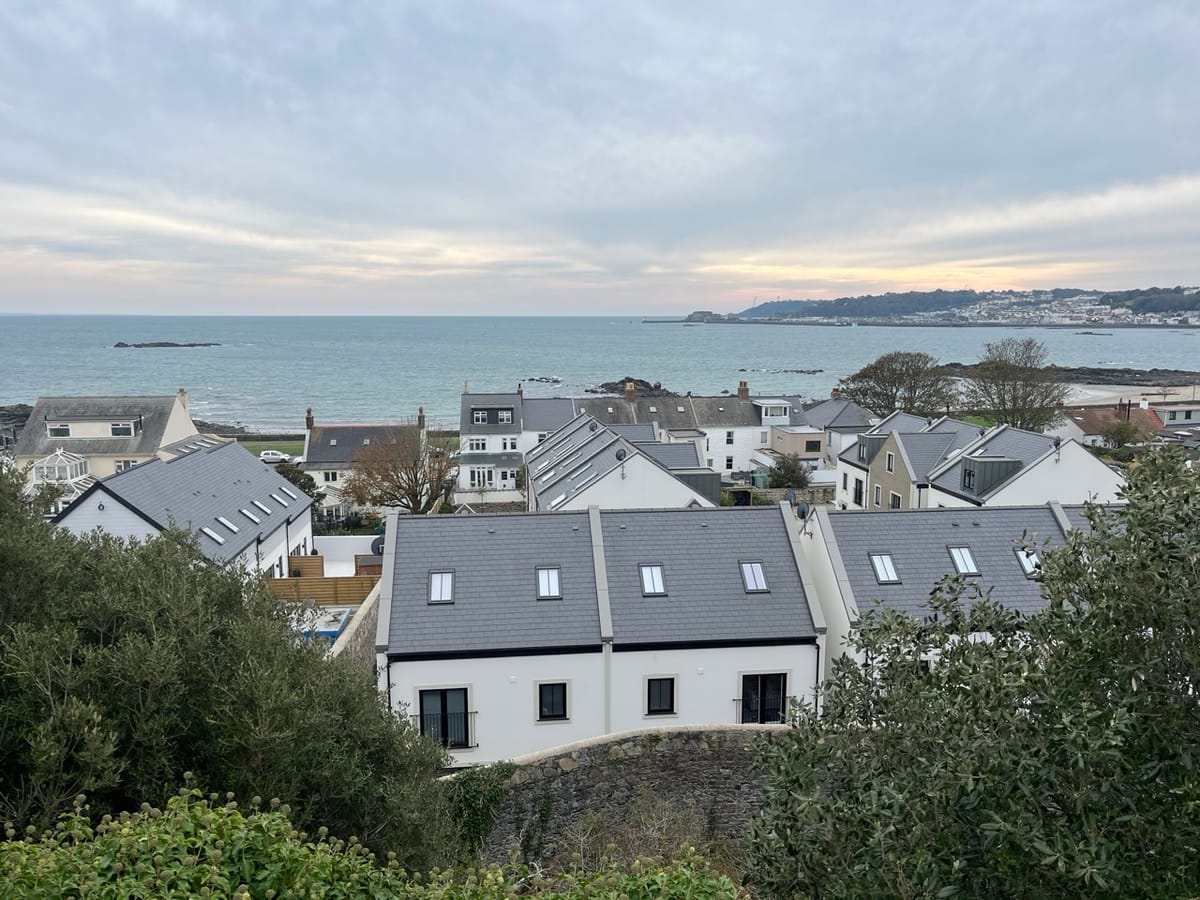
Monitoring reports for the first three quarters of 2025 indicate a significant gap between the theoretical housing supply approved through the planning system and the actual delivery needed to meet demographic requirements, particularly concerning affordable housing and smaller units.
The three reports compiled by the States were all released in one tranche , showing:
• The island's total housing supply capacity currently provides an estimated 8.6 to 10.6 years of supply, well exceeding the minimum five-year requirement
• The overall 'pipeline' of housing permissions (granted or under construction) consistently surpassed the minimum 2-year requirement of 536–654 dwellings
• The Affordable Housing portion of the pipeline, however, reached only 84 dwellings in Q2 and Q3 2025, falling substantially short of its minimum 2-year indicator target of 243–296 units
• The actual net change in residential units created annually has fallen below the States Strategic Housing Indicator, with 72 dwellings completed in 2024 compared to the required annual range of 268–327 new dwellings
• A concerning trend shows that permissions granted in 2022 are lapsing at an increasing rate, with 11 full planning permissions (25 dwellings) having expired by the end of Q3 2025 because development had not commenced
Robust land supply and permissions pipeline
The Island Development Plan requires maintaining a minimum five-year land supply to meet housing needs
Based on the annual States agreed requirement of 268–327 additional new dwellings per annum over the period 2024–2028, the current supply is sufficient for a period ranging between 8.5 and 10.6 years
The planning pipeline, which includes dwellings with granted permission or those under construction, exceeded the threshold necessary to ensure continuity of supply.
The "primary purpose of the quarterly housing monitoring is to monitor whether there is a maintained minimum two-year supply of housing permissions within the ‘pipeline’"
The total pipeline supply stood at 1,076 dwellings at the end of Q2 2025 and 1,058 dwellings at the end of Q3 2025
Physical construction activity, monitored as "dwellings under construction," has remained consistent.
The reports note that "the number of dwellings under construction at the end of each quarter has remained relatively stable over the past 10 years".
The cumulative number of private market units that commenced construction since the IDP adoption in 2016 reached 850 by the end of Q3 2025
Significant shortfall in affordable housing delivery
Despite the strong overall pipeline, delivery effectiveness is undermined by the shortage of Affordable Housing supply.
This is property that is reserved for people who can't afford to rent or buy property on the private market
The pipeline for affordable units was limited to 84 dwellings in Q2 and Q3 2025, which is less than 35% of the minimum 2-year required supply (243–296 Affordable Housing units).
The Strategic Housing Indicator "relates to the creation of new dwellings not the supply of land through the planning system"
Although planning permissions are being granted, the actual net creation of housing units remains substantially below the required SSHI levels.
The net change in residential units reported for 2024 was 72 dwellings, compared to the SSHI target range of 268–327 dwellings
Imbalance in unit size
Further concerns exist regarding the type of units being permitted and the failure of permissions to translate into construction starts.
The SSHI identifies that new private market housing should prioritize smaller homes, requiring 43.4% 1-bedroom units and 56.6% 2-bedroom units
However, the permissions granted during the monitoring period showed a different mix:
• In Q3 2025, only 27.3% of permitted units were 1-bedroom
• In Q3 2025, only 38.2% of permitted units were 2-bedroom
• Conversely, units with three or more bedrooms, for which the SSHI identified a 0% specific need, accounted for a combined 34.5% of permitted units in Q3 2025 (21.8% 3-bed and 12.7% 4+ bed)
The IDP acknowledges this potential variance, stating, "single dwelling sites do not need to meet the requirement for dwelling sizes so may be for a three or more-bed dwelling".
The process of planning permissions expiring before development begins suggests increasing delays or viability issues in converting theoretical supply into built housing.
Of the 109 permissions granted in 2022, a total of 11 full planning permissions (25 dwellings) had lapsed without being commenced by the end of Q3 2025.
How is the States looking to speed up house building?
Some of the initiatives are:
Affordable housing policy suspension: To encourage overall development, the States agreed on April 25 2024 to set the Affordable Housing policy requirement (Policy GP11, for large schemes of 20+ units) at 0% until May 31, 2029.
Conversion exemptions: New planning exemptions were introduced (Class 11) to allow the change of use of an upper floor of a building currently used for offices or retail in Main Centres to residential use (up to 250m² and meeting required space standards) without the need for planning permission
Proactive site delivery: The overall mandate for monitoring includes determining whether there is a need to:
"take action to help bring forward sites for development, wherever possible in partnership with landowners and developers"
"take action to help secure the timely provision of infrastructure"
Leale's Yard: In July 2025 the States agreed to buy Leale's Yard, which backs on to the Bridge, for £4.5m, so that it can build additional housing. It is out to tender to find someone to begin demolition work while it works on fresh designs for the site.
Comments ()