
Housing identifies potential for up to 618 new affordable homes by 2030
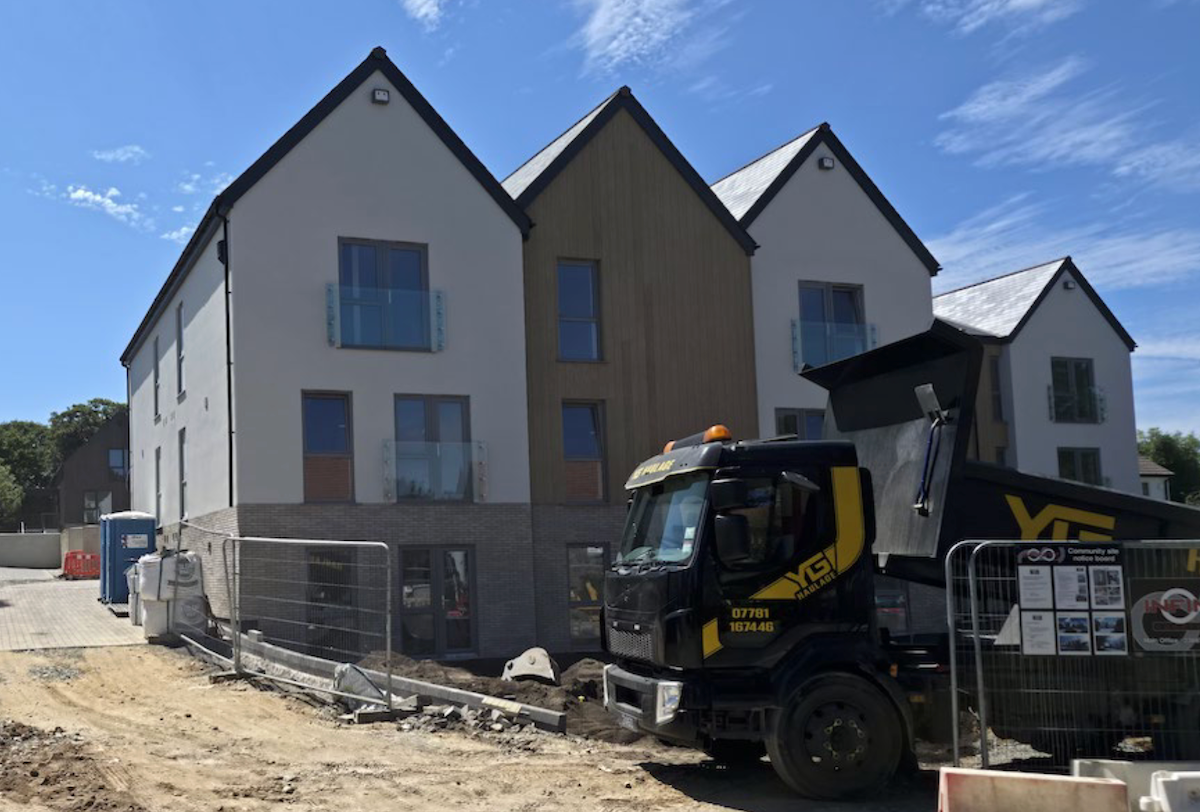
- Housing's new plan sees potential for up to 618 affordable homes by 2030, with a target of 250 to 300 affordable units under construction by the end of the political term.
- The strategy addresses severe housing pressures, with past development averaging just 106 units annually against an identified need of 300 per year.
- Delivery will be pursued through five channels including Guernsey Housing Association schemes, States-owned land development, new IDP allocations, private market purchases, and voluntary sector partnerships.
- The Committee plans significant private rental sector reforms including landlord registration, written tenancy agreements, and licensing for houses of multiple occupation from 2027.
- The programme requires drawing on a £150 million loan facility, with funding proposals contingent on the outcome of the ongoing tax debate.
Housing has published a strategy to tackle what it describes as one of the island's most significant challenges: the availability and affordability of adequate housing.
The Outline Housing Delivery Plan identifies opportunities to begin construction or commission approximately 500 homes across more than 20 sites by the end of 2030, but suggests this could range between 484 and 618.
The Committee has set a key target to have more than 250 to 300 affordable housing units either completed or under active construction by the end of the current political term.
The island has experienced severe housing market pressures for several years, with development consistently falling short of identified needs. The average net change delivered over the past decade stands at just 106 units per annum, far below the 300 net additional units per year indicated by the States Strategic Housing Indicator.
"Market demand has been high, resulting in a lack of availability and consequent demand-led price increases," the Committee stated in its workplan. "The availability and affordability of adequate housing is one of the most significant challenges facing the island."
Housing was established at the beginning of this political term specifically to address these challenges.
The delivery plan is structured around five distinct supply channels. The Guernsey Housing Association's five-year strategic business plan includes development of 168 new homes, with three major schemes identified: Oberlands, providing 15 one-bed flats for States staff currently under construction; Court Falaise, formerly Tyres Yard, with 70 one and two-bed homes for subsidised rent under construction; and The Mallard, offering 69 affordable homes in a mixed-tenure development.
Development of States-owned land will initially focus on smaller sites with potential to deliver 47 to 71 homes, with a moderate estimate of 59 across 10 sites, primarily one-bedroom accommodation. Larger sites including Castel Hospital, King Edward VII Hospital, and Perruque House are earmarked for longer-term development.
Nine sites have been proposed for affordable housing allocation through the focused Island Development Plan review, with an estimated total yield of 283 units. The plan assumes approximately 270 affordable homes from these sites, allowing for some private market housing to ensure viability.
The Committee plans to commission 80 to 120 affordable homes on private housing sites through advance purchase agreements, helping to unblock stalled developments. It will also work with community organisations to provide housing for those whose needs are not met by the private market, including emergency and interim housing.
The programme requires significant financial investment, with plans to draw upon a previously approved loan facility of up to £150 million. However, the Committee acknowledges that specific funding proposals are contingent on the outcome of the currently ongoing tax debate.
"The suitability of different forms of funding and the speed at which these funding proposals can be brought forward will be tied to the outcome of the currently ongoing tax debate," the workplan states.
A Programme Business Case is currently being prepared to enable the Affordable Housing Development Programme to move from the pipeline stage into delivery.
Beyond supply increases, the Committee is pursuing reforms in the private rental sector. During the third and fourth quarters of 2026, proposals will be brought to the States to establish basic requirements for written tenancy agreements, clarify eviction procedures, introduce landlord registration expected to start in early 2027, and implement a licensing regime for houses of multiple occupation.
"Guernsey is a particular outlier among similar jurisdictions in having very little legal protections in this area," the Committee noted. "The absence of this legislation makes the island less attractive to institutional investment and inhibits the growth of a 'build to rent' market."
The Committee emphasized that the goal is "not to be unduly burdensome, but to establish clear and basic parameters to govern tenancies" protecting both landlords and tenants.
A Homelessness Delivery and Implementation Plan is being developed in partnership with At Home in Guernsey to address increased levels of homelessness. The Committee has approved a project to re-establish services at St Julians House with enhanced focus on pathways to permanent accommodation.
The Committee is actively engaged with At Home In Guernsey, Action for Children, and Caritas regarding support services, with particular emphasis on establishing a clear gateway to access support directing those in need to appropriate services.
Following a resolution from the 2026 budget debate, the Housing and Policy & Resources committees must report back on measures to support first-time buyers by the 2027 budget. The Committee is considering policies principally related to facilitating saving and reducing purchase costs, including tax-free savings products and document duty exemptions.
"A policy which makes housing more affordable has inflationary potential, so must be appropriately targeted and carefully considered," the Committee cautioned.
New legislation approved in November 2025 introduces changes to how Part A of the Open Market can be accessed. Key provisions include up to 15 new Part A inscriptions available over five years through a ballot system, subject to a £500,000 fee, an exceptional circumstance route for buildings of historic or cultural significance, and transfer provisions to incentivize development of local market housing and rightsizing.
The Committee aims to approve at least 15 new Open Market inscriptions and promote or facilitate at least 20 local market units through transfer of inscriptions.
The Committee has launched the Housing Site Availability Framework in partnership with the Guernsey Building Trades Employers Association, providing transparency on development progress across all housing types.
According to the most recent IDP Monitoring report, there was active planning permission for 1,193 housing units at the end of 2025. The Committee is taking an individualised approach to development sites through periodic meetings with owners and developers to identify and remove barriers to development.
The Committee has not ruled out punitive policies for undeveloped land should it become apparent that development opportunities are not being progressed without good cause, potentially including higher TRP rates for undeveloped land.
The Committee is exploring Modern Methods of Construction, including various forms of off-site assembly and prefabrication. Plans include piloting modular construction projects as proof of concept, with lessons learned to be shared with the wider industry.
"Though modular construction faces inherent challenges in an island setting, amplified by our narrow road network, the Committee are interested in piloting and exploring the different methods of construction to help demonstrate its viability or otherwise," the workplan states.
The condition of States Housing properties is identified as a key concern, with the Committee noting that the maintenance budget was historically targeted for savings, creating an unsustainable and undesirable position.
The Committee aims to review and increase the maintenance budget to properly maintain properties to a good standard. States Housing currently produces net income of approximately £5 million per annum to the States, making active estate management essential to maximise social and financial value.
The States Strategic Housing Indicator, set in March 2023, identified need for 1,565 additional housing units over 2023 to 2027, split between 844 private market units and 721 affordable units comprising 473 social rental and 248 partial ownership.
A 2024 monitoring report showed marginal revision to 1,488 homes over five years, with 815 private market and 673 affordable. For the extended IDP period to end of 2030, the Strategic Housing Land Availability Assessment indicates need for 1,062 private market homes and 976 affordable homes.
The Committee acknowledges that based on current identified opportunities, there will be a shortfall in meeting all identified housing needs to end of 2030, but states that further iterations of the Housing Delivery Plan will identify other opportunities to increase housing supply.
Several workstreams from the previous Guernsey Housing Plan have been paused, including rent stabilisation and rent control investigation, statutory deposit protection scheme, older peoples' housing models, rightsizing barriers, and key worker definition.
The Committee Work Plan is described as a live document to be reviewed at least every 12 months to ensure it remains up to date and delivers what the island needs. The Housing Delivery Plan will be periodically reviewed with annual updates published.
The Committee emphasises that housing development is measured in months and years, with actions taken today not translating into completed homes for some years, particularly for complex large-scale developments.
"The Committee believes that performance will need to be monitored using not only consideration of the net increase in housing, but also the consideration of data relating to the development pipeline," the workplan states.
The Committee's mandate is to enable community wellbeing and economic prosperity by ensuring all people living in Guernsey have access to a range of good quality housing that is affordable, secure, energy efficient and adequate for their needs.
Q&A
Q: How many new homes does Guernsey plan to deliver by 2030?
A: The Committee for Housing's Outline Housing Delivery Plan identifies opportunities to deliver up to 618 homes across more than 20 sites by the end of 2030, with a risk-adjusted figure of 484 based on probability assessments.
Q: What is the current housing development shortfall in Guernsey?
A: Over the past decade, the average net change in housing has been just 106 units per annum, far below the 300 net additional units per year indicated by the States Strategic Housing Indicator.
Q: What reforms are planned for the private rental sector?
A: Proposals will be brought to the States in the third and fourth quarters of 2026 to establish written tenancy agreement requirements, clarify eviction procedures, introduce landlord registration from early 2027, and implement licensing for houses of multiple occupation.
Comments ()