
Guernsey‘s embrace of digital finance recognises it needs a regime fit for tech entrepreneurs, not just traditional experts
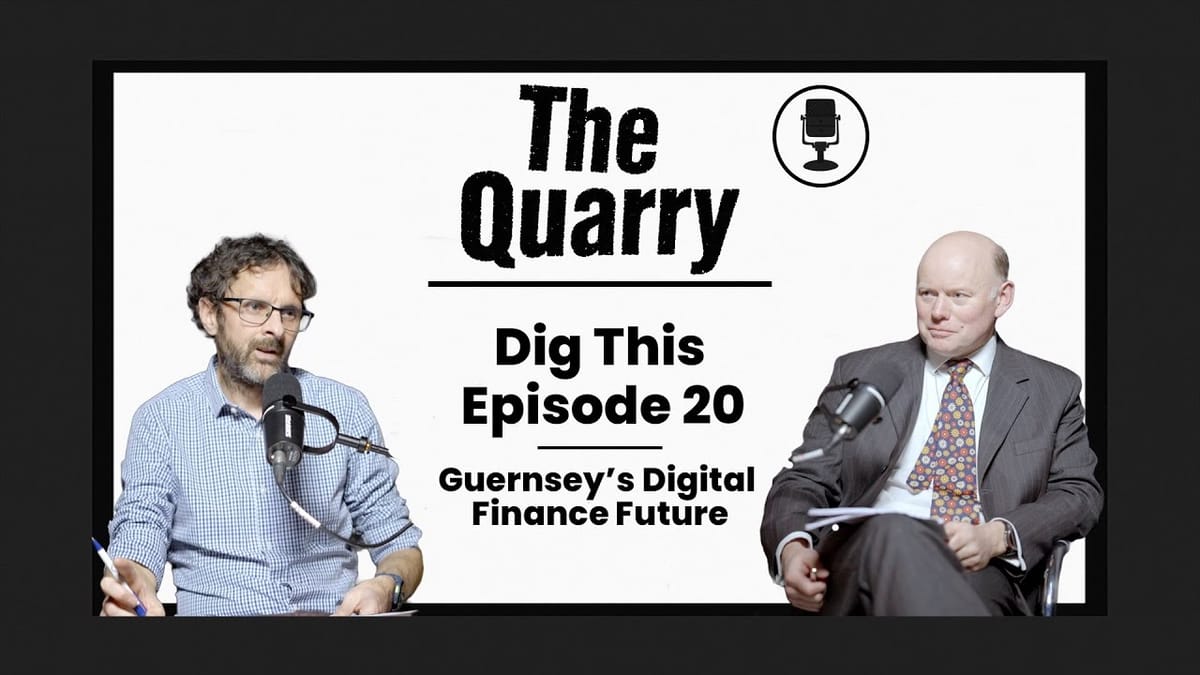
Guernsey’s shift to embrace digital finance is showing encouraging signs.
The regulator, freed from the workload of the Moneyval inspection, is signaling that it wants to have conversations with innovative businesses as it grasps the opportunity a changing approach from the US has created.
That means looking at tokenisation, blockchain, stablecoin, and beyond.
It has launched a consultation on what the regulatory environment needs to look like for success, while also being open to approaches for business that may be moving faster than the rules and laws can be changed.
The island steered clear of the at times risky dubious first wave of digital finance operations - just take a look at the Bahamas experience with FTX for what happened.
Now it has laid the groundwork as the technology has matured, with the Guernsey Financial Services Digital Finance Initiative a central part.
“What changed is Donald Trump coming in and his administration and all his regulators, frankly doing a bit of a volte-face and suddenly saying that this is the future of finance, and in those circumstances, a small jurisdiction such as Guernsey has a lot more latitude to welcome these things than was the case," GFSC Director General William Mason told the Quarry's Dig This podcast.
“The US is probably our second largest trading partner for financial services business, and one generally wants to be doing things which conform to US policy because they don't have to trade with us. They trade with us because they like us. We're a jurisdiction of choice, and the fact the US is now, with its Genius Act and other things going down a very permissive, encouraging route on digital finance gives us some scope to do so too.”
There are several elements to digital finance.
On public blockchains, for example, transactions are recorded on a shared digital ledger that can be viewed and verified by network participants, often within minutes rather than days.
Stablecoins are digital currencies usually pegged to the US dollar, enabling cross-border transfers that may bypass some of the costs and delays associated with traditional banking.
The concept of tokenisation is also being tested. Tokenisation uses blockchain technology to convert real-world assets into digital tokens, potentially making them easier to trade, divide, and track.
Mr Mason gave the example of a tower block, traditionally a very illiquid asset.
You could have digital tokens to own fractions of it and then have a traded market in that through the blockchain.
“Lots of asset classes which were previously very illiquid, ie, if you're in trouble, it’s really difficult to raise cash off them, can be made liquid through this technology, and thus much more easily tradable and that creates new markets and new opportunities for wealth management.”
Guernsey was very well positioned to take advantage of digital finance, he said.
“We've got a very good reputation for being tough on financial crime, and nobody wants to transact with a jurisdiction which is seen as being soft on financial crime.
“We've got a lot of good banks in Guernsey. We've got a lot of good insurers. There's a lot of fund administrators and a lot of wealth managers. So we've got a lot of the key components there.”
Guernsey’s fund sector was worth £272.8bn at the end of the third quarter of 2025.
“Those funds, if they want to tokenize, mean we've got some base business there. We've also got a good set of custodians in the jurisdiction who are charged with looking after things like share certificates. In the future, they need to adapt to looking after digital instruments.
“And dare I say it, the laws are actually already quite benign. The States passed digital signature legislation a long time ago, and we've got some of the fundamental laws in place which allow people to do some of this stuff.”
There was a balance to be struck, as ever, with the level of regulation.
Without any, people will lack confidence that their investment is not going to disappear overnight.
“Conversely, I don't think it's sensible to jump to trying to regulate for every conceivable circumstance, because, especially if you're a tech entrepreneur, more so than your financial services entrepreneur, it just looks too difficult to deal with. And I think what you've got coming together here is a lot of tech entrepreneurship with some financial capital.”
It is a complex space, and one where the GFSC is not claiming to have all the answers.
“I used to say in finance that the most complex thing for a regulator was understanding the balance sheet of a large life insurer or the trading book of an investment bank. Now, I think it's understanding how some of the operational flows of some of these transactions on the blockchains through tokenization actually work, and we have to be comfortable that the firms we license also understand that and can put in place sensible controls.”
Five months into the digital finance initiative and the GFSC has had approaches to its authorisations team for discussions about doing different things.
“We're pretty encouraged that both people on island and off island are interested in what we're doing.”
Its sandbox aims at making the regulatory process less daunting for people that may not have been in the industry long term.
It provides a zone where they can try experimental initiatives that may not entirely conform to its rule books.
“Say you're a tech entrepreneur, you want to set up a stablecoin in Guernsey, and you want to have it run in X, Y, Z fashion, which doesn't quite fit with all the rules.
“Maybe we can give you a license under the sandbox, but we put some conditions on the license to keep the public safe, saying, ‘yes, you can try this, you can see if it works technically, but you agree under the condition that you're not going to go near retail investors for some time. You're just going to deal with professional counterparties and things like that’.
“So it provides a zone where, frankly, the men and women running clever stuff in their back office or their garage don't think it's just too hard to scale. Hopefully it provides an environment in which people test things out, and then they find they actually work technically with a smaller audience, and then hopefully they get some venture capital, some private equity capital, to be able to scale these ideas to a full solution coming out of the sandbox.”
Conversations have taken place with two entrepreneurs in the last fortnight about using the sandbox.
In another early sign of its embrace of digital innovation, when the GFSC rewrote its handbook in 2017 it made clear it was very happy with digital forms of ID.
Industry has been slow to move in that direction, but it is one way of streamlining operations while complying with obligations for things like anti money laundering compliance.
AI has a role to play in that.
The Bailiwick remains in the early stages of embracing that.
“I think something like 85% of UK financial services firms are now using AI. And the trouble is, if you don't use AI, it's likely that your costs are going to be higher than your commercial rivals who do.
“I think we'd make the argument that it is a new general purpose technology. Does it have issues? Can it hallucinate? Yes, absolutely. Should firms be careful and cautious, as you should with any big IT project? Yes, of course, you should. Should you do your due diligence, do your blueprints right? Understand what it'll do. Of course, you should do all those sort of good things, but if you don't adopt it, you could be just totally out-competed by your competitors off island who have maybe invested more and can cut whole layers of process out of the system and thus offer a much cheaper service of an equivalent quality.”
Part of the Digital Finance Initiative is a consultation which aims to support growth through changes to the regulatory framework.
The GFSC’s proposals come off the back of extensive work with the industry already to find out what was needed and what they would be interested in pursuing.
It also spoke to some other leading regulators about what they were doing.
That consultation runs until 6 March.
The GFSC’s work in this area was recognised at Guernsey Finance’s Industry Update.
Nicola Watkinson, Managing Director, International of TheCityUK said that the UK has been a great believer in second mover advantage, watching what the rest of the world does, taking the best of it and then ingesting that.
“But at the moment, what we're seeing is technology is moving at a really rapid pace, and there's a huge amount of opportunity if we can ride that wave. Full credit to Guernsey and to your regulator who's been doing some really creative good thinking about things like tokenization.
“Because what we're seeing with the Genius Act and the Clarity Act, what we're seeing from Dubai, with the first ever digital finance regulator, we're going to be in Hong Kong next week, what we can see there with the moves that they're doing, and also for Singapore, is that other financial centers are moving at pace to capture the opportunities of digital finance, and we really need to see how the UK and Guernsey can do the same.”



Comments ()