
E&I to pilot a tougher approach to how it spends money
- Environment & Infrastructure piloting priority-based budgeting to align spending with agreed priorities and demonstrable value
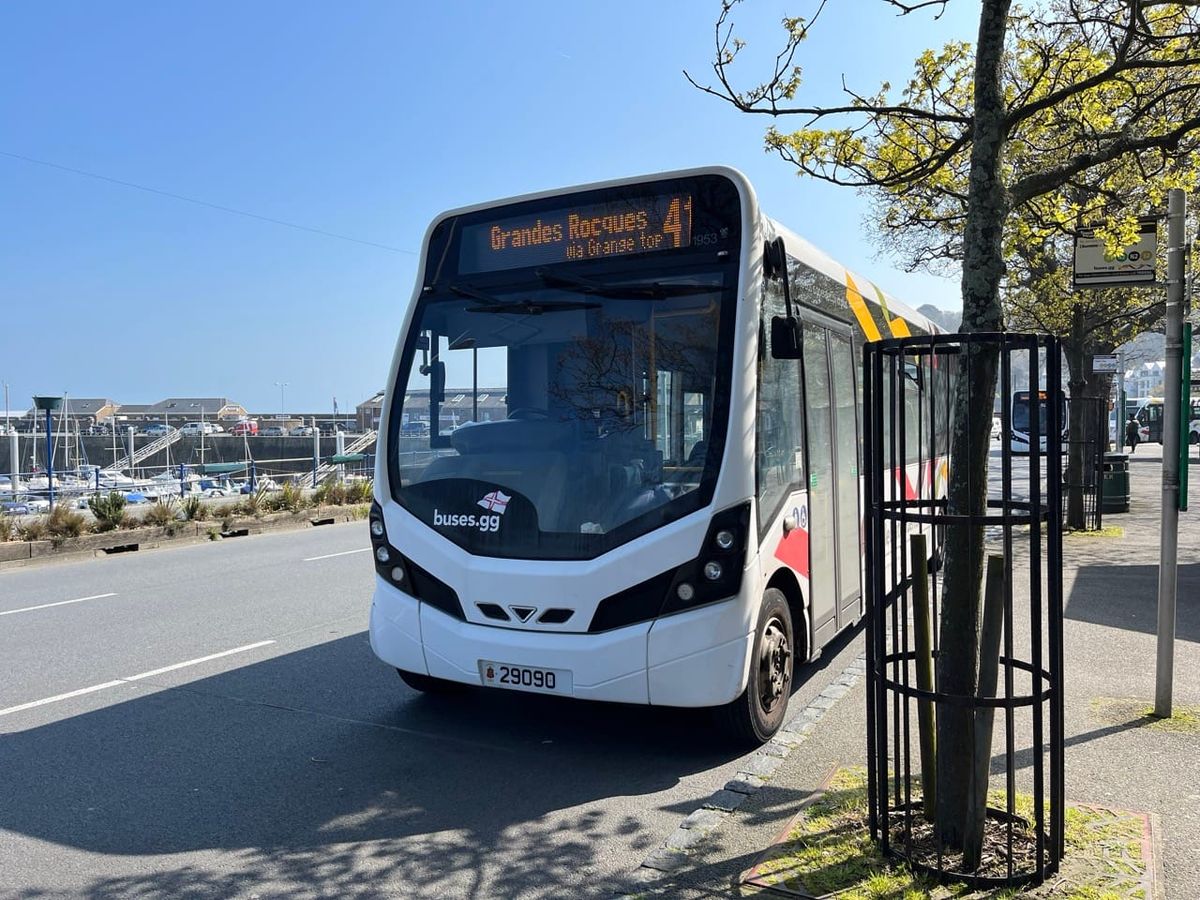
- 1.8 million bus journeys recorded in 2025, with Stagecoach covering 1.3 million miles and carrying over 1.7 million passengers in first full year
- Committee maintains over 400 kilometres of road network and managed 4,000 enquiries resulting in 1,252 road closures in 2025
- Strategic Infrastructure Plan being developed to provide coordinated framework for transport, energy, water, coastal defences and land use
- Solar capacity reached over 4MW by end 2025, narrowly missing 5MW target, while offshore wind programme moves into delivery-focused phase
Environment & Infrastructure has outlined its delivery record and strategic priorities in a detailed update to the States, revealing 1.8 million bus journeys in 2025 and positioning itself as a pilot for priority-based budgeting reforms.
Committee President Adrian Gabriel addressed what he described as a "simple and entirely reasonable question" regularly posed to States Members: what are the States of Guernsey doing to help islanders?
The committee has volunteered to pilot the States' move towards priority-based budgeting, deliberately challenging itself to examine spending decisions against agreed priorities and demonstrable value. Mr Gabriel emphasised this approach was "not about salami-slicing services or chasing short-term savings" but about ensuring spending decisions support clear objectives.
"We recognise that public finances are constrained, and that people rightly expect government spending to be aligned more closely with agreed priorities, outcomes, and demonstrable value," he said.
The committee is responsible for maintaining more than 400 kilometres of road network — roughly equivalent to the distance between Poole and Leeds — alongside nearly 250 junctions. In 2025, around 4,000 enquiries and applications were managed relating to temporary traffic management, with almost 3,000 permits issued resulting in 1,252 actual road closures.
The past year saw delivery of the annual maintenance programme, including resurfacing of key routes such as the Grange, Le Bourg and Route Militaire. Recent improvements at the Weighbridge roundabout maintained access during working hours to reduce disruption for commuters and town-centre businesses.
Public transport has shown significant activity, with Stagecoach marking its first full year of operation in Guernsey, covering more than 1.3 million miles and carrying over 1.7 million passengers. Two electric buses are now in operation, with charging infrastructure being developed to allow future expansion.
More than 400 children completed Bikeability Level 2 last academic year, with the committee now trialling family sessions in partnership with the Health Improvement Commission. School Streets schemes are progressing, with La Houguette made permanent and trials advancing for Les Beaucamps and St Sampson's High School.
The committee has formally identified the need for a Strategic Infrastructure Plan for Guernsey, marking what Mr Gabriel described as "an important shift away from fragmented, asset-by-asset decision-making toward a more holistic approach". The plan will provide a coordinated framework to guide investment across transport, energy, water, coastal defences and land use.
"We are currently at the very start of this process, determining its scope and methodology," Mr Gabriel said. "Getting this right at the outset is essential because the decisions informed by this work will have consequences that extend decades into the future."
Storm response capabilities were tested during Storm Goretti, when officers worked across teams to clear primary routes and restore access. Environmental teams carried out remedial works including preventative interventions at the Bathing Pools, where early action avoided more expensive repairs later.
In Alderney, breakwater repairs are being prioritised ahead of next winter following damage from Storm Goretti. The committee is also progressing flood resilience work at the Bridge, which will enhance protection for infrastructure whilst helping unlock development at major housing sites including Leale's Yard.
On energy policy, Mr Gabriel reported that whilst the Electricity Strategy target of 5MW of solar capacity by end of 2025 was narrowly missed, more than 4MW was installed. He recently represented Guernsey at the British-Irish Council Energy Ministerial meeting, continuing engagement on market access for offshore wind.
As a member of the Offshore Wind Delivery Board, he reported the programme has moved into a more delivery-focused phase, progressing through phases from opportunity identification toward developing credible routes to market.
"Offshore wind offers significant potential economic and strategic benefits, including long-term revenue and progress toward net zero," Mr Gabriel said. "But it is also complex, and this phase of work is about thoroughly testing assumptions, understanding market access, commercial structures and regulatory alignment."
The committee also plays a vital role in safeguarding Guernsey's trading ability through responsibilities for animal and plant health regulations, particularly important as the UK and EU continue discussions around trading arrangements. Officers continue to liaise with UK government authorities to ensure goods, plants and animals can move without disruption.
In March, the committee worked with Guernsey Ports to launch a Marine Biosecurity Guide, providing the "Check, Clean and Dry" approach to marine users. New arrangements supporting the Guernsey cow and dairy sector have been taken up by all eligible farm businesses.
Mr Gabriel acknowledged that much of the committee's work is not visible, noting it is "noticed only when it fails".
"When it is done well, it is taken for granted — which, in many ways, is exactly what we want," he said. "Roads are repaired, buses arrive, coastal paths are open, fuel and food move freely to and from the island, and the natural environment is protected."
The committee has prioritised what Mr Gabriel described as "pragmatism over aspiration, enabling frameworks over premature capital spend, and long-term resilience over short-term fixes".
"When someone asks me in the supermarket what the States are doing for them, I want to answer plainly — not with buzzwords or theories, but with real examples of delivery that people can recognise in their daily lives," he said.
Q&A
Q: What is priority-based budgeting and why is the committee piloting it?
A: Priority-based budgeting is an approach to align government spending more closely with agreed priorities, outcomes and demonstrable value. The Committee for Environment & Infrastructure has volunteered to pilot this approach to challenge itself on what it does, why it does it, and whether spending represents the best use of public funds, whilst recognising that public finances are constrained.
Q: How extensive is Guernsey's road network that the committee maintains?
A: The committee is responsible for maintaining more than 400 kilometres of road network, roughly equivalent to the distance between Poole and Leeds, alongside nearly 250 junctions. In 2025, it managed around 4,000 enquiries and applications relating to temporary traffic management, issued almost 3,000 permits, and coordinated 1,252 actual road closures.
Q: What is the Strategic Infrastructure Plan and what will it cover?
A: The Strategic Infrastructure Plan will provide a coordinated, long-term framework to guide investment across transport, energy, water, coastal defences and land use. It marks a shift away from fragmented, asset-by-asset decision-making toward a holistic approach considering how different systems interact, population pressures, climate risk and effective resource deployment. The committee is currently at the start of this process, determining scope and methodology.

Comments ()