
Discover Guernsey virtual tour: Ste Apolline's Chapel
Discover the history and secrets of a rare medieval chantry chapel.
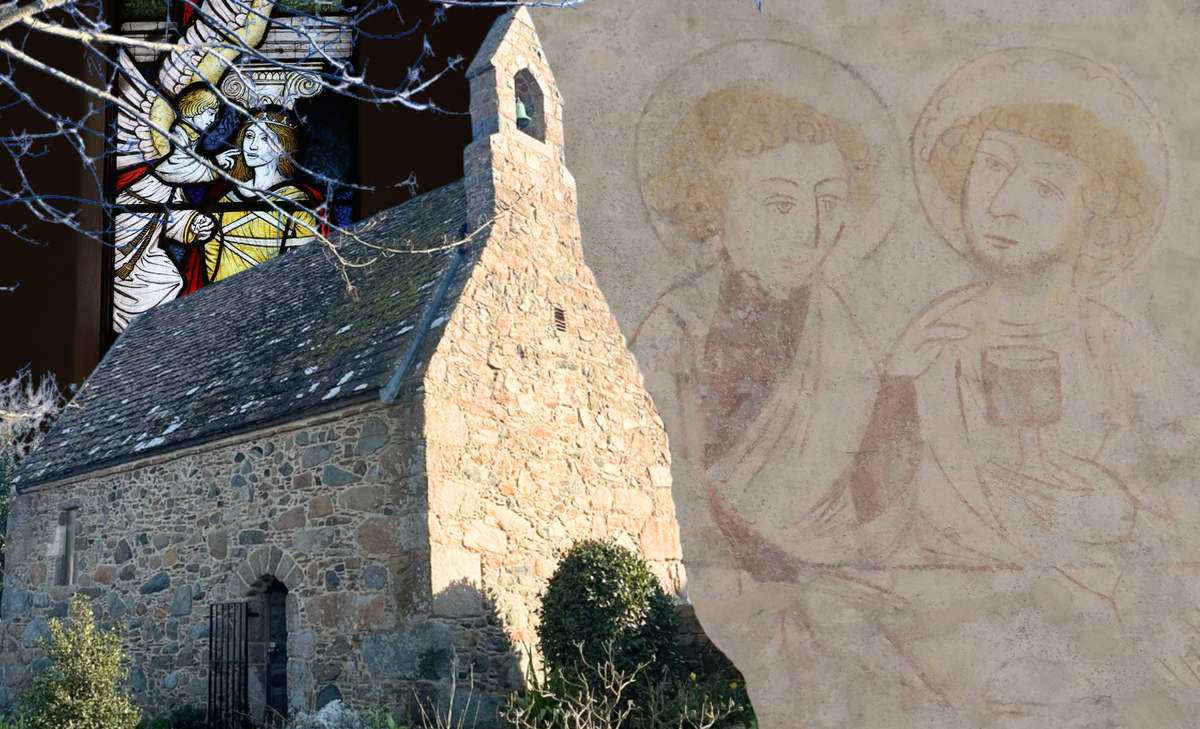
That Sainte Apolline’s Chapel stood for six centuries is remarkable.
Not only did it survive changing religious outlooks, for half of that time it was a farm building, falling into such a state of disrepair that when the argument was made for the States to buy the building in 1873 one opponent called it a “useless” and “ugly” ruin.
It became the island’s first ancient monument after the purchase for £120.
Even in more decent times the ravages of damp have threatened the chapel and the rare spectacular medieval church wall paintings.
It is also one of only four religious sites in the Western Hemisphere devoted to Sainte Apolline, the patron saint of dentists, the others being in Rouen, Rome, and Ribe.
Walk inside, or read and watch below to discover more about Ste Apolline’s Chapel.
A tiny chapel that reflects 600 years of Guernsey life and holds a rare treat inside
The life of the chapel begins in the late 14th century, a period of firm religious belief in Guernsey.
It was founded by Nicholas Henry, whose since demolished manor stood nearby, on land which had from at least 1054 been owned by the Abbey of Mont Saint Michel.
He is said to have constructed the chapel as an act of thanksgiving for surviving the heavy losses suffered by the English Navy during battles against the French.
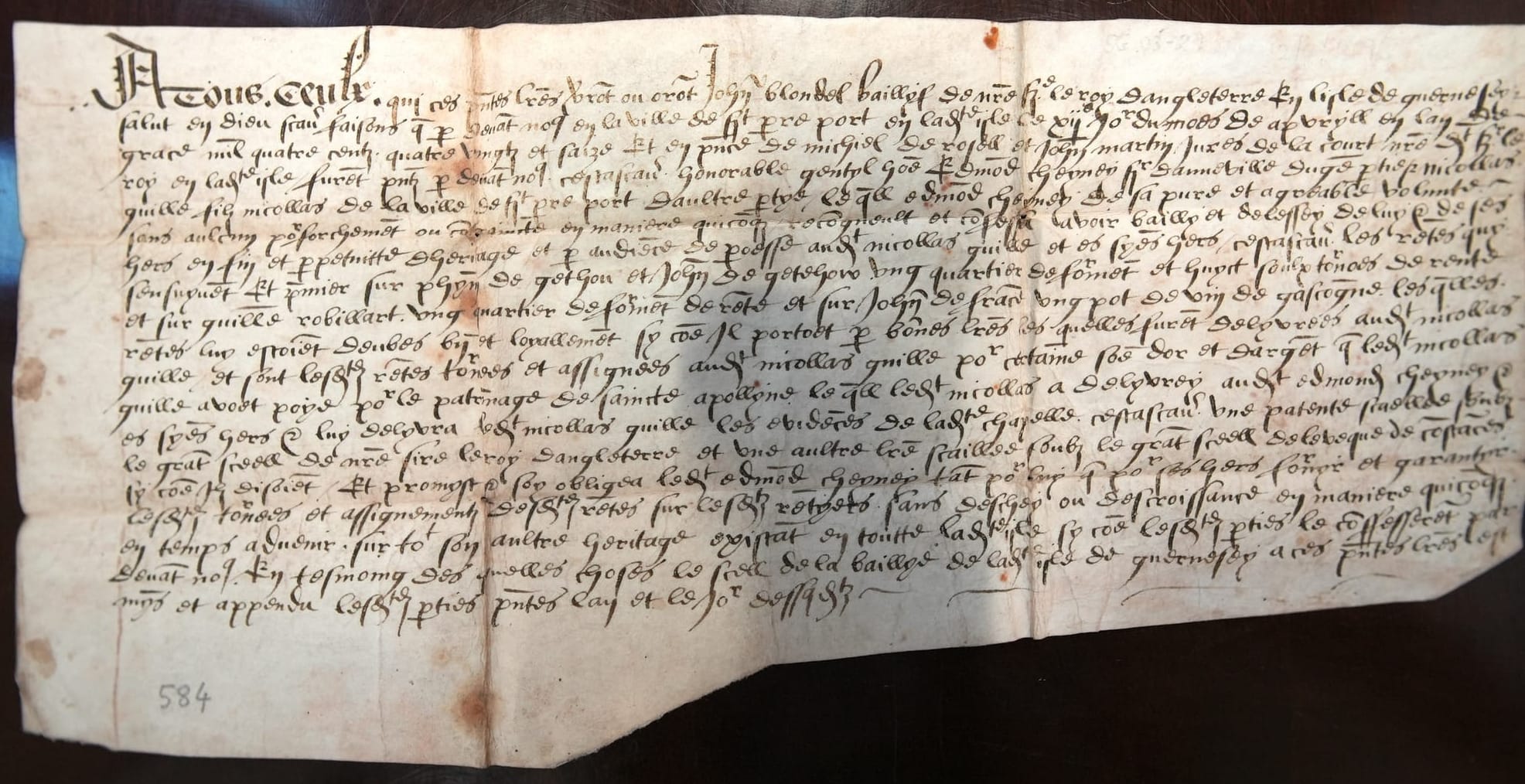
He received a charter from the Abbot and Monastery of Mont St Michel on 3 October, 1392, giving him permission to provide the permanent funding and resources needed to keep the chapel running and pay for a priest.
Because the Abbey owned the land, it was normally entitled to an annual rent.
The Abbot’s permission was required to free the land (or the surrounding "close of three vergées") from this standard rent so it could be used for the chapel. In exchange, the Abbey accepted a symbolic yearly payment of one bushel of wheat.
At its inception, the structure was dedicated as the Chapel of Sainte Marie de la Perelle.
Formal legal standing was granted on 20 July, 1394, when King Richard II issued a royal grant at the Palace of Westminster.
This was needed to bypass a law that would normally block land and permanent income from being gifted to the church.
This document permitted Henry to provide twenty shillings of rent from his manor to maintain a chaplain who would celebrate daily mass in perpetuity for the safety and departed souls of Nicholas, his wife Philippa, and their ancestors.
The chapel was built with solid masonry walls and a granite vault, and it was decorated shortly after completion (c. 1400) with high-quality wall paintings depicting the Last Supper and other scriptural scenes.
While originally dedicated to the Virgin Mary, an Act of the Royal Court from 1452 provides the first recorded use of the name "Sainte Appolyne".
The chapel functioned as a chantry (a place of worship where Masses were celebrated in perpetuity for the spiritual safety and souls of the founder and their family) until the Reformation reached Guernsey in the mid-16th century.
It survived that period where most others were destroyed or stripped of their religious functions. On 25 May, 1563, a Royal Commission conveyed the chapel to Thomas Effart, a prominent Protestant Jurat and leader of the reforming party.
Under this new Protestant regime, Catholic practices were suppressed, and the building began a long period of secular use.
For the next three centuries, the chapel was used as a farm building, serving as a stable for cows and a storage site.
This agricultural repurposing is credited with saving the structure from being dismantled for its stone, which was the common fate of many other medieval chapels in the Channel Islands.
During its centuries of secular use, the property passed through several families, including the Brouarts, the Martels, and the Andros family.
By the early 19th century, it was owned by the Lenfestey family.
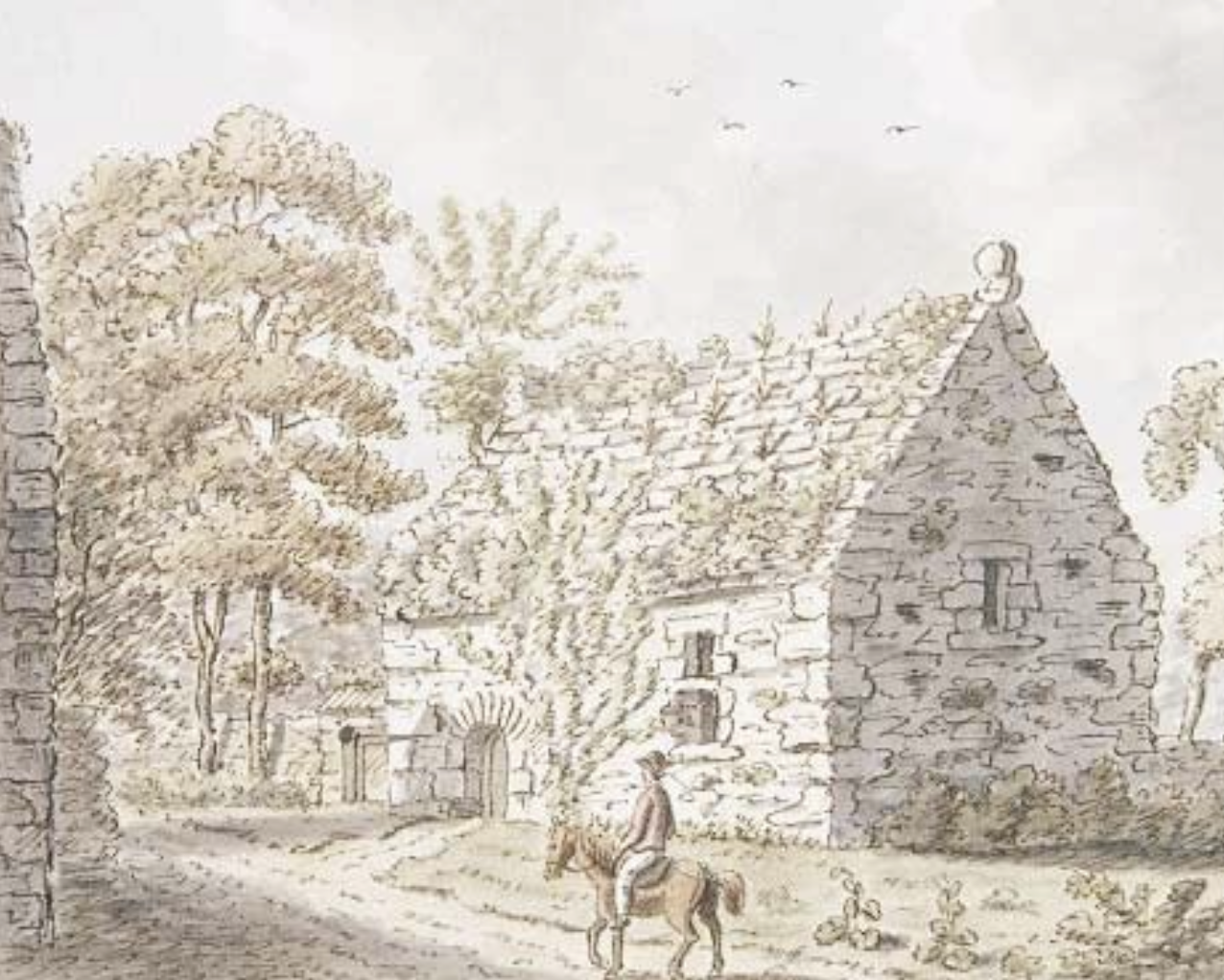
The building's transformation into an agricultural stable was documented by various artists, including Joshua Gosselin, whose 1793 watercolour showed the roof heavily overgrown with vegetation.
The movement to save the chapel was led by Sir Edgar MacCulloch, a prominent local antiquarian who recommended in March 1873 that the States of Guernsey purchase the building.
MacCulloch argued that the chapel's solid construction and harmonious proportions made it a unique architectural treasure that should not be allowed to fall into further ruin or be demolished for land profit.
Although some officials, such as Henry Tupper, opposed the purchase by calling the building a "useless" and "ugly" ruin, MacCulloch’s view prevailed.
On 19 July, 1873, the States bought the chapel and approximately 12 perches of adjoining land from Pierre Lenfestey for £120.
This milestone acquisition established Ste Apolline’s as the island’s first ancient monument and led to the creation of the Ancient Monuments Committee.
What makes the building so special?
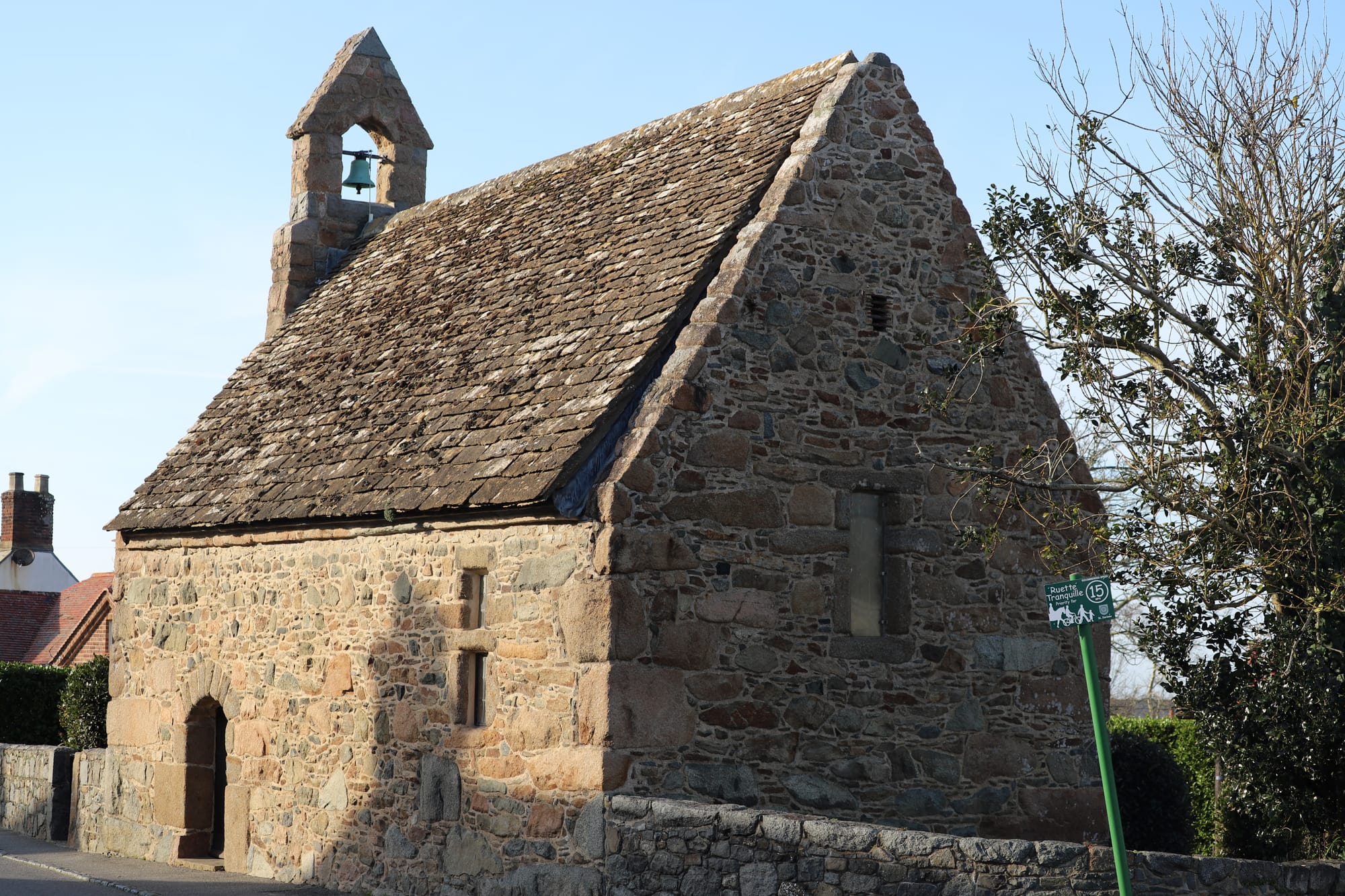
It is the only free-standing medieval chantry chapel remaining in Guernsey and one of only three in the Channel Islands that survive in anything close to their original form.
It was the island’s first Ancient Monument: Purchased by the States in 1873 to prevent it from being demolished or continuing to be used as a cow stable, it prompted the establishment of the Ancient Monuments Committee.
It remains the only ecclesiastical building owned by the States.
Its founding and early history are unusually well-documented through charters from the Abbey of Mont St Michel and royal grants from King Richard II.
What is so important about the medieval wall paintings?
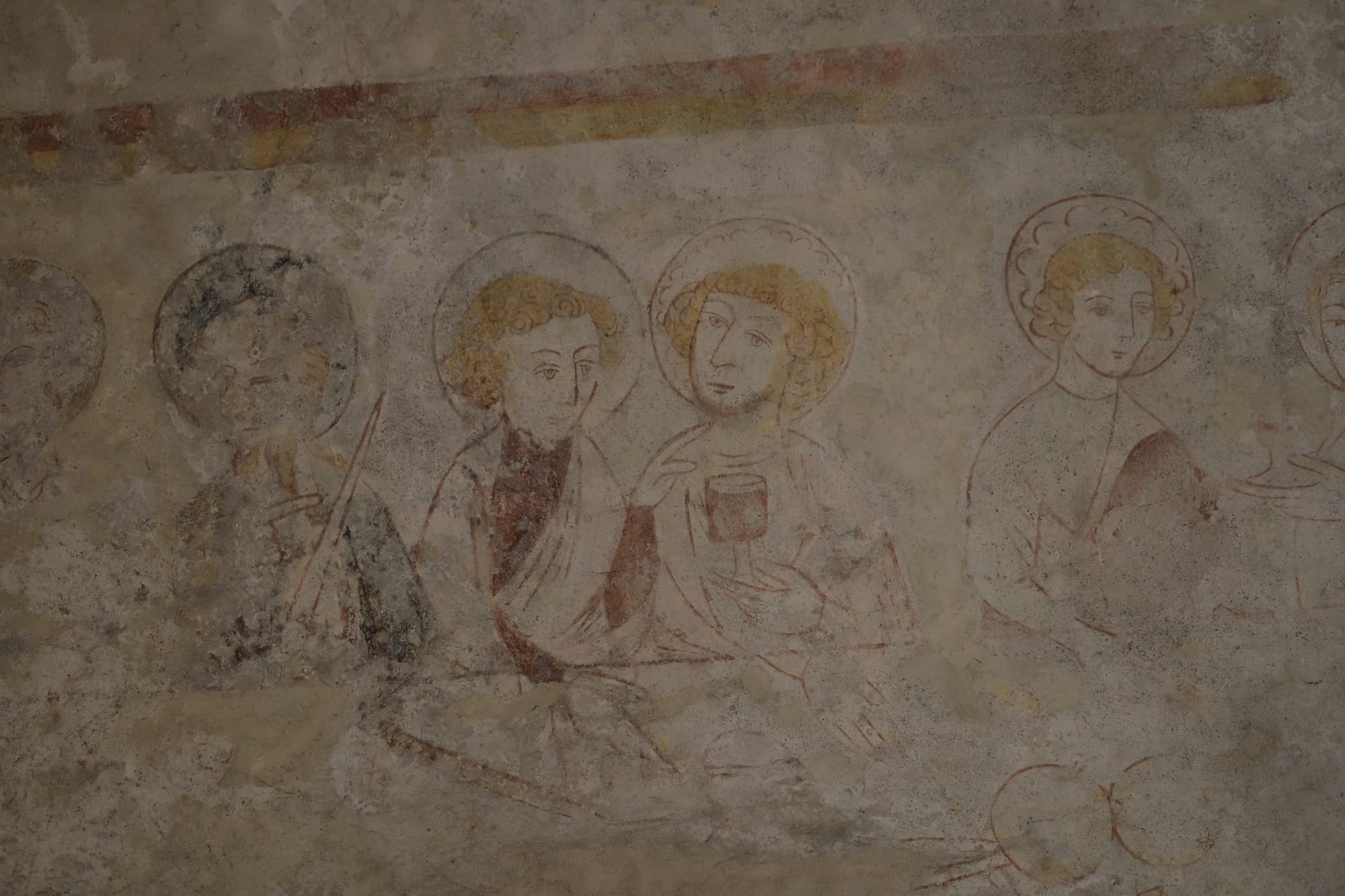
They are only found in two places in the island, the other surviving example is in Castel Church.
The Last Supper is not a particularly common theme for the painted decoration of church interiors in the period, in either France or England.
The depiction of the Last Supper features rare elements, such as Judas seated in profile at the end of the table rather than in front of it, and the presence of St. Paul with his sword (St. Paul was not one of the original twelve Apostles present at the Last Supper). There are parallels in a 14th-century wall painting in Savigny, Normandy.
There is an exceptional visual focus on the elements of the Eucharist, including prominent glasses of red wine and loaves of bread.
Executed around 1400, the paintings are a high-quality regional variant of the late Gothic International Style, which features that might indicate that the painters belonged to a team from France.
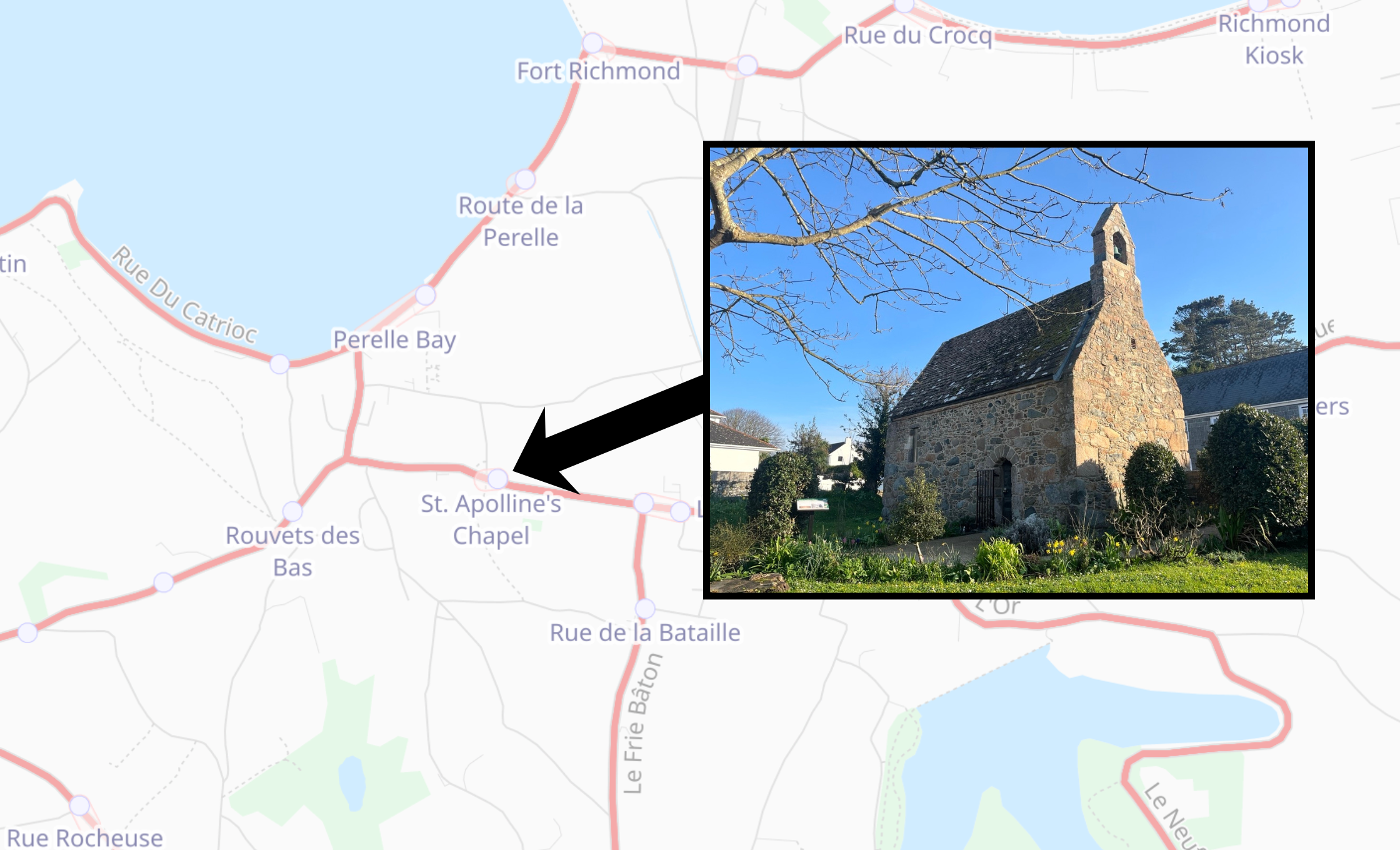
For more information click above to take the tour and dive into the features and history of the chapel.
Details based on the Wessex Archeology Conservation Management Report produced for the States in 2003, available here.

Comments ()