
Charity Spotlight: Guernsey Cheshire Home is evolving, a new purpose built facility is a key aim
It has been a home for people with serious disabilities for nearly 40 years.
One that is all about facilitating life, encompassing a philosophy that concentrates on what people can do, not what they can’t.
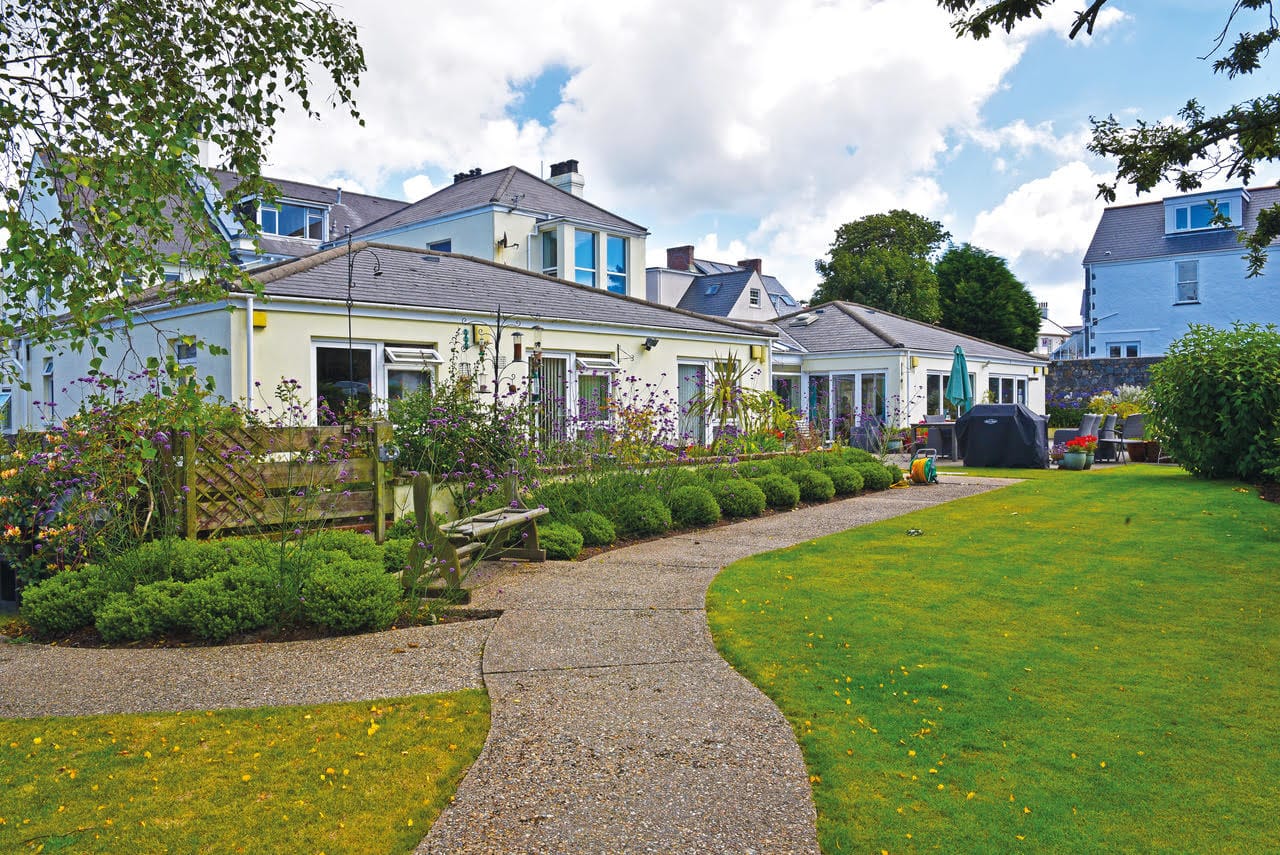
The Guernsey Cheshire Home sits on the Rohais, but Shorncliffe, for all the good memories it holds, is tired, and now the charity is planning for a new future.
The Home receives no public grant, it relies on fundraising, legacy donations and through payments of long term care allowance to cover running costs of about £1.6m a year, 90% of which is spent on staffing.
It has appealed to landowners to let them know if they have a site that could become a purpose-built facility, one that could also help it evolve to meet the future needs of the island, including the possibility of providing step down care for those ready to leave hospital, but not quite ready to look after themselves.
Making lives as fulfilling as possible
If you walked through the doors last week, you would have seen three residents glued to the Winter Olympics curling.
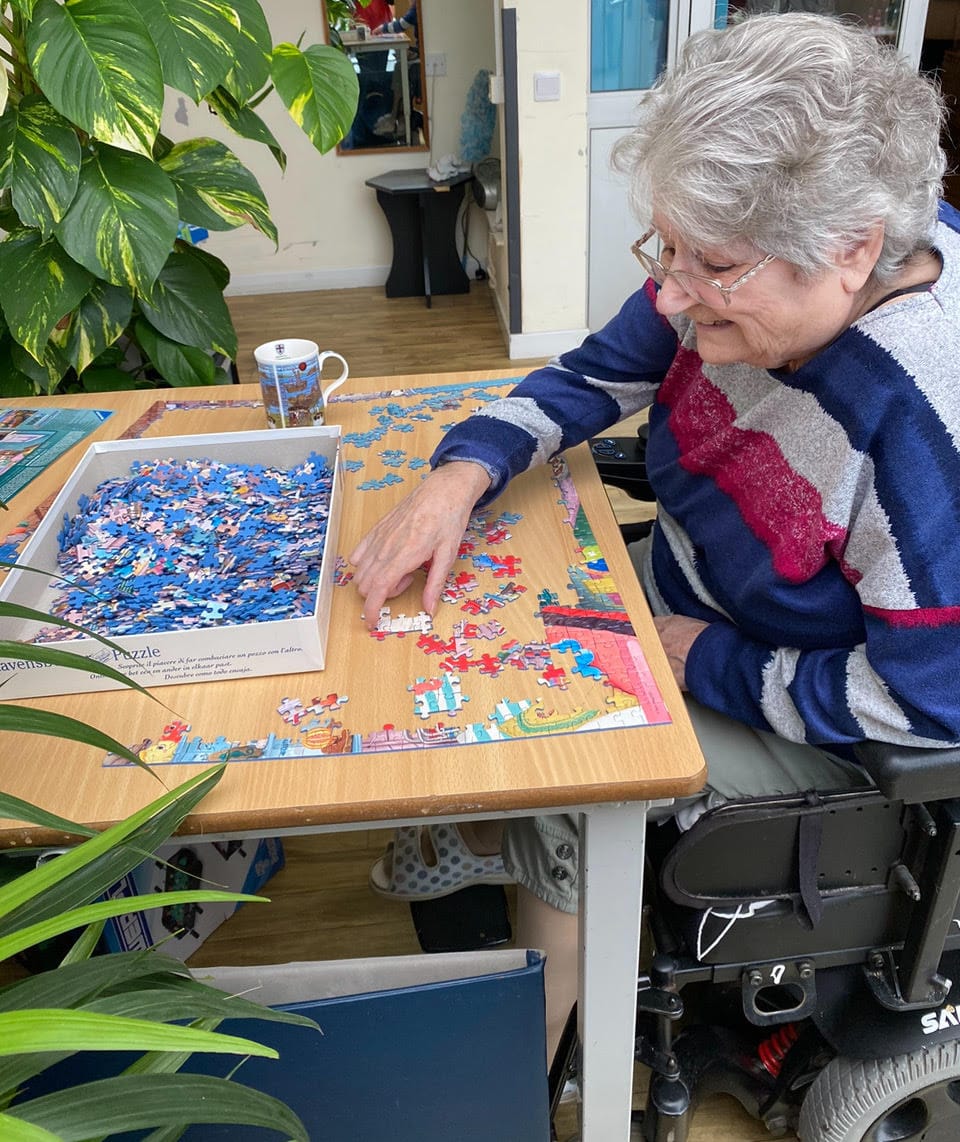
Two others were busy playing Uno.
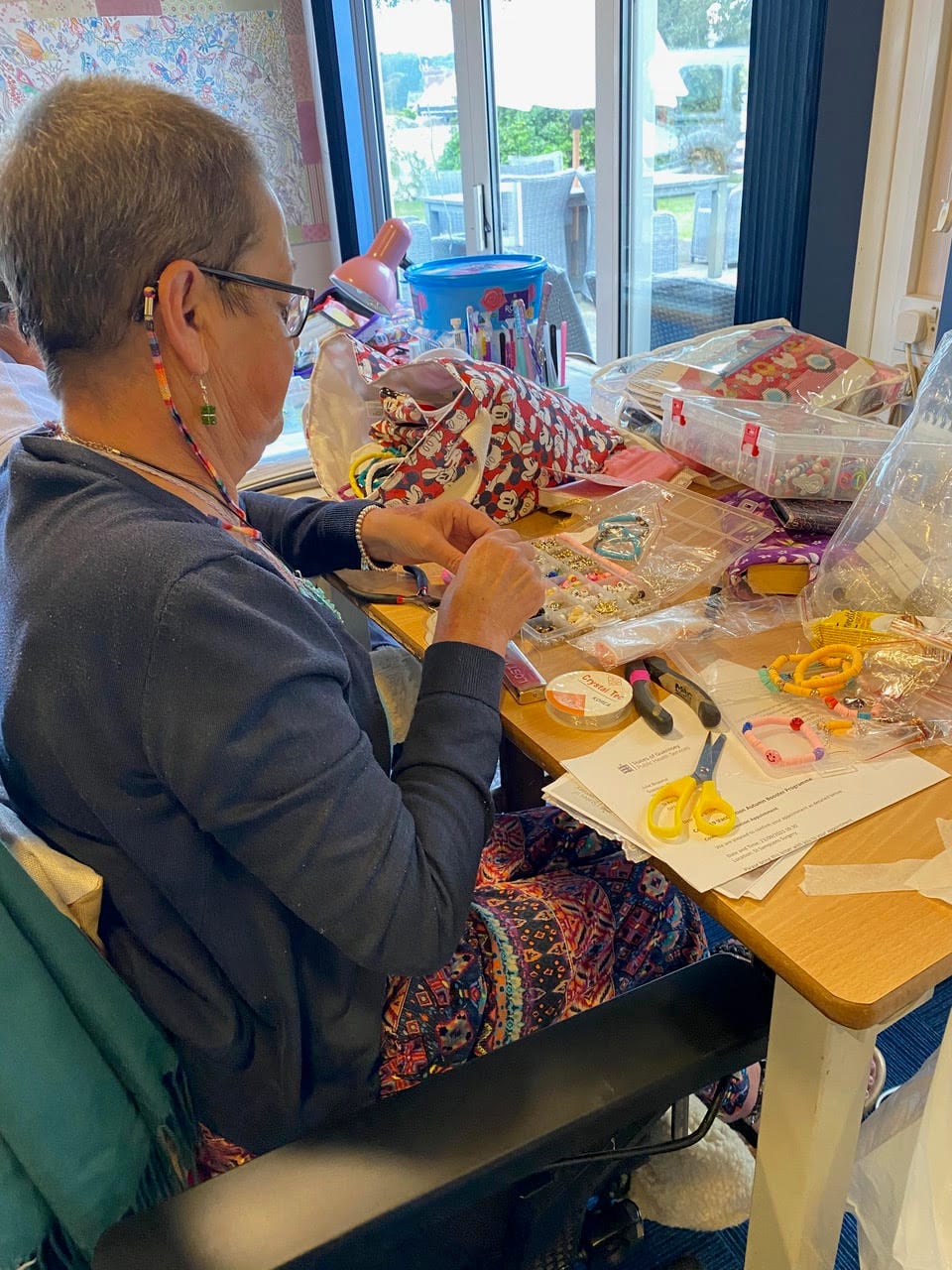
Another was making jewellery which is often sold from stalls, another crafting an image with beads.
Someone was out at the gym, another having lunch with a relative.
There are 11 full-time residents and others that visit for respite.
The home was founded by volunteers nearly four decades ago to embody the principles of Leonard Cheshire, a distinguished Second World War pilot who in 1948 recognised a gap in what the new NHS was providing.
He began by providing accommodation for one man, but by the summer of 1949, Le Court in Hampshire had 24 residents with complex needs, illnesses and impairments, and a tuberculosis ward.
Others began to recognise the need for a similar home for people in their communities and the charity now known as Leonard Cheshire began.
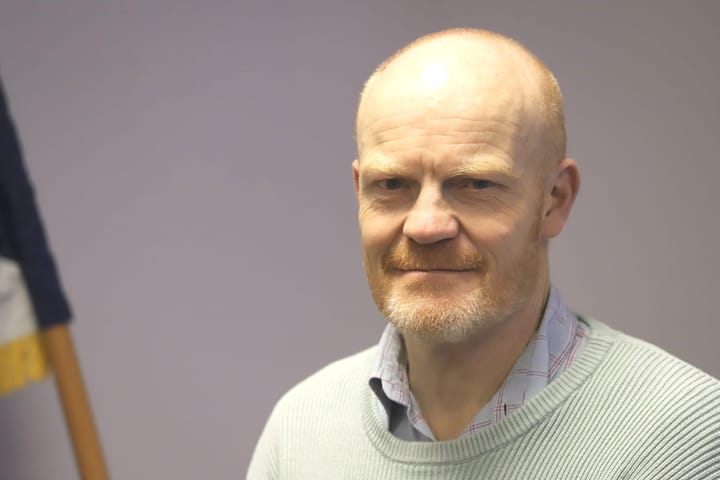
“The principle was, ‘I'm less concerned with the fact that you've lost your left leg, I'm more concerned with what you can now do with your right leg?’,” said Guernsey Cheshire Home Chairman Rob Shepherd.
“And that principle really embodies what the Cheshire home in Guernsey is all about.
“We're much more interested in facilitating life for those residents that live with us. Physical disabilities among our residents are generally around MS, MND, stroke, car accidents. But actually we're really concentrated on physical ability. What is it that our residents want to do to make their life as fulfilling as possible.”
Of the total £1.6m. annual costs of running the home, £600,000 comes from fundraising, through large events like the ongoing monthly Dream Holiday Draw and The Boxing Day Dip, down to quizzes.
“There's no two ways about it, it's a real long, hard slog. Because we don't get any direct funding from the States, we are required to get on with it ourselves.”
They are aware that if they build to cater for more residents, perhaps a 22 bed facility, it means increased running costs.
Something may well have to change about their funding model.
“Once we've got the facility there, we need to work out additional sources of revenue that will enable us to close that funding gap, such that our fundraising requirement becomes at least stabilized around a number that we think we can reasonably achieve each year.”
One source of revenue could be physiotherapy for non residents.
“We've been talking to Health & Social Care, it's no secret, for about seven or eight years about a potential facility and whenever I say that we're in trouble, they get very scared because they know that but for us, these 11 highly complex needs residents would fall upon the government's not hands, but beds, and that's not a scenario they want.
“They need us. But on the other hand, we're quite proud of our independence.
“The other thing, which we've talked about with them, is what's called step up and step down care. So someone who perhaps goes into hospital for a knee replacement, and after two or three days, they're well enough to leave hospital and, frankly, liberate that bed for someone else to go into hospital.
“But they're not quite well enough to go home yet, they need that additional care. Well, a knee is a piece of cake for our carers compared to complex MS or other needs. So that step down care is something we think we could do, and that might be quite a good source of revenue for us.”
He said that how their funding model changes has got to be on the table.
“But I'll be frank, there are two issues with that. One is that HSC is not replete with money at the moment. But the other, and this is more subtle, is that part of our appeal to the Guernsey public is we get no direct funding from the States of Guernsey - ‘we belong to you, please help us, support the home’. As soon as we get a little bit fuzzy, it undermines that message.”
Moving on?
Home is a key.
It is something that has to carry through to any new site, planning for which remains at an early stage.
“We've all lived in houses that have not necessarily been in Rolls Royce condition, but they're our home.
“It's an emotional attachment to a building I rather like, I'm used to seeing that crack on the wall because it's my crack, on my bedroom, in my home.
“So we don't want it to be some sort of sterile facility. It's got to be a home where residents feel comfortable. Gavin, one of our residents, died a few years ago. He was a massive Liverpool fan, so his rooms were festooned with Liverpool posters. That's really important, that we have the touches that make it home for each of those residents.”
Officers and deputies at HSC and Employment & Social Security have been keen to make the move happen.
Plans were well advanced to build on part of the Fontaine Vinery site, which was going to be developed for housing before political thinking changed to favour the Salt Pans and Leale’s Yard.
Before Christmas the charity was approached about a property that the seller was prepared to discount, but the sums did not quite add up.
“What's clear is that actually, the costs of remodeling our existing site are not much different to building or rebuilding another site, and you have the added issues of, what do we do with our residents when we're rebuilding their home?
“What came out of the process from seeing this place before Christmas was that there might be someone else out there, and part of our ethos is we stand on our own two feet.”
Five people have already come forward after the charity went public with its appeal and they have now visited one plot.
They are still keen to hear of any options.
Residents needs are changing.
People are living longer with a disability because of higher standards of care.
The equipment they can use is getting more sophisticated, and in the case of wheelchairs, larger.
That means corridors and doors need to be suitably wide.
MS is statistically becoming more prevalent in society.
Three years ago it was identified that 60 people could need the Home’s help in the coming years.
At the end of the day, this is about housing for local people, which is something that people can lose sight of, Rob said.
“There's lots of research around care homes, not just physically disabled like us, but older care homes, if they're within a community setting where there are families and young people moving in and out, that's fantastic for those community settings, on both sides.
“That's why the idea of being down at the Fontaine Vinery is very attractive to us. But we can't wait. We thought we should see what's out there, because it may be we have to go on our own.”
For further information or confidential discussions, please contact:
Rob Shepherd. Phone: 07781 407442. Email: Rob.Shepherd@cheshirehome.gg
Comments ()