
Brittany Ferries warns new carbon tax in form of UK’s Emissions Trading Scheme could add significantly to its costs
- UK consulting on extending its emissions trading scheme to cover voyages to and from Guernsey.
- The ETS has been operating since 2001, with plans to extend it to the maritime sector from 1 July.
- Brittany Ferries warns it is a costly blunt instrument.
- Questions raised in Parliament about the potential economic impact.
- P&R responds to consultation.
The UK plans to extend its emissions trading scheme to cover shipping to and from Guernsey and the other Crown dependencies from July.
Policy & Resources has responded to a consultation on the proposal in the hopes of shifting the UK Government’s thinking, while Brittany Ferries says it is a concern for it and the wider shipping industry.
An extension of the UK ETS to the domestic maritime sector has a start date 1 July.
It operates on a “cap and trade” principle: each year, a limit is set on the total volume of certain greenhouse gases that sectors covered by the scheme may emit.
P&R President Lindsay de Sausmarez said: “Deputy Lindsay de Sausmarez, President of the Policy & Resources Committee, said: "The UK Government recently launched a consultation on extending the UK Emissions Trading Scheme (ETS) to maritime transport to and from the UK, specifically including a reference to the possible extension of the scheme to shipping from the Crown Dependencies.
“The States of Guernsey have made representations to the UK Government to highlight three key areas: the importance of the lifeline route between the islands and the UK; the potential impact of the ETS on this service; and the islands' own plans to work towards net zero targets, which specifically include emissions from off-island travel.
“The UK Government will be taking these representations into account as it considers its expansion of the UK's ETS."
Ships that are 5,000 gross tonnages and above will be subject to the UK ETS obligations, although there are some exemptions such as offshore ships, emergency and medical craft
The oil tank ships that supply the island, Sarnia Cherie or Sarnia Liberty, are under this tonnage.
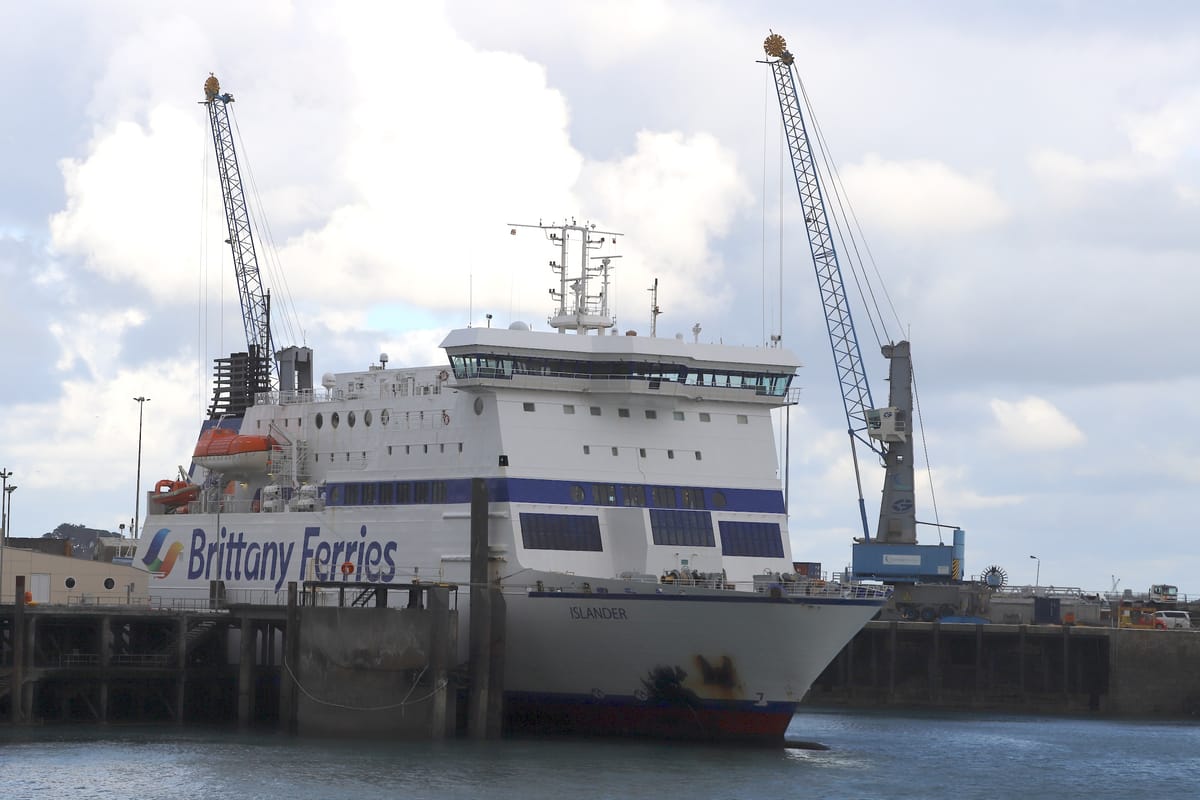
But Brittany Ferries Islander and Voyager would both be captured by the scheme on their UK legs if it was to extend to the island.
“The extension of ETS is a worry for Brittany Ferries and the wider shipping community,” a spokesperson for the company said.
“The way the legislation has been drafted is particularly disappointing.
“We would like to see money ring-fenced for cleaner shipping initiatives, for example supporting plug-in at quay, where electricity costs are currently prohibitive.
“At the moment it’s simply a blunt instrument, a carbon tax that will add significantly to Brittany Ferries’ costs.”
On 3 February, Conservative MP for Isle of Wight East Joe Robertson received an answer to a written question about the scheme asking what assessment had been made of potential impacts on services to and from Crown Dependencies; and whether any mitigations or exemptions are being considered for these routes.
Department for Energy Security and Net Zero Minister Chris McDonald replied: “The UK Emissions Trading Scheme Authority has recently consulted on proposals to include a share of emissions from international maritime voyages, including voyages to and from Crown Dependencies and British Overseas Territories. The consultation invited evidence on the potential impacts on their communities and economies.
“The Government recognise that some of these communities rely heavily on shipping and will continue to engage with Crown Dependencies and Overseas Territories regarding the financial impacts this policy may have on their communities and economies.
“Policy decisions will be considered once consultation responses have been fully analysed and considered by the UK ETS Authority.”
The UK ETS was introduced on 1 January 2021.
Those covered can receive free emissions allowances or purchase them at auction or on the secondary market. The cap decreases over time, with the intention of creating an incentive to reduce emissions in order to remain within allocated limits.
The UK ‘s scheme broadly mirrors the structure of the EU’s.


Comments ()