
Beau Sejour needs major transformation as review warns 'patch and mend' approach risks closure
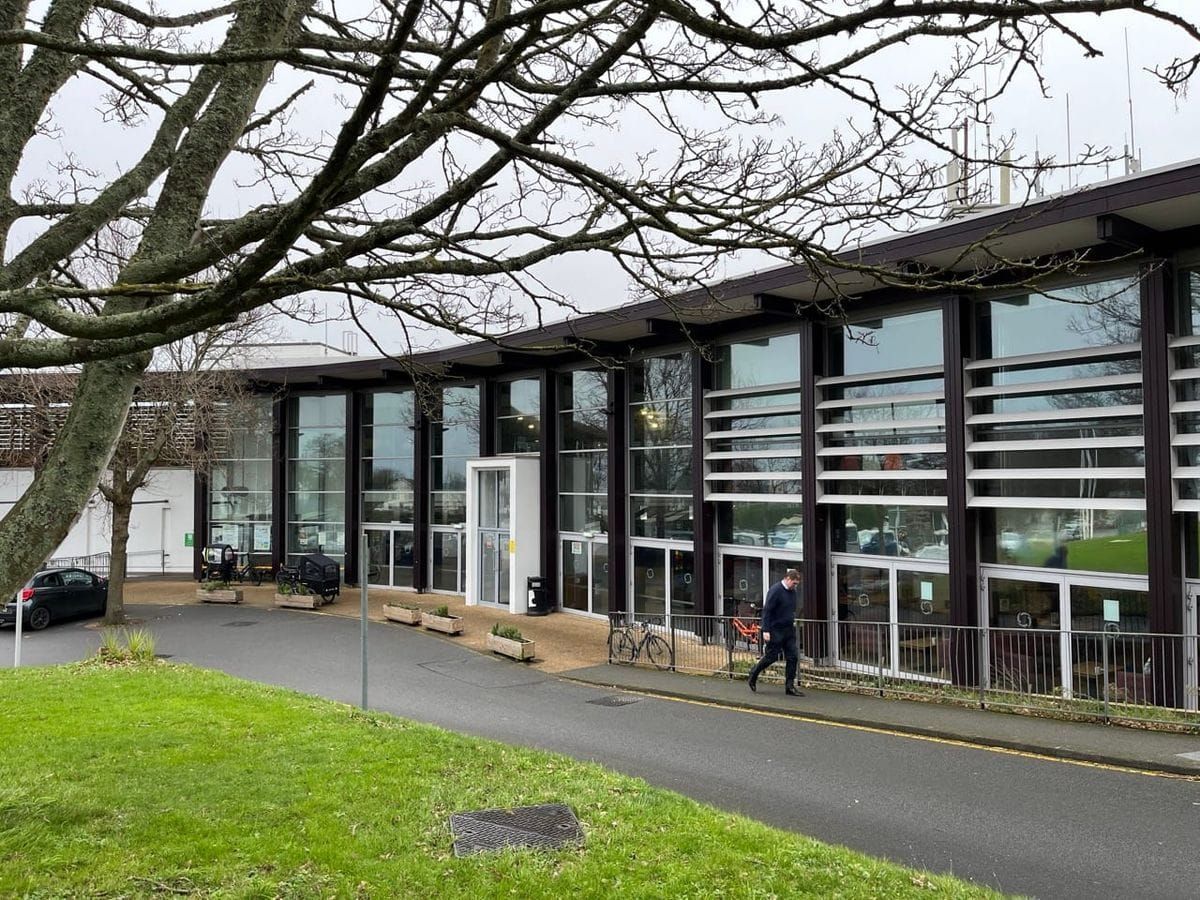
- Beau Sejour Leisure Centre requires major transformation, with review warning 'patch and mend' maintenance risks closure of the 50-year-old facility
- Centre operates with annual subsidy of £900,000 to £1 million but delivers social value of £1.4 million per annum to the community
- Two options proposed: major refurbishment with lower capital investment or rebuild offering strongest 40 to 50 year solution
- Review recommends evolving facility into integrated wellbeing campus combining sport, culture, health, youth provision and civic services
- Swimming pools and gym operating over capacity whilst sports hall, squash courts and tennis courts significantly underused, pointing to need for redesign
Guernsey's 50-year-old Beau Sejour Leisure Centre requires significant transformation to remain viable, with a comprehensive sustainability review warning that continued maintenance without major investment represents a "programme of managed decline" that could lead to closure.
The review, commissioned by the States through Education, Sport & Culture, found that parts of the building originally constructed in 1976 are nearing end of life, with dated plant, poor energy efficiency, and significant mechanical and electrical replacement pressures.
"Simply put - continued 'patch and mend' is not sustainable and would effectively be a programme of managed decline resulting in an increased risk of failure and potential closure," the report states.
Whilst confirming Beau Sejour's position as a "cornerstone of island life, deeply valued by the community and embedded in Guernsey's identity," the review acknowledges the facility has reached a critical juncture where transformation is needed.
The centre currently operates with an annual subsidy of between £900,000 and £1 million, comprising a £700,000 grant from the lottery appropriation account plus approximately £300,000 from general revenue funding. However, the review found that a zero-subsidy or reduced-subsidy model is unrealistic without major change, given the centre's purpose and civic responsibility within the community.
The report emphasises a shift in how this investment should be understood: "Stakeholders stressed this investment should be understood not as a subsidy but as commissioned funding or service grant to deliver defined public outcomes."
Despite the operating deficit, Beau Sejour delivers a minimum social value of approximately £1.4 million per annum, according to the review. The facility contributes to States priorities including inclusivity and accessibility, preventative health and healthcare cost reduction, culture, community engagement, and education.
Consultation feedback described the centre as "a lifeline for physical health, mental wellbeing, and social connection," with its role extending far beyond providing spaces for physical activity.
The review identified significant inefficiencies in space usage. Whilst swimming pools and fitness facilities are operating over capacity, the sports hall, squash courts, and outdoor tennis courts are significantly underused, pointing to a need for rebalancing and redesign.
Cultural and civic provision is often misunderstood, with up to 70 per cent of events hosted at the centre having no alternative island venues without significant compromises.
Two realistic options have been identified for moving forward. A major refurbishment or repurposing would address the most important condition, utilisation, capacity and service quality issues with lower capital investment, but would provide a shorter asset life and less complete expression of the full wellbeing campus model.
Alternatively, a rebuild or new build offers the strongest long-term asset solution with greatest potential to deliver a fully integrated wellbeing campus over a 40 to 50 year period, providing highest flexibility and best response to sustainability and future-proofing needs.
Both options in early financial modelling "look likely to outperform business as usual," the report states.
The review proposes evolving Beau Sejour from a traditional leisure centre into Guernsey's main community hub – an integrated wellbeing campus bringing together sport, culture, health, youth provision and civic services.
The revised endorsed purpose is: "To be a trusted, welcoming and inclusive place at the heart of island life, supporting everyday wellbeing, making daily life easier and bringing people together across generations."
Core functions would include youth provision with visible, safe spaces including informal areas, youth café, and creative spaces; social and civic space with revitalised foyer and improved café or restaurant offer; health and wellbeing support including fitness facilities and accessible spaces for social prescribing and allied health services; cultural experiences through modernised theatre and repurposed event spaces; and learning and skills opportunities from early years through adult education.
A comprehensive Indoor Built Facilities Review examined 28 sites across Guernsey, leading to specific recommendations for various sports and activities.
For swimming, whilst Guernsey has above-average pool numbers, only Beau Sejour offers year-round public and club access. Demand remains high with pools operating at or near capacity. The rebuild option recommends an enhanced eight to 10 lane 25-metre pool with spectator seating, plus a separate teaching pool with moveable floor.
Regarding sports halls, whilst the island has various halls, most larger ones are in schools with limited community access. The rebuild option proposes a modern eight-court competition-standard hall with spectator seating and appropriate run-off areas.
Beau Sejour's gym is "operating beyond its comfortable capacity" and is "likely uncomfortably full at peak times." Recommendations include expanding from current provision to a minimum of 120 stations.
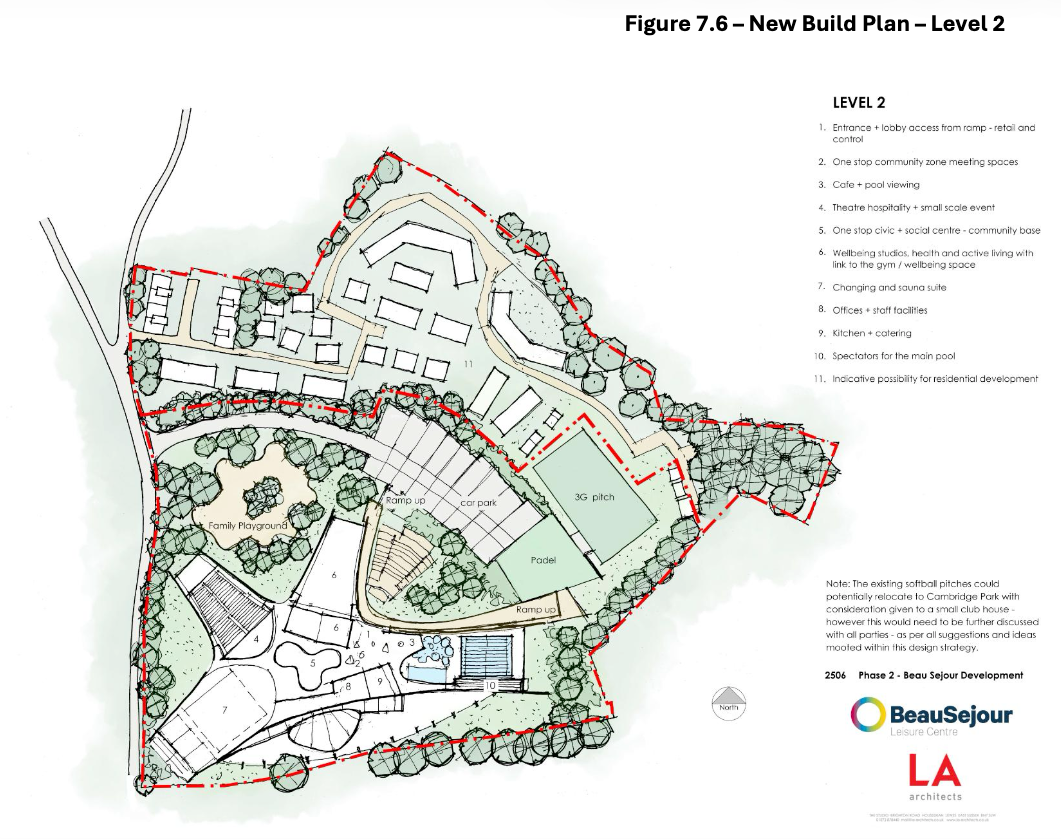
With over 40 tennis courts island-wide showing "very low recorded usage levels," the review found "significant over-provision." Current demand modelling shows only a small proportion of existing stock is required, with consideration given to repurposing Beau Sejour's tennis courts, potentially for housing development on the lower court site and a multi-use games area or artificial pitch on the upper site.
For squash, current provision of six courts exceeds the theoretical need of 5.39 courts, with occupancy data showing peak demand around 3.5 courts. Future provision should focus on protecting three to four high-quality accessible courts.
Demand for padel, a rapidly growing sport, is currently just below modelled population requirements, with recommendations to create three covered padel courts for year-round use.
Insufficient all-weather capacity exists for training and matches during poor weather, particularly for women's, disability and recreational teams. A centrally accessible artificial pitch or multi-use games area is recommended.
Bowls provision is "well above current demand" with multiple outdoor greens and an indoor stadium providing more rinks than required. Future planning should focus on consolidating use across fewer, better-equipped sites, with no bowls provision recommended at Beau Sejour.
Current theatre, cinema and cultural provision across the island is of good quality but capacity is limited with high bookings. The rebuild option recommends enhancing theatre and cinema provision for a minimum of 401 seats with increased flexibility throughout the building for cultural events.
Strong consensus emerged around co-locating services to "make daily life easier," with most widely supported ideas including primary health services such as GP appointments, dental, pharmacy, and physiotherapy; mental health support across all age groups; child and family services including health visiting, midwifery, parenting support, and nursery or crèche facilities; and civic and advice services such as Citizens Advice, housing and benefits desks, libraries, and careers advice.
The "single strongest theme" was youth provision, with stakeholders wanting Beau Sejour to become a recognised youth hub with drop-in areas, creative and gaming spaces, safe evening activities, and visible youth worker support.
Design concepts have been developed to accommodate post-16 vocational training provision and potential housing development on the Beau Sejour site as both an enabling development for capital receipts and to address housing pressures.
The review examined six management options: joint venture development partner, community asset transfer, in-house management, outsourcing contract, commission, and trading company.
However, local market conditions in Guernsey limit potential advantages of outsourcing. "Wage levels across all industries on the island are fundamentally higher and there is no scope to secure utility savings due to a lack of supplier choice," the report notes.
Salary comparisons show significant differences from UK averages. A duty manager earns £55,000 per annum compared to a UK average of £42,000, whilst a senior recreation assistant earns £48,000 per annum against a UK average of £31,000. An active fitness instructor earns £22.30 per hour versus a UK average of £20.04, and a recreation assistant earns £18.27 per hour compared to £12.66 in the UK.
Despite higher staffing costs, benchmarking shows Beau Sejour performs well with good income within benchmark parameters, excluding the sports hall.
The review suggests a commission approach "may provide the opportunity for a step change in the service, allowing an independence that is needed with such a commercial service but linked through a funding agreement or Service Level Agreement."
Alternatively, if criteria for a trading company were amended, this "could present a more viable 'win-win' option," retaining security of States-owned assets whilst allowing greater operational flexibility.
The States resolved in April 2026 to include the Beau Sejour Leisure Centre Re-Development or Rebuild within the Major Projects Portfolio at Pipeline stage. The review was formally closed by the Project Board on 30 April 2026.
The Project Board unanimously agreed that revenue subsidy or continued investment remains necessary; mechanical and electrical systems are nearing end of life with fundamental building areas needing significant investment; community needs have changed significantly since the 1970s; the existing building is inefficient in design, operations and energy usage; significant opportunities exist for greater integration and increased social value; and a revised purpose for Beau Sejour is needed.
The review will form the foundation of a Beau Sejour Transformation Programme including maintaining safe continuous operation of the existing facility short-term; developing understanding of island-wide needs beyond sport and culture; defining a sustainable long-term role, scale and operating model over a 20-year horizon; developing initial programme scope; outlining essential maintenance and risk mitigation with a five-year plan; and defining a long-term facility and operating model with a 20 to 50 year forecast.
The report emphasises: "It is important to note that at this point, no final solution or capital commitment has been confirmed, albeit potential options have been explored. However - there is a clear evidenced need for investment going forward."
As of January 2026, Beau Sejour employed 74 full-time or part-time staff and 93 zero-hour contracted staff, excluding central committee roles, outdoor grounds teams, technical maintenance teams, and supporting functions.
Financial year 2025 showed income of £3,983,753 and expenditure of £4,909,519, resulting in a net position of negative £925,766. Funding comprised £415,300 budgeted States cash limit plus £700,000 Channel Island Lottery contribution, producing a surplus to funding of £189,534.
The report notes that "significant capital investment appears unavoidable" and that "doing nothing increases risk of failure and potential future closure."
The review was co-produced Education, Sport & Culture and Subject Matter Experts, FMG Sport & Leisure Consultancy.
Deputy Paul Montague, President of Education, Sport & Culture, said: "The Sustainability Review identifies that Beau Sejour's future has reached 'a crossroads', and that is entirely accurate. The Centre has been improved and patched up incrementally over the years, but we've now reached the point where something more significant is undeniably required."
He added: "This also reflects a bigger crossroads for Guernsey. We need to look carefully at our major public buildings and think radically about how the island's facilities can be made fit for the future, and this Committee is determined to take on that challenge."
He said that the sustainability review serves as an evidence base and starting point for more detailed analysis.
Further work is required on affordability, deliverability and how the recommendations fit with wider island needs.
"The review is clear on one thing: there is a real, evidenced need for investment, and simply doing nothing is not a viable long-term strategy," Deputy Montague said.
Sam Herridge, Head of Recreation Services, described the review as beginning the work of reimagining what Beau Sejour is for and what it can be.
"The shared ambition we hear clearly is for a trusted, welcoming and inclusive place that supports everyday wellbeing, makes daily life easier, brings people together across generations and reflects the character and cultural identity of Guernsey."
Q&A
Q: What are the two main options for Beau Sejour's future?
A: The review identified two realistic options: major refurbishment or repurposing to address key issues with lower capital investment but shorter asset life, or a rebuild or new build offering the strongest long-term solution over 40 to 50 years with greatest flexibility and sustainability benefits.
Q: How much does it cost to run Beau Sejour annually?
A: Beau Sejour operates with an annual subsidy of between £900,000 and £1 million, comprising a £700,000 grant from the lottery appropriation account plus approximately £300,000 from general revenue funding. In financial year 2025, income was £3,983,753 with expenditure of £4,909,519.
Q: What is the proposed vision for Beau Sejour's future?
A: The review proposes evolving Beau Sejour into Guernsey's main community hub – an integrated wellbeing campus bringing together sport, culture, health, youth provision and civic services, described as a trusted, welcoming and inclusive place at the heart of island life supporting everyday wellbeing and bringing people together across generations.

Comments ()