
A meteorological tale of three storms
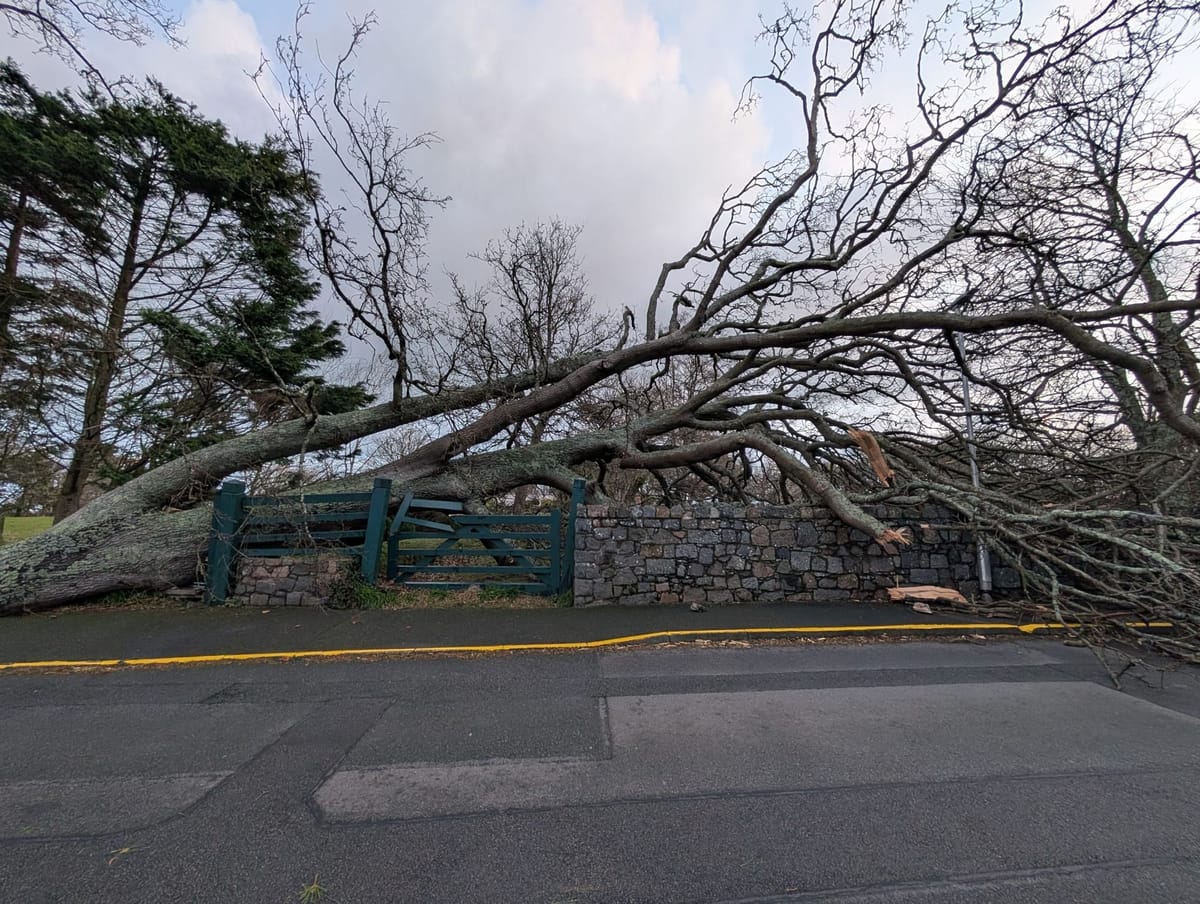
- Fundaising to replace fallen trees after Storm Goretti launched.
- Cleanup continues, with Millennium Walk closed and park areas fenced off.
- Peak gust below Guernsey's 1979 record and that of Great Storm, but outstripped Storm Ciarán.
Storm Goretti was the most powerful to have hit Guernsey since the Great Storm of 1987.
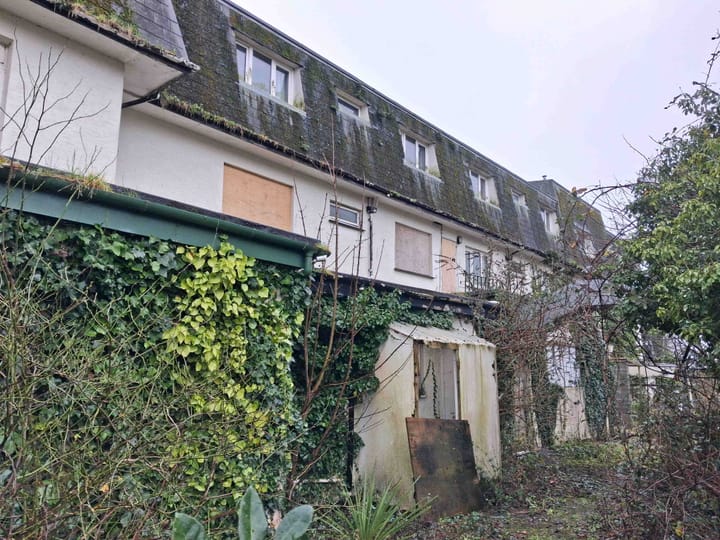
It left trees flattened, saw flats evacuated, and sparked a huge cleanup operation to get the island moving again.
Public areas like Sausmarez Park and Le Guet were hit hard, the Millennium Walk around St Saviours Reservoir left unpassable, and by Friday evening there were still 65 roads shut because they were blocked by trees.
Experts believe that the number of trees lost is likely to run into the low thousands.
As the cleanup continues, fundraising efforts have begun to help with restoration efforts.
The highest gust recorded at Guernsey Airport was 84mph WSW, at 8.24pm on Thursday 8 January, some 11mph highest on record.
How the storm unfolded
Adam Heaume, Senior Meteorological Officer, explains:
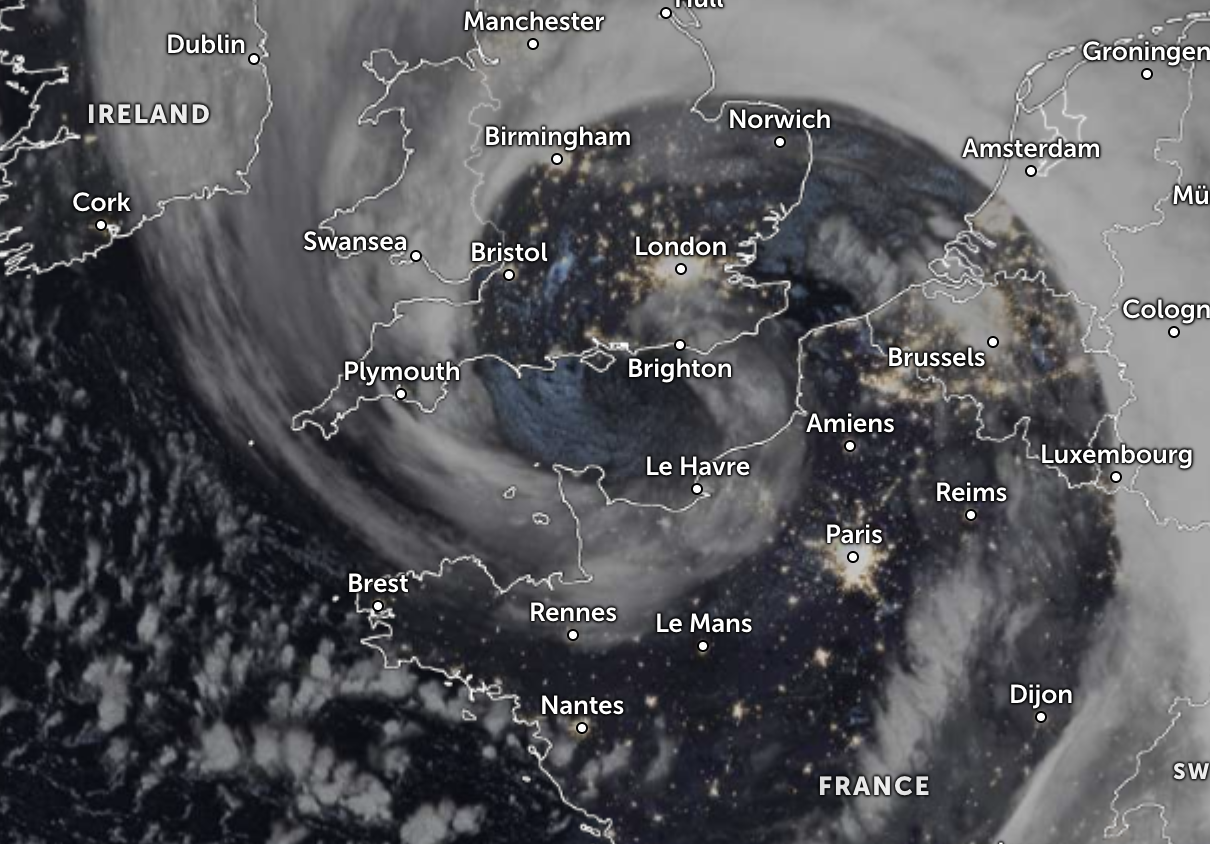
A quick glance at weather maps on Wednesday 7 January and the feature that would become storm Goretti was barely distinguishable.
It wasn’t until mid-morning on Thursday 8 January, when the system crossed from the warm southern side of the jet stream to the cold northern side, that a low-pressure system started to deepen rapidly.
Named by the French weather service, Météo France, the worst impacts were expected over Northern France, but also areas on the southwest coast of England and of course the Channel Islands.
This rapid deepening of a low-pressure system is known by the Meteorological term explosive cyclogenesis but often referred to as a ‘weather bomb’ – for this to be the case the central pressure of the low needs to fall through 24 millibars in 24 hours. The pressure drop at the centre of Storm Goretti was particularly extreme with, 36-38 mbar observed at some stations in the British Isles.
Unlike Storm Ciarán in November 2023, forecasting the exact track and severity of Goretti early was not easy.
Two winters ago, the various models were all in general agreement and consistent in forecasting Storm Ciarán, naming it three days before the impacts were felt. While forecasters agreed on the potential severity of Storm Goretti, increasing certainty of the exact track and intensity was only established about 36 hours ahead of its arrival.
By this stage, emergency planners and front-line services were already preparing for a very severe storm with potential for winds reaching 80-90mph.
Through daylight hours on Thursday the winds remained relatively light, but near continuous rain and drizzle contributed to some of the damage that followed.
Early in the evening, a reported gust of 99mph at St Mary’s airport on the Isles of Scilly reaffirmed forecasters concerns. By this stage the storm had arrived in Guernsey and the wind strength had increased significantly.
Mean wind speeds increased to Gale force 8 around 5pm, strengthening to Strong Gale force 9 by 7.15pm and further intensifying to Storm force 10 shortly before 8pm, with a peak mean wind speed of 54kts/62mph.
Storm force conditions persisted for approximately two hours before dropping back to Strong gale force 9 shortly before 10pm. A continual decrease followed, and the wind veered W-NW Gale force 8 by 1am in the early hours of Friday, then further to Near Gale force 7 by around 2.30am.
The highest gust recorded at Guernsey Airport, 72.7 kts (84mph) WSW, was at 8.24pm on Thursday. Undoubtably, there were parts of the island that experienced higher wind speeds, due to local factors, hence the apparent random nature of the damage caused.
Initial analysis of data from Alderney Airport shows a peak mean wind speed of 63 kts (F11) with a maximum gust of 80 kts.
As Storm Goretti moved through the English Channel, the Channel Islands experienced some of the windiest conditions, before it reached the northwestern Manche region of France.
What happened elsewhere
St Mary’s Airport (Isles of Scilly) – highest gust recorded 99mph
Channel Light Vessel –highest mean wind speed observed - 52kts
Jersey Airport – highest gust recorded 95mph
Northwestern Manche region (France) – highest gust recorded 213 kmh (132 mph)
Conditions continued to ease ahead of sunrise on Friday but remained gusty, and a fresh north-westerly brought the temperature down a few degrees.
However, the wide-ranging effects of Storm Goretti continued to spread.
Two hundred miles north, as the fronts associated with this system bumped up against the cold arctic air that had established over the UK during the Christmas period, heavy snow caused disruption across the West Midlands.
How did it compare to 1987?
In the early hours of 16 October 1987, winds gusted at up to 81 knots (93mph) at the airport, two knots below the record set in December 1979 (95.4mph).
The St Peter Port signal station reported a gust of 96 knots, 110mph.
At least 2,000 trees were blown down, with their foliage because of the time of year as well as ground softened from heavy rain in the days before making them vulnerable. Greenhouses were demolished, slates and tiles lost.
And Storm Ciaran?
Storm Ciaran was the third named storm of the 2023 season, arriving on the evening of Wednesday 1 November.
The Bailiwick escaped the worst impacts, with the strongest mean wind speed of 50 knots (57mph) a maximum gust of 68 knots (78mph) recorded at Guernsey Airport around sunrise.
Jersey experienced the full force, with a tornado leaving destruction through the eastern parishes. Wind speeds would have ranged between 161 to 186mph in its path.
Looking to the future
Guernsey Trees for Life have set up the Storm Goretti Tree Appeal.
Donations can be made through the Guernsey Nature Commission’s JustGiving page by selecting Storm Goretti or through this link to avoid administration charges.
Details will be confirmed soon on what the money will be spent on.
“Funds will initially be focussed on those publicly accessible areas worst hit by Goretti such as Saumarez park and Le Guet among numerous others,” the charity said.
“Monies will help pay for trees, stakes, ties mulch and, crucially, aftercare (primarily watering). Funds will not be used for dismantling/removing fallen trees or making good.
“Success will be measured by the number of trees established, not the number planted.”
Comments ()